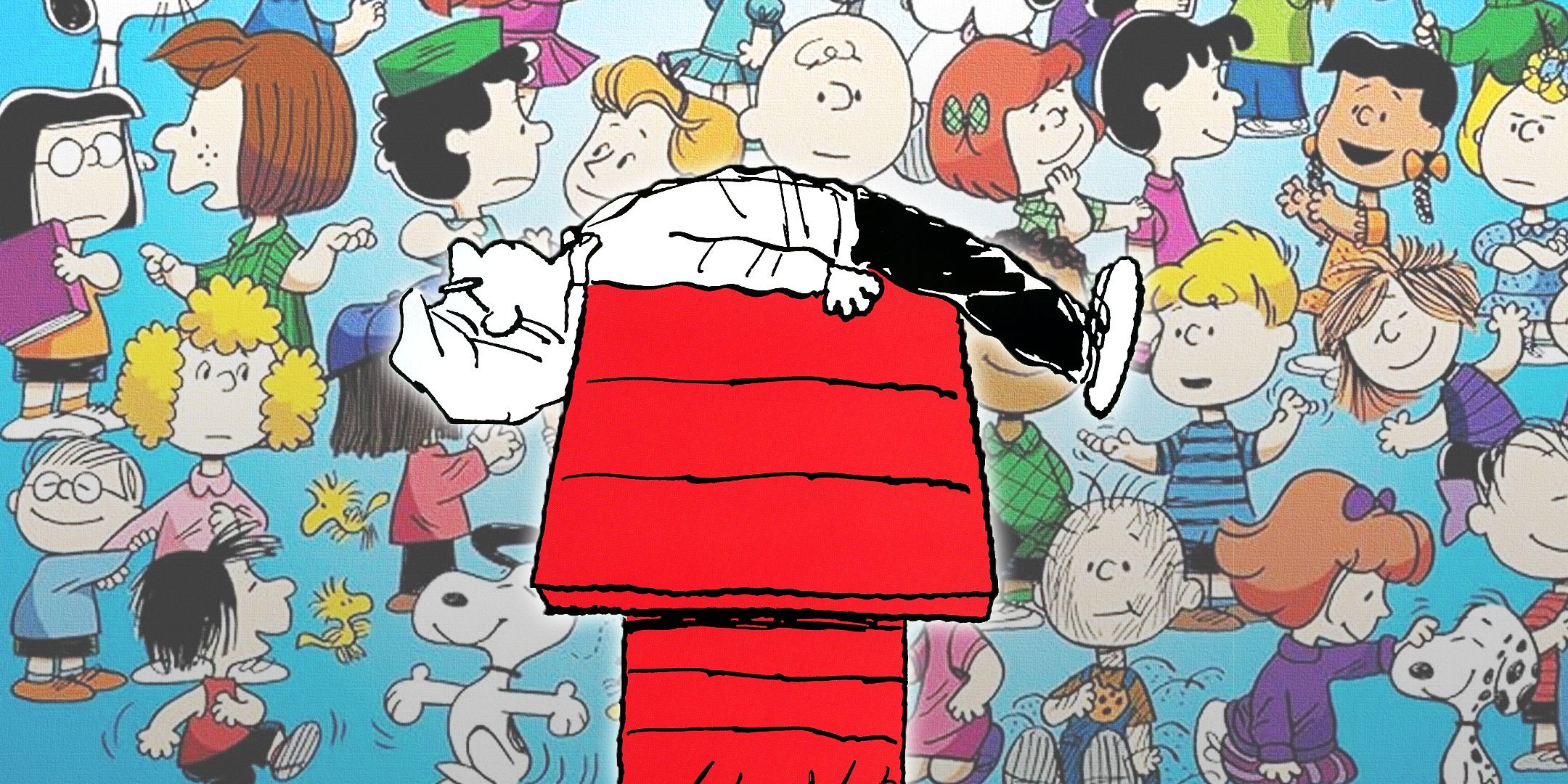
The ubiquity of Peanuts’ lead beagle across high-end jewelry, cosmetic adhesives, and fast-fashion apparel is not a fluke of "nostalgia" but a calculated masterclass in IP Elasticity and Risk Mitigation. While most heritage brands struggle with the "Grandpa Brand" trap—where aging demographics lead to terminal brand decay—Snoopy has achieved a rare decoupled status. The character currently functions as a high-liquidity aesthetic asset that operates independently of its original source material. This phenomenon is driven by three structural pillars: The Blank Slate Semiotic, The Low-Friction Licensing Model, and The Gen Z Visual Syntax.
The Blank Slate Semiotic: IP as a Modular Emotional Vessel
The primary driver of Snoopy’s current market saturation is the character’s high degree of Semantic Neutrality. Unlike Marvel characters, which are burdened by complex, rigid canonical backstories, or Disney protagonists who carry heavy moralistic weights, Snoopy represents a "vibe" rather than a narrative.
This neutrality allows the IP to be inserted into disparate product categories without creating "Brand Dissonance." When Snoopy appears on a $5,000 Omega Speedmaster, he evokes the technical history of the Apollo 10 mission. When he appears on a Starface pimple patch, he represents low-stakes self-care and "chill." This ability to bridge the gap between "Veblen Goods" (luxury items where demand increases as price increases) and "Commodity Goods" is rare.
The character’s physical design contributes to this modularity:
- Minimalist Line Work: The simple black-and-white aesthetic fits any color palette, making it a dream for creative directors.
- Anthropomorphic Versatility: Snoopy can be a pilot, a writer, a surfer, or a Joe Cool student. This allows licensees to target specific sub-niches (e.g., tech workers, outdoor enthusiasts, or beauty influencers) without altering the core asset.
The Licensing Architecture: Minimizing Entry Barriers
Peanuts Worldwide (owned 41% by WildBrain, 39% by Sony Music Entertainment Japan, and 20% by the Schulz family) operates on a high-volume, diversified licensing strategy. They have effectively solved the IP Scarcity Paradox. Usually, if a brand is everywhere, it loses its prestige. Peanuts circumvents this by segmenting their partners into "Tiers of Scarcity."
- Tier 1: Scarcity-Driven Prestige (Omega, Bamford, Gucci). These collaborations are limited-run, high-price point, and designed to provide "Halo Equity" to the brand. They signal that Snoopy is a sophisticated icon, not just a cartoon.
- Tier 2: Lifestyle Integration (Uniqlo, Zara, Urban Outfitters). These partnerships handle the volume. They ensure the character remains visible in the daily lives of the middle-class consumer.
- Tier 3: Niche Hyper-Specificity (Starface, Baggu, Smeg). These are targeted "surgical" strikes into specific subcultures. The Starface collaboration, for instance, wasn't about selling stickers; it was about capturing the Visual Real Estate of the human face on TikTok.
This multi-tiered approach creates a Self-Reinforcing Feedback Loop. The luxury collaborations prevent the brand from becoming "cheap" in the eyes of the consumer, while the mass-market products ensure the brand doesn't become "forgotten" or "stale."
The Gen Z Visual Syntax and the Death of Context
A critical factor missed by surface-level analysis is that the current generation of consumers does not consume Peanuts comic strips. We are witnessing the De-contextualization of IP. To a 19-year-old purchasing a Snoopy-themed "puffer bag," the character does not represent a 1950s newspaper strip about childhood anxiety. Instead, it represents a specific digital aesthetic: "Soft Life" and "Cozy Core."
In the attention economy, Snoopy serves as a high-speed visual shorthand for a specific emotional state—quiet, slightly cynical, but fundamentally harmless. This makes the character a "Safe Bet" for brands. In an era of high political polarization and "Cancel Culture," Snoopy is one of the few remaining "Universal Neutrals." He has no political affiliation, no problematic history, and no complex interpersonal drama.
The Cost Function of Nostalgia: Why Now?
The resurgence of Snoopy aligns with specific macroeconomic pressures. During periods of high inflation and geopolitical instability, consumer behavior shifts toward "Comfort Hedonism." When consumers cannot afford major life milestones (like home ownership), they redirect discretionary spending toward "Micro-Luxuries."
A $15 Snoopy pimple patch or a $30 Snoopy graphic tee offers a high "Dopamine-to-Dollar" ratio. It provides a sense of security and familiarity. From a strategic consulting perspective, Snoopy is a Counter-Cyclical Asset. His value remains stable or even increases when traditional luxury or high-risk "trend" brands falter because he taps into the "Lindy Effect"—the idea that the longer something has survived, the longer it is likely to survive.
The Operational Risk: Dilution vs. Saturation
The strategy is not without flaws. The primary risk facing Peanuts Worldwide is "Omnipresence Fatigue." If the IP is applied to too many low-quality products, the "Halo Effect" from the Tier 1 collaborations will begin to erode.
The "Snoopy-fication" of everything follows a predictable decay curve:
- Innovation: A cult brand (e.g., Baggu) uses the IP in a fresh way.
- Saturation: Every fast-fashion retailer adopts the IP.
- Commoditization: The IP is found in discount bins and grocery store aisles.
- Hibernation: The brand must pull back to regain its "cool" factor.
Currently, Peanuts is in the late-Saturation phase. To avoid the Commoditization trap, the brand must pivot toward "Functional Utility" collaborations—moving beyond putting a picture of Snoopy on a shirt and instead integrating the character into the experience of the product.
Strategic Recommendation: The Pivot to Experience
For brands looking to replicate or leverage this trend, the "Slap a Logo on it" era is reaching its zenith. The next evolution of the Snoopy Arbitrage is not more physical goods, but "Thematic Environments."
Peanuts should focus on:
- Modular Pop-up Architecture: Creating "Snoopy Cafes" or "Reading Rooms" that lean into the "Cozy Core" aesthetic.
- Digital Skinning: Moving the IP into high-fidelity gaming environments (e.g., Fortnite, Roblox) where the character can serve as a non-combative social avatar.
- Selective De-stocking: Deliberately ending long-term mass-market contracts to create artificial scarcity before the 75th anniversary cycles.
The ultimate play is to treat Snoopy not as a character, but as a Protocol for Emotional Comfort. Any brand that can successfully "wrap" its product in that protocol will see a measurable lift in "Brand Warmth" and "Purchase Intent," provided they maintain the delicate balance between ubiquity and exclusivity.