Walk into any wine cellar in the Champagne hills or the terraced cliffs of the Rhône Valley, and the first thing you notice is the silence. It is a heavy, living quiet. It smells of damp stone, ancient oak, and turning earth. For generations, the people who work these dark spaces have operated on a timeline that mocks the frantic pace of the modern world. They think in decades. They plant vines for their grandchildren.
But outside the cellar doors, the world is moving very fast, and it is brutally loud.
Up the road in Evian, behind closed doors and heavily guarded perimeter fences, the leaders of the wealthiest nations on earth are gathered. The atmosphere at the G7 summit is sanitized. It smells of expensive cologne, recycled air, and fresh printing toner. Here, the slow, muddy reality of agriculture is reduced to a single, bloodless word: tariffs.
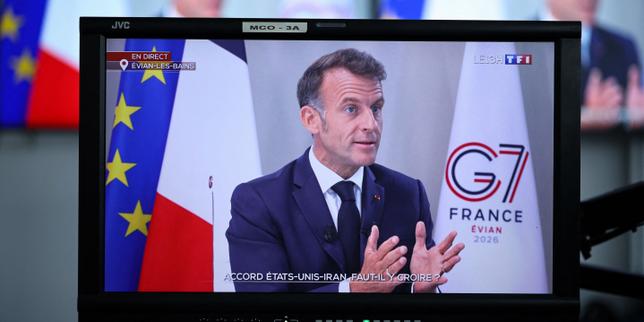
Emmanuel Macron sits at a polished table. Across from him is Donald Trump. Between them lies an invisible battleground, and the weapon of choice is a bottle of French wine.
To the bureaucrats drafting press releases, this is a standard economic skirmish. The United States threatens to slap massive import taxes on French wine, a direct retaliation for France taxing American digital giants like Google and Amazon. It sounds like a clean, mathematical equation. You tax our pixels; we tax your grapes.
But mathematics has a habit of erasing human beings.
Consider Jean-Louis. He is a hypothetical composite of the dozens of winemakers who dot the hillsides of Burgundy, but his anxieties are entirely real. Jean-Louis did not study international trade law. He studied the sky. He knows exactly how much rain fell on his hillside in 2018, and he can tell you how the sudden late-spring frost of last year changed the acidity of his Chardonnay. His hands are rough, stained a faint, permanent purple around the cuticles.
For Jean-Louis, a tariff is not a policy lever. It is a ghost that sits at his kitchen table.
If the American government imposes a twenty-five or fifty percent tax on his bottles as they cross the Atlantic, the wine does not suddenly become more expensive for wealthy collectors in Manhattan. Instead, the wine stops moving. The supply chain chokes. The independent boutique importers in Ohio and Texas, small businesses run by people who also have mortgages and kids, cannot afford to clear the shipments. The bottles stay in the boxes. The boxes stay in the ports.
Back in France, Jean-Louis looks at his cellar. The barrels from the current harvest are full. The next harvest is already growing on the vines, oblivious to Washington politics. If the wine cannot leave, the system backs up like a blocked pipe. There is no room for the new vintage. You cannot tell a vine to stop growing because a trade negotiation went sideways.
This is the invisible stake of the G7 meeting. It is the terrifying vulnerability of an ancient craft caught in the gears of twentieth-first-century geopolitical posturing.
When Emmanuel Macron stepped forward to address the press pool in Evian, his language was carefully calibrated. He spoke of wanting a "respectful but firm" discussion with Trump. It is the language of diplomacy, designed to sound resolute without causing an immediate market panic. But beneath the polished phrasing is a desperate attempt to inject reality into a room full of abstractions.
Respectful because France and the United States are bound by centuries of shared history, from the battlefields of Yorktown to the beaches of Normandy. Firm because you cannot allow the livelihood of thousands of rural families to be used as a bargaining chip to protect Silicon Valley balance sheets.
The core of the argument is simple, though explaining it to a billionaire real estate mogul requires a different kind of language. Wine is not an industrial product. You cannot dial down production in a French vineyard the way you slow down an assembly line making smartphones in Shenzhen. If a factory stops receiving microchips, it idles its workers for a week. If a vineyard loses its market, a century of careful soil cultivation can erode into bankruptcy in a matter of months.
It is easy to get lost in the jargon of these summits. Experts talk about Section 301 investigations, digital services taxes, and retaliatory frameworks. It sounds like a game of chess played by grandmasters who never have to live on the board.
But the reality of trade is always visceral.
The truth is, nobody really wins a wine war. If French wine becomes a luxury item accessible only to the ultra-rich in America, the American consumer loses a connection to a culture, a place, and a tradition. The American restaurant owner loses the margin that keeps their staff employed. And the French winemaker loses their security.
The tension in Evian is palpable because everyone knows the unpredictable nature of the man sitting across the table from the French president. For Donald Trump, tariffs are not a last resort; they are a favorite tool, a blunt instrument used to crack open negotiations. He views trade as a simple ledger of winners and losers. If America buys more from France than France buys from America, he sees a deficit that needs to be corrected with a penalty.
But how do you quantify the value of a centuries-old relationship over a glass of Bordeaux? How do you calculate the worth of a family heritage in a trade balance spreadsheet?
Macron’s task is to make Trump see the human faces behind the bottles. He has to convince a man who prides himself on being a dealmaker that some things are too fragile to be used as leverage.
The afternoon sun begins to dip over Lake Geneva, casting long shadows across the summit grounds. Inside, the leaders will eventually move to dinner, where they will likely be served excellent food and, ironies of ironies, beautiful wine. The servers will pour it carefully, holding the bottles by the base, ensuring not a drop is wasted.
The politicians will raise their glasses. They will clink the crystal. They will smile for the cameras, and then they will go back to the tables to decide whether the people who made that wine will be able to afford their lives next year.
A few hundred miles away, Jean-Louis walks through his rows of vines. The leaves are green, stretching toward the summer light. He kneels down, picks up a handful of dark, crumbly earth, and lets it sift through his fingers. He looks toward the horizon, wondering if the storm gathering in the west is just rain, or something much worse.