The air inside the airplane hangar was thick with the scent of popcorn, stale coffee, and collective anticipation. Outside, the Texas heat shimmering off the tarmac distorted the horizon, turning the distant oil rigs and mesquite trees into wavering mirages. Inside, thousands of red hats bobbed in unison, a sea of synthetic fabric waiting for a spark.
They did not have to wait long.
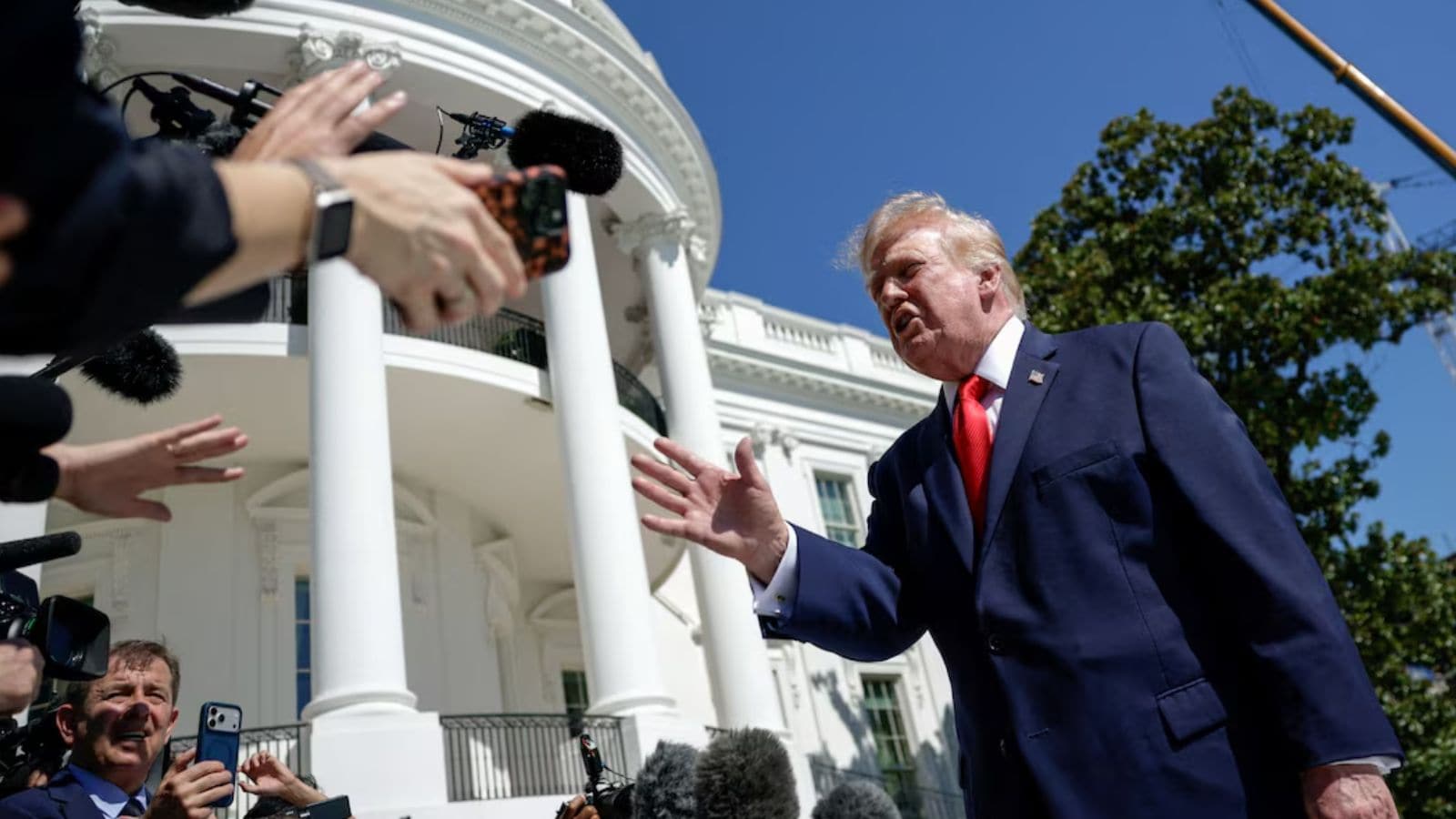
When Donald Trump took the stage, the decibel level inside the structure surged past a physical threshold, vibrating in the chests of everyone standing near the steel rafters. He was not merely there to speak; he was there to anoint. The mission was explicit: to transfer his political capital, heavy and volatile, onto the shoulders of Texas Attorney General Ken Paxton in a high-stakes alignment within the fabric of conservative power.
Then, the rhythm fractured.
A voice cut through the amplified roar of the sound system, sharp and piercing. It came from the middle rows, unscripted and raw. A protester, standing on a folding chair, thrust a sign into the air before security descended like a swift tide. For a heartbeat, the grand theater of political certainty stuttered. The teleprompter hummed, the crowd shifted from adoration to protective anger, and the carefully choreographed unity of the evening brushed against the unpredictable friction of real life.
Noise. Resistance. The persistent static of a deeply divided electorate.
To understand why thousands of people stood shoulder-to-shoulder in a sweltering hangar on that afternoon, you have to look past the political theater and into the psychological landscape of modern Texas. This state has long fancied itself an island of self-determination, a place where the myth of the independent cowboy still casts a long shadow over suburban cul-de-sacs and rural highways alike. Yet, the reality on the ground is more complicated. Growth brings friction. Tech transplants arrive with different expectations, while longtime residents watch their generational neighborhoods morph into unrecognizable grids of asphalt and strip malls.
Change is unsettling. And when people feel unsettled, they look for anchors.
Enter the endorsement. In the ecosystem of American politics, an endorsement from a figure of immense gravity is designed to function as gravity itself—pulling stray planets into a predictable orbit. Trump’s push for Paxton in the political arena was calculated to do just that: to quiet the internal dissent of the party, to signal loyalty, and to draw a bright, unmistakable line in the sand between the faithful and the apostate.
Consider what happens next when that kind of force is applied. It creates ripples.
In every small-town diner from Lubbock to Beaumont, conversations over sweet tea and chicken-fried steak inevitably drift toward the future of leadership. People are tired. They are tired of the constant hum of outrage, but they are also deeply invested in the outcome because they believe, rightly or wrongly, that the cultural survival of their way of life hangs in the balance. When a leader steps onto a stage to fight for an ally amid jeers and shouting matches, it sends a message that transcends policy positions. It says: We are under siege, and we are holding the line.
The interruption by the protesters was brief, swallowed almost immediately by the rhythmic chanting of the faithful who drowned out the dissent with the sheer volume of their presence. But that momentary collision of worlds captured the underlying tension of the entire event. Politics in America has largely ceased to be an exercise in persuasion. It has become an exercise in mobilization. You do not try to convince the person shouting across the aisle; you make sure the person standing next to you hears your voice loud enough to blot them out.
As the rally drew to a close and the crowds spilled back out into the blinding Texas sun, the dust kicked up by thousands of boots settled slowly over the parking lot. The banners would come down. The sound equipment would be packed into semi-trucks and hauled toward the next destination on the map. But the friction remained. It lingered in the text messages exchanged between neighbors, in the yard signs standing defiant against the evening breeze, and in the quiet spaces where people try to reconcile the America they remember with the America that is currently unfolding around them.
History is rarely made in quiet rooms. More often, it is forged in the noise, carved out by the clash of competing visions, shouted over the roar of crowds, and cemented by leaders who refuse to lower their voices even when the room begins to fracture.