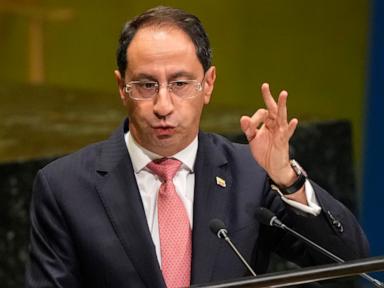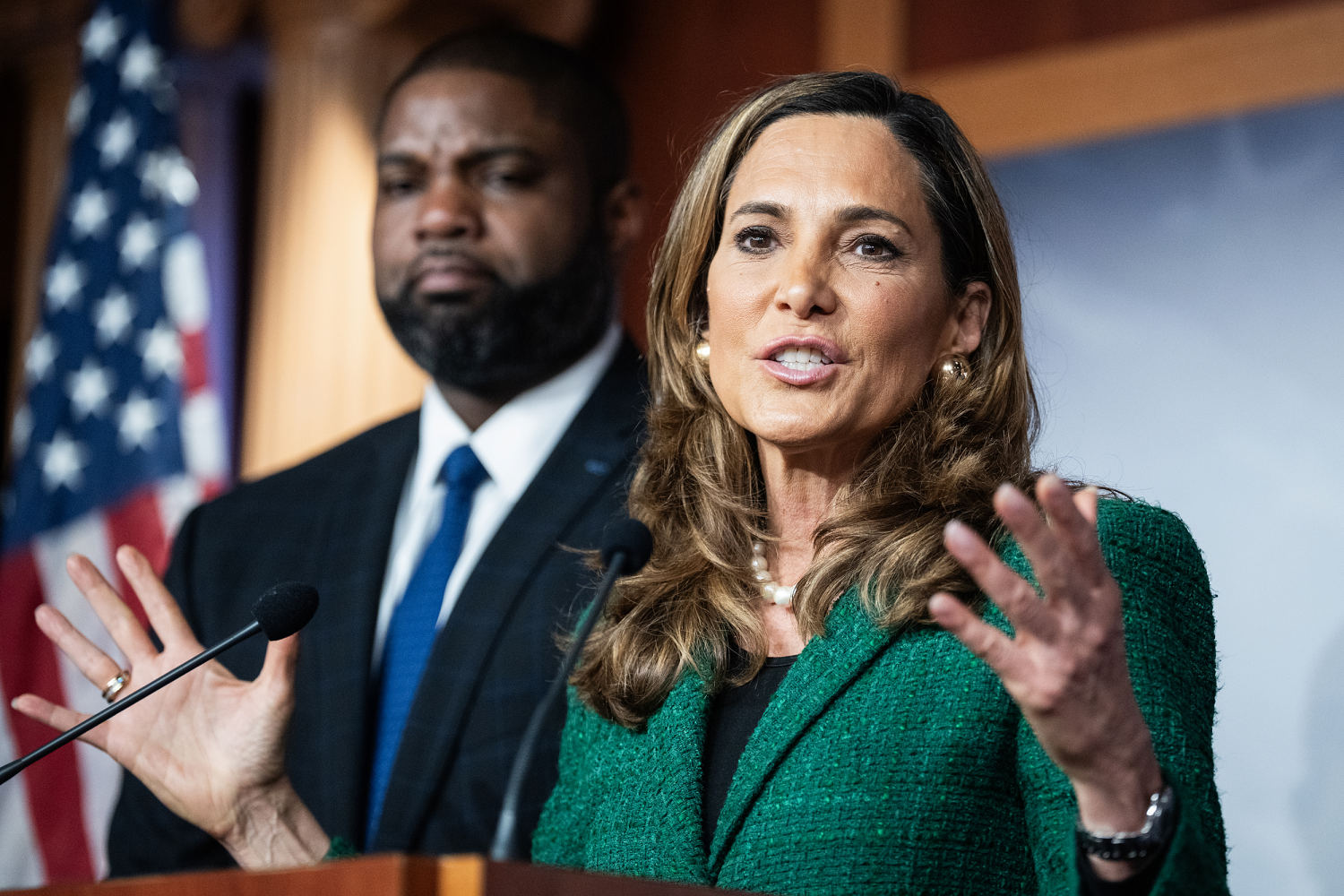
In the peculiar ecosystem of South Florida congressional politics, electoral survival often requires a candidate to look as far outward as they look down their own ballot. When Republican Representative María Elvira Salazar secured a high-profile presidential endorsement from newly elected Colombian President Abelardo de la Espriella during a tightening 2026 re-election battle, it underscored a foundational reality of Miami-Dade County voting patterns: domestic American politics and Latin American geopolitical positioning are permanently fused. Salazar, fighting to hold a heavily Hispanic district that has oscillated wildly between parties over the past decade, found herself leaning into foreign alliances precisely as her relationship with the leader of her own party frayed over national immigration policies.
To understand why a foreign head of state's blessing matters in an American legislative race, one must examine the demographic architecture of Florida’s 27th Congressional District. Comprising parts of Miami, Coral Gables, and Kendall, the district features a population that is roughly three-quarters Hispanic, with deep generational and cultural roots anchored in Cuba, Venezuela, Colombia, and Nicaragua. For decades, local political campaigns in this region have functioned as extensions of hemispheric ideological struggles. A candidate cannot simply talk about local infrastructure or domestic inflation; they must signal absolute alignment with the anti-leftist orthodoxy that defines the political identity of many South Florida immigrants. De la Espriella’s rise to power in Colombia—fueled in part by conservative solidarity and an endorsement from Donald Trump during his own runoff—created a reciprocal political asset. By backing Salazar, de la Espriella reinforced a transnational conservative network that treats Miami as its intellectual and financial capital.
Yet, this cross-border validation arrives at a moment of acute domestic friction for Salazar. Her campaign found itself navigating a sharp public fracture with the national Republican apparatus after she broke with party orthodoxy on immigration, warning publicly that the administration's aggressive border policies risked alienating the exact Hispanic constituency that helped deliver the White House. That public dissent drew immediate blowback from the top of the ticket, exposing the fault lines between local Hispanic incumbents who must moderate their tone to win suburban swing voters and a national party driving a harder restrictionist line.
This is where the Colombian endorsement ceases to be a mere diplomatic curiosity and becomes a calculated electoral shield. By projecting herself as a vital bridge to South America's conservative leadership, Salazar attempts to anchor her credentials in the bedrock principles of Miami anticommunism. It is a performance designed to reassure voters who fled left-wing governance in the Andes that their representative wields direct influence in international capitals. Financial disclosures highlighting contributions from de la Espriella's circle further illustrate how deeply intertwined these political fortunes have become, bypassing the traditional boundaries of domestic campaign financing narratives.
At the same time, Democratic challenger Eliott Rodriguez has sought to reframe the contest around immediate domestic anxieties, arguing that voters care far more about the cost of living and local economic pressures than about presidential palace drama in Bogotá. It is a classic tactical division. The challenger attempts to localize a nationalized and internationalized race, while the incumbent leverages high-stakes geopolitical theater to solidify her base. The Cook Political Report’s shift of the district rating from safe to competitive indicates that the local electorate is genuinely divided over whether these external ideological battles compensate for domestic policy friction.
The broader implications extend far beyond a single congressional seat in suburban Miami. As political polarization reshapes traditional geographic boundaries, diasporas living inside the United States are increasingly courted not just as American voters, but as active participants in the governance of their countries of origin. When foreign leaders actively intervene in U.S. congressional races through public video endorsements, the porous nature of modern political communication becomes glaringly apparent. National sovereignty is no longer an absolute firewall in local elections when digital networks allow a president in Bogotá to speak directly to constituents in Westchester and Doral.
Whether this cross-border reinforcement will insulate Salazar from domestic headwinds remains the central question of the cycle. In a district where political loyalty is constantly tested by shifting economic realities and demographic churn, symbolic victories from abroad must compete with the unglamorous metrics of grocery prices, insurance rates, and neighborhood security. The foreign endorsement provides a potent rhetorical weapon, but in a district as volatile as Miami's 27th, symbolism must ultimately translate into votes cast at local precincts where international headlines matter far less than the cost of daily life.
This video provides context on how Colombian political developments are viewed and broadcast within the South Florida media market.