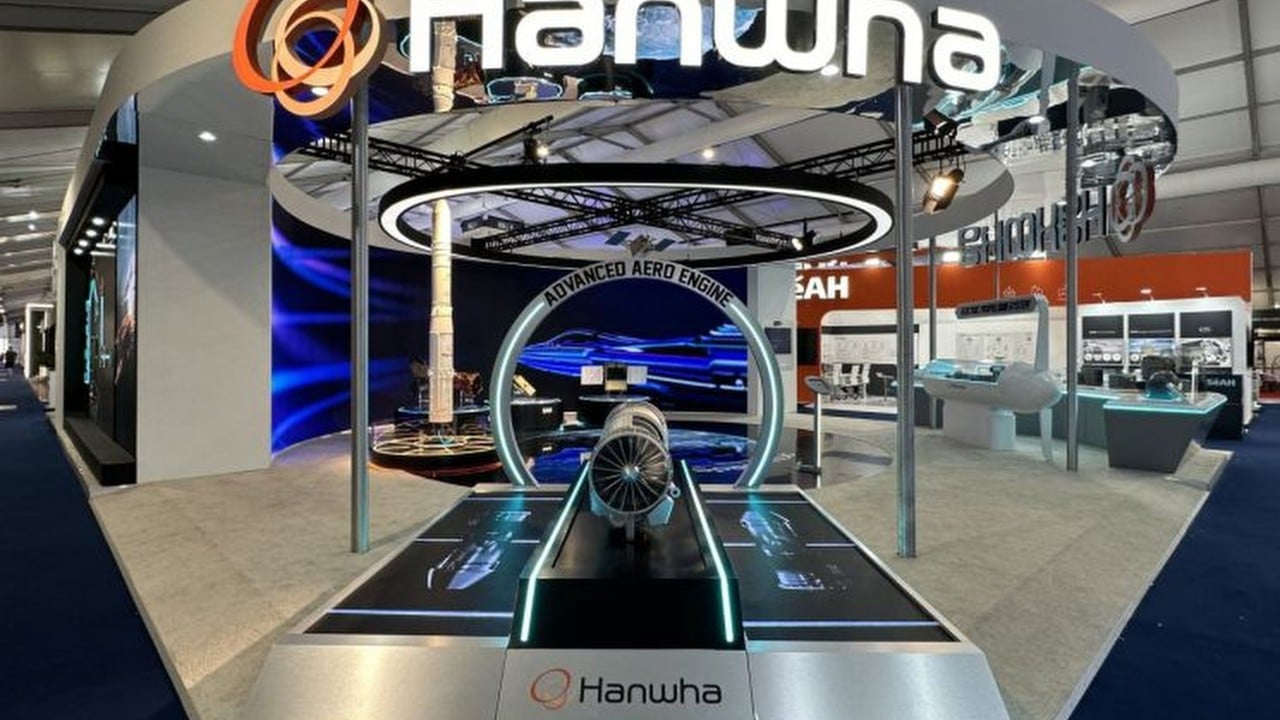
The defense industry loves a good arms race. It justifies budgets, keeps the lights on at Hanwha and KAI, and allows generals to play with shiny new toys. Right now, the toy of choice is the Collaborative Combat Aircraft (CCA), better known by the marketing-friendly moniker "loyal wingman."
The consensus is predictable: South Korea must join the US and China in the top tier of drone warfare to survive. We are told that pairing an AI-piloted drone with a manned KF-21 fighter is the only way to counter the numerical superiority of regional rivals.
This is a fantasy. It is an expensive, hardware-heavy solution to a software problem that Seoul is nowhere near solving. While the press salivates over airframes that look like mini-F-22s, they ignore the reality of electronic warfare, the fragility of data links, and the sheer hubris of assuming a "loyal" wingman won't become a "rogue" liability the second a peer-level adversary turns on a high-powered jammer.
The Pilot in the Loop is a Bottleneck Not a Feature
The core premise of the loyal wingman is a lie. It suggests that a human pilot, already taxed by flying a Mach-1.8 fighter and managing multi-domain sensors, can effectively "command" a swarm of autonomous drones.
I have watched operators struggle to manage a single MQ-9 Reaper from a comfortable ground station with zero G-load and a latte in their hand. Expecting a KF-21 pilot to play real-time strategy commander while dodging S-400 missiles is not just optimistic; it is dangerous.
The bottleneck isn't the drone's aerodynamics. It is the human brain. By tethering these drones to manned assets, we aren't "force multiplying." We are creating a massive cognitive load that will likely result in the pilot being shot down because they were too busy micro-managing their robotic sidekick's target acquisition parameters.
The Logic of the Discardable Airframe is Flawed
Proponents argue that CCAs are "attritable"—a fancy word for "cheap enough to lose." They claim this allows for riskier missions.
Check the price tags. When you pack an airframe with a $F414$ derivative engine, AESA radar, and the processing power required for autonomous flight, the cost creeps toward $20 million or $30 million per unit. That isn't attritable. That is a sovereign asset.
If South Korea loses ten of these in a single afternoon because of a software glitch or a concentrated electronic attack, that is a multi-hundred-million-dollar blow to the treasury. The "low cost" argument only works if the drones are essentially flying pipe bombs. But the current designs are becoming so sophisticated that they are effectively just unmanned fighter jets. We are recreating the exact cost-spiral problem that drones were supposed to fix.
The Data Link Delusion
Every "loyal wingman" concept relies on a persistent, high-bandwidth connection between the mother ship and the drone.
In a conflict with a near-peer adversary—think China or a Russian-backed North Korea—the first thing to go is the spectrum. The electromagnetic environment will be so saturated with noise that maintaining a "seamless" connection will be impossible.
When the link breaks, what does the drone do?
- Option A: It reverts to pre-programmed logic and becomes a predictable target.
- Option B: It returns to base, effectively removing itself from the fight.
- Option C: It uses "full autonomy" to choose its own targets.
Option C is where the ethical and tactical nightmare begins. We are nowhere near a "General AI" that can distinguish between a retreating enemy and a civilian transport in a high-stress, degraded environment. Relying on CCAs in a contested environment assumes the enemy will kindly allow our radio waves to pass unmolested. They won't.
Seoul is Chasing Yesterday's Prestige
South Korea's push into the top tier of drone tech feels less like a strategic necessity and more like a branding exercise. It is "Great Power" cosplay.
The US and China are pursuing CCAs because they have global expeditionary requirements and massive budgets to burn on experimental failures. South Korea’s primary threat is across the 38th parallel. You do not need a stealthy, high-subsonic loyal wingman to counter North Korean aging MiGs or mobile artillery. You need mass, persistence, and low-cost loitering munitions.
By chasing the high-end CCA market, Seoul is diverting R&D funds away from the "unglamorous" tech that actually wins wars:
- Hardened GPS-independent navigation.
- Low-cost, high-volume interceptors for drone swarms.
- Localized, decentralized manufacturing.
Instead of building a few dozen "loyal wingmen," South Korea should be building ten thousand "dumb" drones that can operate without a mother ship. Quantity has a quality of its own, but "quantity" doesn't look as good in a defense expo brochure as a sleek, stealthy drone standing next to a KF-21.
The Autonomy Gap
We need to stop using the word "autonomous" when we mean "highly scripted."
True autonomy requires the machine to understand intent. Current AI models are based on pattern recognition. They are brittle. If the enemy paints their tanks a color the training data didn't include, the "smart" drone becomes a multi-million dollar paperweight.
The US Air Force is currently struggling with the software architecture for its CCA program. If the Pentagon—with its bottomless pockets and Silicon Valley ties—is finding the software "exceedingly difficult," why do we believe Korea Aerospace Industries can solve it on a fraction of the budget?
We are building the body before we have the brain. It is an exercise in tax-funded taxidermy.
The Coming Electronic Warfare Reality Check
Imagine a scenario where a squadron of KF-21s launches with thirty loyal wingmen. Five minutes into the engagement, the adversary deploys a wide-area cognitive jammer. The drones lose their handshake with the pilots.
In that moment, those drones aren't assets. They are obstacles. They are thirty high-speed objects occupying the same airspace as the manned jets, without the ability to coordinate or deconflict. The risk of mid-air collision or "blue-on-blue" friendly fire incidents skyrockets.
The industry’s answer to this is usually a hand-wavy "we will use AI to manage deconfliction." This is a circular argument. You are using the technology that is failing to fix the failure of the technology.
Stop Trying to Out-America America
The "loyal wingman" is a doctrine designed for the Pacific theater's vast distances, where the US needs to extend the reach of its limited number of F-35s. South Korea's theater is cramped, violent, and messy.
The "Top Tier" isn't a place South Korea needs to be. The mid-tier—focused on brutal efficiency, extreme cost-reduction, and overwhelming numbers—is where the actual defense of the peninsula will be won.
Building a loyal wingman to prove you can sit at the big kids' table is a vanity project. If Seoul wants to actually disrupt the drone race, it should stop trying to build a robotic F-22 and start building the things that will make F-22s and their wingmen obsolete: cheap, ubiquitous, and utterly disposable swarms.
The race to the "top tier" is a race to bankruptcy and tactical rigidity. The winner won't be the nation with the most loyal drone; it will be the nation that realizes loyalty is a human trait, and machines are just ammunition.
Treat your drones like bullets, not like buddies.