Every November, Western media outlets run the exact same heartwarming fluff piece.
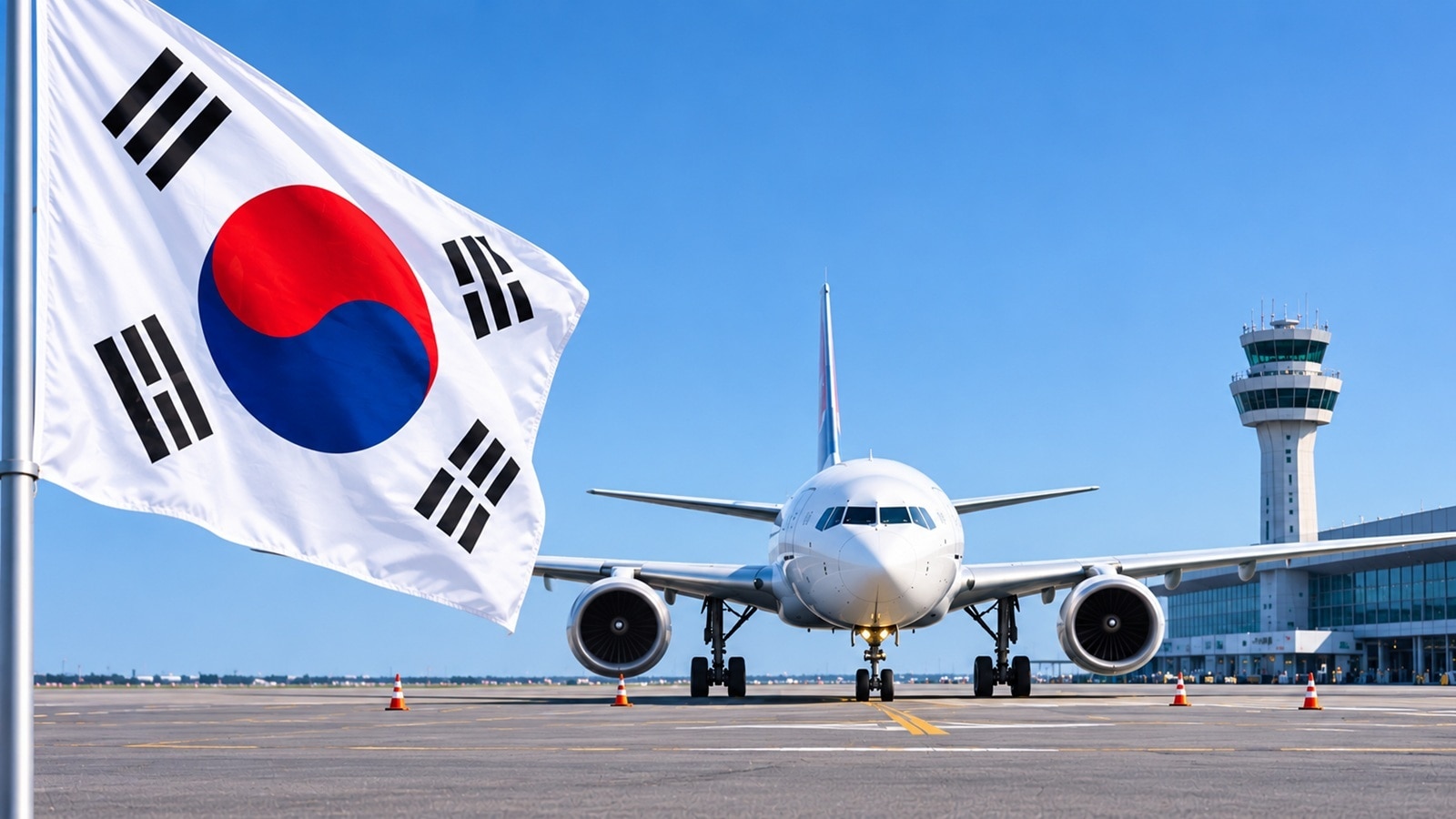
South Korea halts takeoffs and landings for 35 minutes. The stock market opens an hour late. Police officers escort tardy teenagers on motorcycles with sirens blaring. Construction crews drop their jackhammers.
Foreign journalists eat it up. They frame this annual national paralysis during the College Scholastic Ability Test, known locally as the Suneung, as an inspiring display of collective national solidarity. Look at how much this country values education, they gush. Look at the discipline. Look at the sacrifice.
They are completely missing the point.
What the rest of the world mistakes for a charming cultural quirk is actually a symptom of an economic and psychological chokehold. Grounding commercial aviation for a standardized English listening test is not a triumph of educational devotion. It is an admission that a single, eight-hour multiple-choice exam holds so much disproportionate power over human survival that an entire G20 economy must flatline to protect the acoustics of a classroom.
The Myth of the Noble Sacrifice
Let us look at the actual mechanics of what happens on that Thursday in mid-November.
During the English listening comprehension section—typically running from 1:05 PM to 1:40 PM—the Ministry of Land, Infrastructure and Transport restricts all aircraft from taking off or landing across the entire country. Planes already in the air are forced to hold at altitudes above 3,000 meters (roughly 10,000 feet). Dozens of flights are rescheduled, delayed, or rerouted. Simultaneously, the Korea Exchange delays its opening bell from 9:00 AM to 10:00 AM, and public offices shift their working hours back by an hour to keep commuter traffic off the roads.
The lazy consensus in international journalism treats this as a logistical marvel. "How incredible that a nation bands together for its youth!"
Ask anyone who has actually worked in East Asian corporate strategy or aviation logistics, and you will hear a very different assessment. When you force international carriers to burn extra fuel holding at 10,000 feet and compress trading windows on one of Asia's most active equity markets, you are not demonstrating efficiency. You are subsidizing a broken meritocratic bottleneck.
I have sat in boardrooms in Seoul where hiring managers openly admit they filter resumes exclusively by the university tier a candidate unlocked on that single November afternoon ten years prior. A teenager does not need police escorts and grounded Boeing 777s if the test is merely an academic benchmark. You only deploy state-level emergency infrastructure when the test functions as a permanent caste-sorting mechanism.
Why Aviation and Finance Bow to a Scantron Sheet
To understand why the Korea Exchange and Incheon International Airport bend the knee to high school seniors, you have to understand the SKY cartel.
In South Korea, elite social mobility routes overwhelmingly through three institutions: Seoul National University, Korea University, and Yonsei University. Historically, graduating from one of these three institutions has served as the primary golden ticket into the chaebol—the massive, family-controlled conglomerates like Samsung, Hyundai, and SK Group that dominate the national economy.
When your entire lifetime earning potential, social status, and marriage prospects hinge on a single day's performance, the stakes cease to be educational. They become existential.
If a low-flying Airbus A380 rattles the windows of a high school in Gangnam during the English audio track, it is not just an annoyance. In the hyper-litigious, zero-sum environment of South Korean admissions, an acoustic disruption could trigger lawsuits against the Ministry of Education, mass protests from parents, and political fallout for the ruling administration.
The government does not ground planes out of pure altruism. It grounds planes out of sheer institutional self-preservation. The state knows the pressure cooker it has built, and it knows that any external interference—a honking horn, a jet engine, a traffic jam—will detonate public fury.
Dismantling the "People Also Ask" Fallacies
Whenever this story trends globally, the same naive questions flood search engines. Let us tear apart the false premises behind them.
Does grounding flights actually improve test scores?
This question assumes the problem is ambient noise. It is not. You could put these students inside an anechoic chamber at NASA, and they would still be drowning in cortisol. By the time a South Korean 18-year-old sits down for the Suneung, they have likely spent a decade attending hagwons—for-profit cram schools—often studying until midnight after regular school hours. Sleep deprivation, not airplane noise, is what destroys cognitive performance on exam day. Silencing the sky for 35 minutes while ignoring the fact that teenagers are running on four hours of sleep is like putting a bandage on a broken femur.
Why doesn't South Korea just offer the exam multiple times a year like the SAT?
Western observers always ask this, assuming Korea simply hasn't thought of modular testing. They have. The barrier is cultural obsession with absolute, simultaneous standardization. In a society deeply skeptical of subjective admissions criteria—where high-profile scandals involving forged internships and parental influence have triggered massive street protests—the Suneung is viewed as the last incorruptible arbiter of fairness. Everyone takes the exact same questions at the exact same second. Offering multiple test dates introduces statistical equating, which the public distrusts. Therefore, the country remains trapped in a single-day, high-stakes format that requires halting air traffic to maintain a controlled laboratory environment.
Isn't this level of discipline the reason for South Korea's economic miracle?
This is the most dangerous myth of all. Standardized test prep drove the "Miracle on the Han River" during the 1970s and 1980s, when the economy needed disciplined, uniform white-collar workers to execute industrial catch-up. Today, South Korea is no longer a catch-up economy; it is a frontier innovator competing in artificial intelligence, semiconductors, and cultural exports. Memorizing obscure English vocabulary words that even native speakers never use does not produce creative engineers or visionary founders. It produces exhausted rule-followers.
The Hidden Bill Nobody Calculates
When financial journalists report on the one-hour delay of the Korea Exchange (KRX), they usually mention that trading volume shifts slightly and life goes on. That is surface-level reporting.
Modern global markets do not operate in isolation. When Seoul delays its open by 60 minutes, it creates an artificial liquidity gap during the crucial morning overlap with Tokyo, Hong Kong, and Singapore. Algorithmic trading desks have to adjust execution schedules. Institutional investors managing cross-border Asian portfolios face delayed price discovery on major tech bellwethers like Samsung Electronics and SK Hynix.
Meanwhile, in the aviation sector, air traffic control (ATC) does not simply press a pause button and walk away for 35 minutes. Managing a nationwide ground stop requires complex metering hours in advance. Incoming international flights from North America and Europe have to adjust cruise speeds mid-flight or enter holding patterns, burning thousands of gallons of jet fuel and throwing off gate turnaround schedules at Incheon—one of the world's busiest cargo and transit hubs—for the remainder of the evening.
And what about the domestic human cost? Millions of salaried workers have their commutes forcibly shifted, compressing evening rush hour and disrupting supply chains, logistics deliveries, and medical appointments.
The nation absorbs tens of millions of dollars in hidden friction costs every single year to protect the integrity of a multiple-choice exam whose predictive value for actual workplace innovation is minimal.
What Needs to Change (And Why It Won't Happen Easily)
If you are an educator, policymaker, or business leader watching this spectacle, stop romanticizing it. Look at the demographic reality staring South Korea in the face.
South Korea currently holds the lowest total fertility rate in the world, hovering near 0.7 children per woman. That is a demographic collapse in slow motion. When you ask young South Koreans why they are refusing to have children, the astronomical cost of private education—the hagwon arms race designed entirely around beating the Suneung—consistently ranks at the very top of the list.
Families spend upwards of 10% to 20% of their household income on cram schools just so their child can survive those eight hours in November. The system is literally pricing the next generation out of existence.
To be fair, the Suneung system does have one undeniable strength: radical transparency. Unlike the American Ivy League admissions model—which hides behind opaque "holistic" criteria that frequently favor legacy wealth, donor status, and curated extracurriculars—the Korean exam is ruthlessly objective. A kid from a rural farming village in Jeolla Province can outscore the son of a Seoul billionaire on the exact same sheet of paper, and no admissions officer can take that away. That objectivity is why the Korean public defends the exam so fiercely, and why dismantling it carelessly could invite massive corruption.
Acknowledge that upside. Respect why it exists. Then admit that the cure has become worse than the disease.
If South Korea wants to survive its demographic winter and unleash genuine economic dynamism, the solution is not better acoustic insulation or smoother flight diversions. The structural fixes are obvious, even if they are politically radioactive:
- Decouple corporate hiring from university pedigree. Major conglomerates must strip university names from initial resume screenings—a "blind hiring" practice some public enterprises have experimented with, but private giants still resist. When companies hire based on verifiable skills and portfolios rather than where a candidate sat at age 18, the Suneung loses its monopoly overnight.
- Shift from one-shot ranking to competency thresholds. Instead of turning the exam into a hyper-granular ranking tournament where one wrong answer drops a student down a university tier, convert the Suneung into a pass/fail qualification benchmark. Once a student clears the academic baseline, universities should evaluate actual subject-matter aptitude.
- Break the hagwon feedback loop. Stop designing exam questions so convoluted that public high school curricula cannot possibly prepare students for them. Historically, the Ministry of Education has tried to eliminate "killer questions" (ultra-difficult problems designed solely to separate the top 1% of test-takers), yet cram schools immediately adapt. Until the test measures actual comprehension rather than trick-question pattern recognition, parents will keep mortgaging their futures to private tutors.
Stop Clapping for a Cage
The next time you see a viral clip of a South Korean police officer sprinting a panicked teenager into a school gate seconds before the doors lock, resist the urge to hit the heart button.
You are not watching a heartwarming story about community support. You are watching a society trap its brightest young minds in a high-stakes survival game, then congratulating itself for holding the doors open while they run inside.
A healthy, confident education system does not need to ground commercial airliners to function. When a country has to silence the sky just to let its children take a test, the noise isn't coming from the airplanes.