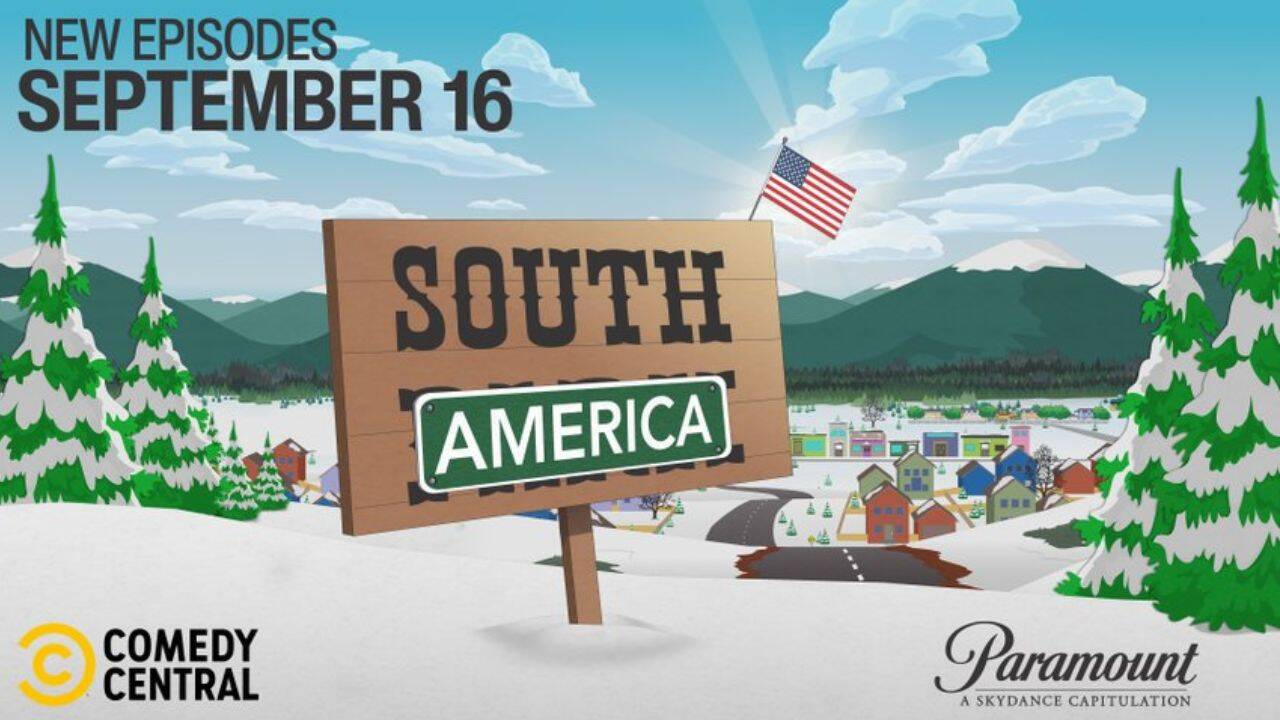
Every lazy culture critic on the internet is currently popping champagne over the latest South Park stunt. They call it a masterclass in political satire. They claim Trey Parker and Matt Stone are holding up a vital mirror to modern geopolitics with their sharp jab transforming the fictional mountain town into South America. It is the exact same superficial hot take recycled every single time Comedy Central drops a special.
Let us stop pretending this routine is revolutionary.
When a show that built its entire empire on being an equal-opportunity offender starts playing safety-first identity politics and leaning into predictable geopolitical tropes, it has not evolved. It has aged out. I have watched television executives greenlight lazy shock-humor for two decades, and I can spot a creative retreat disguised as boldness from a mile away. The consensus view says this latest stunt proves the creators still possess their edge. The reality is far worse. They have traded genuine subversion for comfortable partisanship because true disruption no longer pays the bills quite like tribal applause does.
The Myth of Equal-Opportunity Offense
We need to dismantle the foundational lie of modern satire. The common narrative frames South Park as the lone wolf howling against political correctness from all directions. For years, that reputation was earned. They mocked Al Gore with the exact same venom they reserved for the Catholic Church. They treated everyone as fair game.
That model died somewhere around the Trump administration.
When satire becomes predictable, it stops being satire and morphures into comfort food for cynics. Imagine a scenario where a comedy writer looks at a complex international migration crisis and decides the funniest possible angle is a cheap geographic pun backed by recycled caricature. That is not punching up or punching down. That is punching sideways at a target everyone in a Manhattan writers' room already agrees is fair game.
Parker and Stone used to despise easy targets. Now, they pander to the exact demographic they used to skewer: self-satisfied media consumers who want to feel smart for laughing at headlines they read on their phones five minutes before airtime.
The Economics of Safe Subversion
Why does this happen to every long-running creative enterprise? Simple economics.
When you sign multi-hundred-million-dollar streaming deals, your risk tolerance plummets toward zero. You cannot alienate the subscriber base. You have to maintain the illusion of danger while executing zero actual risk.
True satire requires genuine unpredictability. It demands that the creator has skin in the game, that they are willing to alienate their own loudest fans. When South Park takes a pop-culture headline, runs it through a 22-minute factory line, and serves it lukewarm to an audience waiting to share a screenshot on social media, they are operating as a utility company, not a provocateur. They are delivering electricity to the outrage machine.
Critics love to talk about how the show keeps its finger on the pulse. Let us look at the actual mechanics of modern production timelines. By the time a six-day-turnaround episode hits the screen, the cultural conversation has already moved on twice. What feels like an instant reaction is actually a sluggish echo of Twitter discourse from three days prior.
What Real Satire Looks Like
If you want to see what happens when art actually disrupts the status quo, look at media that loses money, alienates sponsors, and gets pulled from shelves. Real subversion costs the creator something. It does not earn a standing ovation at a Hollywood gala or trigger a predictable cycle of praise from entertainment journalists desperate for clickbait.
The defense mechanism for the show's defenders is always the same: You just do not understand the irony. Trust me, I understand the irony completely. I also understand that irony has become the ultimate shield for creators who are too tired or too rich to actually take a stand. When everything is a joke, nothing matters. And when nothing matters, the status quo wins every single time.
Stop grading television on a curve because you remember when it was dangerous in 1999. Judge it by what it is doing right now.
They did not skewer the geopolitical landscape. They hid behind a punchline because they were too afraid to write an actual joke.