Tech billionaires love setting deadlines they can't keep. It's practically a sport. The latest calendar casualty is the orbital data center—the wildly sci-fi idea that we should blast artificial intelligence hardware into low Earth orbit to save our melting terrestrial power grids.
Elon Musk wants you to believe that a network of floating AI servers is just two or three years away. Jeff Bezos thinks that timeline is completely disconnected from reality.
During an interview, the Amazon and Blue Origin founder didn't mince words. He called the two-to-three-year deployment window "a little ambitious," adding that nobody actually knows how long it will take to make space-based computing a functional business model. Bezos even poked fun at his rival's habit of inflating timelines, suggesting Musk's internal logic is basically: If you want it to happen in six years, tell everyone it'll take three.
Bezos isn't abandoning the idea. He thinks orbital data centers are a very realistic destination. Blue Origin filed paperwork with the Federal Communications Commission for Project Sunrise, a massive initiative aiming to put 51,600 data center satellites into orbit, supported by a communication mesh called TeraWave. But expecting this to happen by 2028 ignores the laws of economics and physics.
Understanding why this timeline is slipping reveals the massive infrastructure bottlenecks threatening the AI boom back on Earth.
The Cold Math Behind the Space Race
The urge to throw chips into space doesn't stem from a sci-fi obsession. It's born out of desperation. Terrestrial data centers are running out of power and land. Tech giants are expected to spend $785 billion on infrastructure this year, climbing toward $1 trillion by 2027. They're buying up old nuclear plants and building massive campuses, like Amazon's $25 billion project in Mississippi, just to keep the lights on for AI training models.
Space seems like the ultimate escape hatch. The logic is simple enough:
- Infinite Energy: Satellites get direct, unshielded access to solar power.
- Zero Land Use: No fighting with local utility companies or zoning boards over acreage.
- Free Cooling: Space is cold, which theoretically solves the thermal management issues that plague hot server rooms on Earth.
But Bezos points out that the current economic balance sheet makes no sense. Right now, terrestrial data centers spend less than 15% of their total cost of ownership on electricity. The remaining 85% goes toward building construction, operations, and the absurdly high price of advanced semiconductor chips.
Moving to space eliminates that 15% energy cost because solar power is free. But it multiplies the other 85% by an order of magnitude.
The Two Bottlenecks Grounding the Industry
You can't build a sustainable business when your supply chain relies on disposable multi-million-dollar hardware. Orbital data centers won't work until two specific things happen.
1. The Cost of Silicon Must Crash
AI chips are too expensive to launch into an environment where they will rapidly degrade. Solar radiation degrades electronics. Orbital hardware faces harsh thermal cycling—swinging from hundreds of degrees in direct sunlight to hundreds of degrees below zero in the shadow of the Earth.
If an enterprise-grade AI chip costs tens of thousands of dollars and has a limited lifespan in orbit before radiation destroys it, the math fails. Chip prices must drop drastically to make them expendable assets in orbit.
2. Launch Expenses Need a 90% Haircut
While rocket launches are cheaper than they were a decade ago, they aren't cheap enough to haul heavy data centers into space. Bezos estimates that launch costs must decline by a factor of 10 before orbital servers can compete with a concrete building in Virginia or Mississippi.
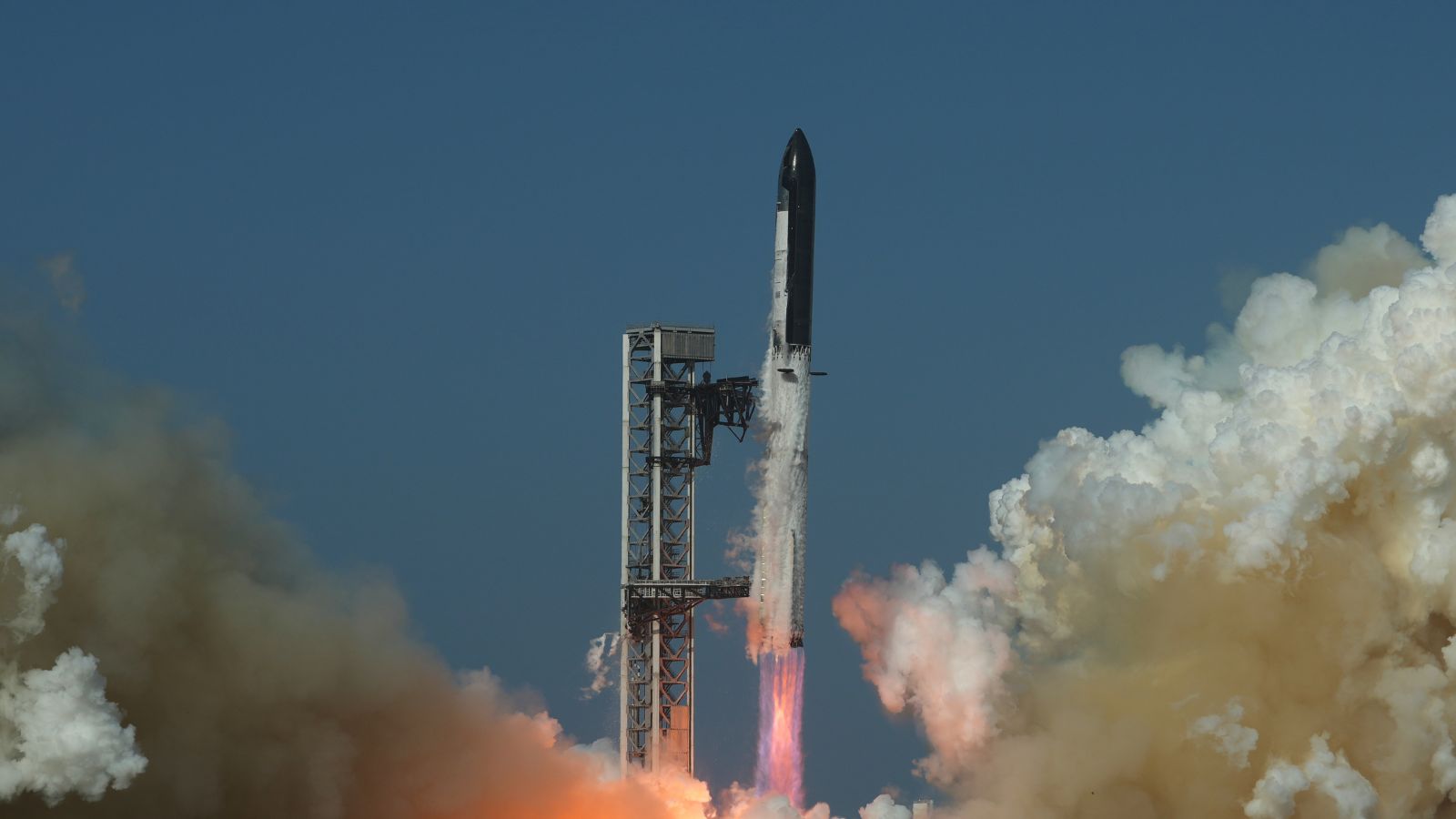
That massive cost reduction is exactly what Blue Origin is trying to achieve with its heavy-lift New Glenn rocket, and what SpaceX is chasing with Starship. Until those launch vehicles reach a high-frequency, fully reusable operational cadence, the weight of heavy server racks, cooling systems, and structural framing remains cost-prohibitive.
The AI Bubble Misdirection
While critics look at these setbacks and scream that the AI bubble is popping, Bezos remains remarkably unbothered. He argues that even if the current market suffers from a capital-spending bubble, the underlying infrastructure investment is incredibly healthy for long-term technological progress.
The tech frenzy means almost any experimental project can secure funding right now. Investors don't yet know how to separate the good ideas from the bad ones. But the successful projects will eventually pay for all the failures.
Because the space timeline is lagging, the immediate investment thesis for ground-based infrastructure hasn't changed. Companies must arrange for as much terrestrial data center capacity as possible in the near term. The cloud isn't leaving the ground anytime soon.
Moving Your Infrastructure Strategy Forward
If you're managing infrastructure budgets or looking at tech investments, don't build your roadmaps around orbital timelines. The immediate play requires focusing on local realities while preparing for an eventually distributed network.
- Secure Terrestrial Power Now: Stop waiting for a magical efficiency breakthrough. Lock in grid capacity, look at alternative energy partnerships (like small modular nuclear reactors), and focus on physical site acquisition.
- Monitor Project Sunrise and TeraWave: Watch Blue Origin's regulatory filings and initial test flights. The company wants to start deploying its network by late 2027. Treat these as early-stage experiments rather than viable commercial options.
- Design for Edge Flexibility: When space data centers finally arrive, they will likely handle specific edge-computing or remote-processing workloads rather than replacing core cloud storage. Build your software architecture to handle highly distributed, variable-latency nodes so you're ready whenever the hardware finally launches.
The transition of heavy computing from Earth to space will happen. It's a realistic long-term bet. Just don't plan your budget around it happening before the decade ends.