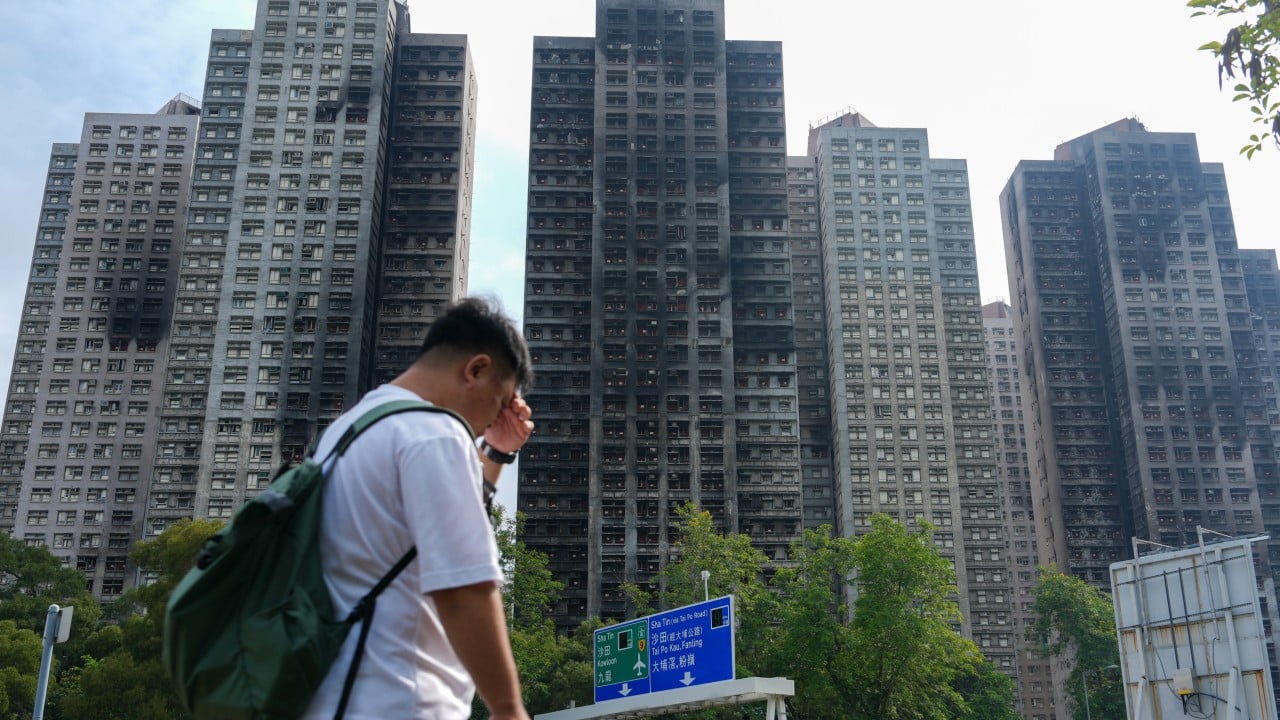
The smell of charcoal does not leave a concrete stairwell easily. Weeks after the black smoke cleared from the skies over Tai Po, the scent remained trapped in the porous walls, a quiet reminder to every resident who walked up and down the building. For those who live in the older residential blocks of Hong Kong’s New Territories, fire is not an abstract hazard listed in a government safety brochure. It is a neighbor that lives in the walls.
Think of an old building as a living creature. It breathes through its ventilation shafts. It stays warm through miles of copper wiring snaking behind plaster. But when that creature grows old, its defense systems fail.
When the alarms finally went off during the recent Tai Po blaze, the response was a familiar choreography of panic and bravery. Sirens cut through the humid afternoon air. First responders rushed into a choke hazard. But as the official investigation finalized its initial hearings, the conversation shifted away from the immediate chaos of that afternoon toward something far more structural, systemic, and deeply human.
The investigation did not just find faulty wires. It uncovered a quiet culture of compromise.
The anatomy of a blind spot
Every regulatory failure begins with an assumption that nothing will go wrong today. In the dry language of the official probe, experts spent hours dissecting the failure of active and passive fire protection systems. They talked about fire doors that failed to close automatically, missing compartmentation, and outdated warning systems that stayed silent when they should have screamed.
But consider what happens on the ground long before a match is struck.
Let us look at a hypothetical resident named Wah. He runs a small dry-goods business on the lower levels of a decades-old composite building, while sleeping in a partitioned space upstairs. To Wah, a fire door is not a critical life-safety barrier meant to withstand one thousand degrees of heat for two hours. To him, it is a heavy piece of wood that blocks the breeze on a hot July morning. So, he wedges a wooden block under it.
He needs air. He gets convenience.
But when a fire breaks out three floors below, that single wooden block transforms the stairwell from an escape route into a chimney. The smoke, thick with toxic carbon monoxide, rushes upward at several meters per second. The trap snaps shut.
The expert panel pointed out that more than sixty percent of old buildings inspected in the district showed similar minor, daily infractions. A blocked corridor here. An uninspected extinguisher there. None of these actions are malicious. They are born from the friction of modern life scraping against old infrastructure. We trade tiny increments of safety for tiny increments of comfort, completely unaware that we are compiling a debt that the universe eventually collects.
The arithmetic of survival
During the hearings, structural engineers put forward a series of sweeping reforms. They want mandatory upgrades for buildings constructed before the mid-1990s. They want wider enforcement zones. They want smart sensors that communicate directly with the fire services department the moment ambient temperatures spike.
The math behind these proposals is clear. Upgrading a single older high-rise with modern fire shutters and integrated sprinkler systems costs significant capital. To a building management committee made up of retired pensioners, that number looks like an impossible mountain.
Here is the real problem. The cost of prevention is always visible, categorized in neat columns on a spreadsheet. The cost of a catastrophe is completely invisible until the day it happens.
How do you value the peace of mind of an old woman living on the twelfth floor who knows her building can protect her for the forty-five minutes it takes for a ladder truck to extend to her window? How do you quantify the weight of a firefighter’s gear as he climbs a dark, smoke-logged stairwell, knowing the building's wet risers might not have any water pressure when he reaches the top?
The panel’s report made it clear that relying on voluntary compliance is a failed strategy. The human brain is simply not wired to fear a statistical probability. We see a clear sky and assume it will never rain. The experts are arguing that the state must step in to force our hand, transforming safety from an individual choice into a non-negotiable public utility.
Where the smoke settles
But the proposed reforms face a wall of practical friction. If the government mandates that every old building must install secondary escape routes or advanced fire-retardant barriers, where does the space come from?
Tai Po is a tapestry of history, where wet markets sit beneath high-rises and narrow alleys serve as logistics hubs for hundreds of families. You cannot simply rewrite the geometry of these streets with the stroke of a pen.
If you tighten the rules on subdivided flats—the absolute epicenter of vulnerability in these incidents—you run headfirst into a housing crisis. Tenants live there because they have nowhere else to go. If an inspector shuts down an unsafe unit because its escape window is blocked by a makeshift kitchen, the tenant does not magically find a safer apartment. They often find themselves on the street.
Safety is expensive. Poverty is more expensive.
This is the knot the investigators are trying to untangle. True reform cannot just be a list of penalties and prohibitions. It must be an economic blueprint. The experts suggested creating a centralized subsidy fund, a mechanism where the city absorbs the financial shock of upgrading these old structures so the burden does not fall entirely on the vulnerable.
The final equation
As the policy debates continue in air-conditioned legislative chambers, the families of Tai Po continue their routines. The blackened windows of the affected block are eventually replaced. New concrete hides the soot.
But the underlying reality remains unchanged. Every old building is ticking. Not because anyone wants a tragedy, but because time moves forward while infrastructure stays frozen in the year it was poured.
The true test of the Tai Po fire probe will not be the volume of the report it produces or the gravity of the speeches given by the panel. The test will be measured in things that do not happen. It will be found in the fire that breaks out five years from now but gets contained to a single room because a fire door actually worked. It will be found in the evacuation that takes five minutes instead of fifteen because the corridors were clear.
We walk past these vulnerabilities every afternoon. We look at exposed wires, rusted fire hydrants, and cluttered stairwells, and we look away because fixing them requires time, money, and difficult conversations. We assume someone else will handle it. We assume the system works.
Until the sirens start again.