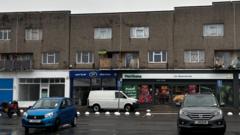
You walk down Les Quennevais Parade and something feels off. The shutters are down on units that used to anchor the community. For decades, this corner of St Brelade acted as Jersey’s reliable secondary shopping hub. It was the dependable alternative to the hassle of driving into St Helier. Today, the gaps between open doors are wider, and the "To Let" signs are staying up much longer.
This isn't just an aesthetic issue for the parish. The visible vacancies at Red Houses and the surrounding precinct point directly to a much deeper crisis hitting the island. Local families are dealing with an unrelenting squeeze on their disposable income, while independent business owners are getting crushed by overhead costs that simply don't match the size of the local market.
When the cost of living spikes, retail hubs are always the first to show the damage. St Brelade is finding out that even a wealthy parish isn't immune to structural economic shifts.
The Reality Behind the Empty Shutters
For a long time, the retail cluster at Les Quennevais thrived because of convenience. It boasts free parking, proximity to large anchors like Waitrose and Marks & Spencer, and a dense surrounding population of roughly 12,000 households. It had all the ingredients for sustained success. Yet, multiple retail and cafe units across the parish have sat vacant, with asking rents hovering between £30,000 and £48,000 per year.
For a small independent trader, that entry price is brutal. When you add Jersey’s specific freight costs, a tight labor market, and commercial electricity rates, the math stops working. Local retailers aren't just competing with online giants anymore. They are competing with the sheer reality that their customer base has less money to spend after paying for essentials.
A recent report by Policy Centre Jersey highlighted the scale of this structural pressure. The data revealed that 64% of islanders now identify the cost of living as the most pressing issue facing Jersey. That number climbs to an alarming 82% among single parents. When the majority of a community is focused entirely on survival and fixed bills, discretionary spending at local boutiques and cafes evaporates.
The Island Premium is Suffocating Local Retail
It’s no secret that living on an island comes with a price premium, but the gap has stretched to a breaking point. Groceries in Jersey are, on average, 14% more expensive than in the UK. For families relying on lower-priced budget options, the reality is even worse. Because Jersey lacks the large-scale discount supermarkets common on the UK mainland, low-income households often pay up to 49% more for their weekly shop than their UK counterparts.
The Jersey Competition Regulatory Authority looked into these grocery prices and found no evidence of corporate profiteering. Instead, the high prices stem from fundamental systemic issues:
- The tiny size of the local Jersey market prevents economies of scale.
- Double-handling freight costs to move goods across the Channel.
- Higher local labor costs driven by the island’s housing crisis.
While average household incomes in Jersey have historically trended higher than in the UK, the soaring cost of housing and food has completely eroded that advantage. People don't have the spare cash to wander down to the local shopping parade and spend money on non-essentials. Every pound spent on an inflated grocery bill or a soaring mortgage payment is a pound taken directly out of the St Brelade retail economy.
Commercial Landlords and the Vacancy Trap
There’s a growing frustration among St Brelade residents regarding the lack of flexibility from commercial property owners. When a shop sits empty for months, or even years, it creates a dead zone on the high street. It drags down the footfall for the surviving businesses next door.
Part of the issue lies in how commercial properties are valued. Landlords are often hesitant to lower their asking rents because a drop in rent can immediately trigger a reduction in the official paper value of the building. They prefer to let a unit sit empty, hoping for a tenant who will pay the historic rate, rather than adjusting to the current economic climate.
This rigid approach doesn't work in an economy experiencing a major cost of living squeeze. The Sustainable Economic Development Ministry has previously raised concerns about town center vacancies, suggesting that more onus needs to be placed on landlords to justify why units are left empty. While those conversations usually center on St Helier's Queen Street or King Street, the exact same principle applies to St Brelade. If landlords don't offer flexible terms, short-term pop-up options, or realistic stepped rents, the vacancies will simply persist.
What St Brelade Needs to Move Forward
Fixing the empty shop issue in St Brelade isn't about launching a generic "shop local" marketing campaign. It requires tangible, structural changes that address both business costs and consumer spending power.
First, the planning and regulatory system needs to get out of its own way. The Policy Centre Jersey report noted that environmental and bureaucratic restrictions heavily delay development and raise consumer prices. Lowering the barriers for new, low-cost retail entries would give residents more affordable options locally, keeping money in the parish rather than seeing it leak to online retailers.
Second, landlords must adapt to reality. Transitioning long-term vacant units into mixed-use spaces, community hubs, or short-term spaces for start-ups would restore footfall to places like Les Quennevais Parade. A vibrant street with lower-paying tenants is infinitely better for the parish economy than a row of dark, shuttered windows.
Finally, addressing the housing supply remains the core driver of the cost of living crisis. Until housing costs are stabilized, local wages will continue to be swallowed up by rent and mortgages, leaving the retail sector out in the cold. St Brelade cannot decouple the health of its high street from the financial health of the people who live around it.