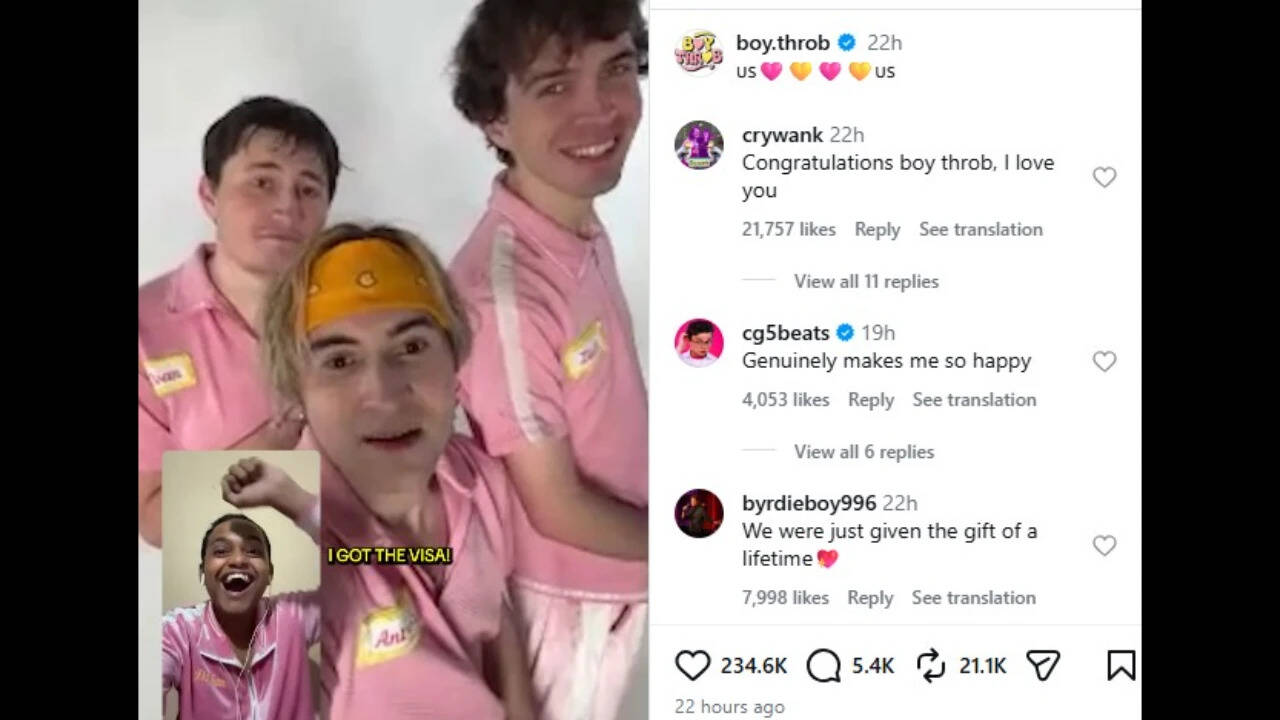
The envelope arrived on a Tuesday.
For months, the mailbox on the porch had been nothing more than a concrete oracle of silence. Inside that thin white sleeve sat a government stamp, a signature, and nine letters that changed an entire trajectory overnight: O-one visa approved.
Darshan Magdum exhaled. It was a breath he had been holding since the day the audition notices went out, since the choreography sessions bled into the small hours of the morning, since the realization set in that talent alone does not clear customs.
We talk about global music as a borderless playground. Digital audio files cross oceans in milliseconds. A track recorded in Mumbai can stream in Los Angeles before the engineer has even saved the project file. Yet the human beings behind the sound remain tethered to paper. Passports, stamps, quotas, committees.
Think about the sheer weight of anticipation. Thousands of miles away from home, standing on the edge of a cultural phenomenon, waiting for a bureaucrat to decide if your art qualifies as extraordinary.
That word is heavy. Extraordinary.
It sounds like a comic book descriptor or a lifetime achievement award. But in immigration terms, it is a technical threshold. To earn an O-one visa, an artist must prove sustained national or international acclaim. They must show that they are at the top of their field, not just by their own estimation, but through critical consensus, media coverage, and undeniable proof.
For Darshan, that proof looked like long rehearsal days, rising digital metrics, and a growing community of listeners who cared deeply about representation. He is part of an emerging wave: an Indian member of an American boy band, navigating a musical landscape where cultural crossover is finally moving past novelty into genuine integration.
But enthusiasm from fans does not automatically translate to government approval.
The internet noticed first. Social media feeds filled with anxious updates, fan edits, and countdown clocks. When an artist builds a grassroots digital movement, their followers become an unexpected kind of advocacy group. They amplify the urgency. They turn a lonely legal battle into a public shared experience.
Consider what happens when the system moves slower than the culture.
Fans tracked every rumor. They analyzed visa processing times like fantasy football statistics. Every delay felt personal because, in the modern era of parasocial connection, supporters feel like co-architects of an artist's career. When Darshan faced bureaucratic hurdles, his community treated those obstacles as their own.
This is the hidden friction of modern stardom. We see the polished music videos, the synchronized choreography, and the effortless smiles on stage. We rarely see the lawyer's office stacked with three-inch binders of press clippings. We rarely see the artist sitting in a quiet room, wondering if their momentum will evaporate before the paperwork clears.
Immigration law was largely written for an industrial economy. It struggles to categorize the modern creator. How do you quantify viral reach? How do you weigh streaming numbers against traditional newspaper reviews? Legal frameworks often lag behind the reality of how global youth culture actually functions.
Yet, when the approval finally dropped, the relief was instantaneous.
The internet did what it does best: it erupted. Celebration flooded the timelines. The narrative shifted instantly from anxiety to anticipation. The boy band was whole again. The rehearsal room doors swung open.
Darshan’s story is not just about a visa stamp. It is a snapshot of how contemporary art is built—collaborative, cross-continental, and held together by both meticulous legal preparation and the fierce loyalty of people who refuse to let their favorite voices get silenced by red tape.
The paperwork is filed. The stamps are dry. The spotlight is waiting.
And the music finally starts.