Politicians love digging holes with taxpayer money. It looks like work. It requires hard hats, press conferences, and oversized scissors for ribbon-cutting ceremonies.
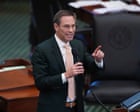
When Texas Democrat Nathan Johnson launched a campaign salvo against a $110 million state broadband grant awarded to Elon Musk’s Starlink, he played directly into this classic theater. He called the deal lopsided. He claimed the fact that low-Earth-orbit satellites scooped up 99% of the funding "sure looks like" corruption. The mainstream media immediately swallowed the bait, painting a picture of backroom deals, partisan favors, and squeezed-out local businesses.
They are all missing the blindingly obvious economic reality.
Awarding rural broadband funds to satellite providers over traditional ground-based fiber isn't cronyism. It is a rare, desperate flash of regulatory competence. The real scandal isn't that Starlink took the cash. The real scandal is that legacy telecom companies expected taxpayers to keep financing their impossible, hyper-expensive pipe dreams.
The Financial Insanity of Rural Fiber
Local fiber-optic providers are furious. Eight of them even wrote a letter complaining that the Texas Broadband Development Office altered its criteria to favor satellite tech.
Let them cry.
For two decades, the telecom lobby has convinced politicians that digging trenches and laying glass cables to every isolated house in America is a basic human right. They have extracted billions from federal and state programs like the Broadband Equity, Access, and Deployment (BEAD) program and the Rural Digital Opportunity Fund (RDOF).
The math behind rural fiber is broken.
Imagine a scenario where a state needs to connect a cluster of isolated ranches in West Texas. The nearest fiber backbone is 40 miles away. Trenching fiber through rocky, unyielding Texas terrain costs anywhere from $30,000 to $100,000 per mile.
To connect five households, a legacy telecom firm will happily bill the state $2 million. That scales out to $400,000 per home just for the infrastructure. The hardware becomes obsolete before the company even breaks even on maintenance.
It is a monumentally stupid use of capital.
The legacy providers do not care because they are spending other people's money. They bake massive profit margins into these deployment contracts, drag their feet for years, and then request more subsidies when project timelines inevitably blow out. When Governor Greg Abbott’s office pushed the Broadband Development Office to look at how other states were managing funds, they realized Texas was lagging behind because it was throwing cash into a fiber abyss.
The Satellite Disruption is About Unit Economics
Starlink does not need to dig a single trench to connect a ranch in Loving County. The infrastructure is already floating 350 miles overhead.
The marginal cost for Starlink to add one more rural subscriber is effectively zero. The satellite is already there. The spectrum is already allocated. The user just needs a flat-panel dish that arrives in a cardboard box and plugs into a standard wall outlet.
Consider the baseline comparison:
| Metric | Ground-Based Fiber Option | Low-Earth-Orbit Satellite |
|---|---|---|
| Capital Expenditure Per Rural Home | $20,000 – $100,000+ | ~$500 (Hardware cost) |
| Deployment Timeline | Months to Years | 3 to 5 Days (Shipping) |
| Geographic Limitations | Blocked by rock, terrain, distance | None (Open sky required) |
| Taxpayer Subsidy Required Per User | Exorbitant | Minimal |
When you look at those numbers, giving 99% of a rural connectivity grant to a satellite provider isn't a sign of a rigged system. It is the only logical conclusion for an agency tasked with connecting people quickly and cost-effectively.
Politicians demanding "neutral bidding processes" are actually demanding that we treat vastly inferior deployment methods as equal to superior ones. If one vendor can achieve the mandate for a fraction of the cost, choosing any other vendor is fiscal malpractice.
The Myth of the Disadvantaged Local Business
The central pillar of the anti-Starlink argument relies on sympathy for local internet service providers. We are told these companies are the lifeblood of Texas communities and that they have been unfairly locked out.
I have spent years watching regional monopolies choke out innovation while collecting government checks. These local fiber companies are rarely nimble startups. They are often protected utilities that have carved up territory maps to avoid competing with one another.
Their business model is built on rent-seeking. They do not want to compete on merit, speed, or pricing. They want to compete via regulatory capture. They lobby state legislatures to erect barriers against municipal broadband networks, and then they turn around and demand state grants to build out lines they should have financed themselves decades ago.
When a tech company bypasses their physical infrastructure entirely, their entire house of cards collapses.
The claim that changing grant rules to include satellite providers lacks transparency is a smoke screen. The rules were updated to reflect modern technical realities. Holding onto old guidelines just to protect the balance sheets of eight regional fiber companies would be the definition of actual corruption.
Facing the Downside of the Satellite Monopoly
To challenge the consensus honestly, we must acknowledge the glaring flaw in the current reality.
Relying on Starlink means relying entirely on one corporation controlled by a volatile billionaire. SpaceX owns the rockets, the satellites, and the proprietary consumer tech. There is zero open-source compatibility. If Starlink decides to hike subscription prices by 50% next year, rural Texans have no recourse. The state will have funded a monopoly.
Amazon’s Project Kuiper is scrambling to catch up, but it remains years behind in terms of active constellation density. For now, Starlink is the only game in town for high-speed, low-latency satellite internet.
That concentration of power is uncomfortable. It presents genuine security and economic risks.
But hiding behind that risk to justify spending hundreds of millions on legacy fiber lines is a coward's way out. The solution to a market monopoly is encouraging more aerospace competition, not building obsolete copper and glass ditches across the desert just to make local politicians feel useful.
Nathan Johnson’s promise to launch a massive anti-corruption probe if he wins the attorney general seat is excellent campaign trail rhetoric. It fires up a base that despises Musk’s political alignments. But as a piece of actual policy, it is hollow. Investigating an agency for picking the cheapest, fastest, and most scalable technology available is an upside-down use of state resources.
The state bidding process didn't fail the public. It finally failed the fiber lobby. That is exactly what good governance looks like.