Soft power is rotting.
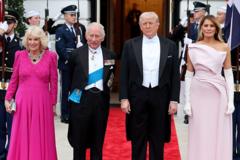
While the mainstream media salivates over the silk thread count of a designer gown or the strategic seating of a tech billionaire next to a European monarch, they miss the glaring reality: the American State Dinner has devolved into a hollowed-out influencer activation. We are told these evenings are the pinnacle of international relations, the "ultimate tool" of the executive branch to grease the wheels of geopolitics.
It is a lie.
The modern State Dinner is a vestigial organ of diplomacy. It is a high-priced masquerade that prioritizes optics over outcomes, substituting actual policy breakthroughs with a carefully curated guest list designed to trend on social media. If you think a three-course meal of Maine lobster and a performance by a legacy pop star moves the needle on trade deficits or defense treaties, you aren’t paying attention to how power actually operates in the 21st century.
The Myth of the "Dinner Table Breakthrough"
The "lazy consensus" dictates that these events provide a rare, informal environment where world leaders can bond away from the cameras. This is a fairy tale. Every second of a State Dinner is choreographed to the millimeter. The seating charts are weaponized. The "spontaneous" jokes are vetted by a team of speechwriters.
Real power doesn't need a tuxedo.
In my years observing the intersection of high finance and federal policy, I’ve seen more consequential decisions made in a fifteen-minute secure video call or a frantic exchange between undersecretaries in a windowless room than in any gilded ballroom. The idea that a King or Queen is swayed by the quality of the Napa Valley Chardonnay is an insult to their intelligence and ours. These dinners are the "theatre" in "political theatre." They exist to signal a relationship that already exists, not to forge a new one.
When the Biden administration hosts a royal family, they aren't negotiating. They are performing a ritual for a domestic audience to prove they have "stature." It is a vanity project funded by the taxpayer, serving as a backdrop for billionaires to network with each other while pretending to care about the "special relationship."
Billionaires are the New Diplomats (And That’s a Problem)
Look at the guest list of any recent State Dinner. You’ll see the usual suspects: Silicon Valley CEOs, hedge fund titans, and the occasional Hollywood darling. The media frames their presence as a sign of America’s "innovation" and "cultural reach."
The truth is more cynical.
The inclusion of the billionaire class isn't about honoring American excellence; it’s about acknowledging who really holds the leverage. When a tech mogul sits at the head table, it isn’t a reward for their contribution to the GDP. It’s a quiet admission that the federal government needs their infrastructure—their satellites, their algorithms, their data—more than it needs the traditional diplomatic corps.
We have outsourced our foreign policy to private interests. By giving these individuals the same status as elected officials and hereditary monarchs, the White House isn't projecting American strength. It is broadcasting its own dependency. These billionaires aren't there to support the President’s agenda; they are there to ensure their global empires remain unimpeded by whatever trivial regulations might be discussed between the soup and the salad.
The Fashion Fallacy: Aesthetics as Distraction
"Who are you wearing?" is the most intellectually bankrupt question in the history of political journalism. Yet, every time a State Dinner occurs, the front pages are dominated by "sartorial diplomacy."
We are told a First Lady choosing a designer from the guest nation is a "subtle nod" or a "powerful message of unity."
Stop it.
It is a dress. It has zero impact on the North Atlantic Council’s decision-making process. It does not lower tariffs. It does not stop a border conflict. Focusing on the aesthetics of the evening is a deliberate distraction technique. It allows the administration to claim a "win" based on "grace" and "elegance" because they have nothing of substance to report from the actual bilateral meetings.
If the most memorable part of a diplomatic summit is the embroidery on a bodice, the summit was a failure. We have traded the hard-nosed realism of the Cold War era for the shallow "vibes" of the Instagram era. We are treating the leadership of the free world like a Met Gala after-party.
The Cost of the "Golden Ticket"
Let’s talk about the logistics. A State Dinner costs hundreds of thousands—sometimes millions—of dollars. This includes the floral arrangements (which are often imported and discarded the next day), the world-class entertainment, and the security detail required to protect a room filled with the world’s most powerful people.
Proponents argue this is "a drop in the bucket" compared to the federal budget. They are wrong, not because of the math, but because of the opportunity cost.
The sheer amount of administrative "bandwidth" consumed by planning these events is staggering. Hundreds of hours are spent by the State Department, the Secret Service, and the White House Social Office on the color of the napkins. Imagine if that energy was redirected toward solving the logistical bottlenecks in our supply chains or streamlining the visa process for high-skilled immigrants.
Instead, we focus on the "pomp."
The Real Winners of the Night
- The Luxury Brands: Free global advertising on the backs of public servants.
- The Donors: A chance to whisper in a Senator’s ear without a lobbyist registration form in sight.
- The Media: Easy, low-effort content that generates clicks without requiring any actual investigative reporting.
The Real Losers
- The Taxpayer: Footing the bill for a party they aren't invited to.
- Diplomatic Efficacy: Losing ground to nations that prefer quiet, results-oriented meetings over loud, flashy banquets.
Why the "Special Relationship" is a Marketing Term
The media loves to use the phrase "Special Relationship" whenever the UK is involved. It’s a cozy, nostalgic term that evokes Churchill and Roosevelt.
In reality, it’s a brand.
Geopolitics is cold, transactional, and increasingly fragmented. The UK needs the US for security and a post-Brexit economic lifeline; the US needs the UK as a reliable proxy in Europe. It’s a marriage of convenience, not a romance. The State Dinner tries to sell us the romance. It uses the King and Queen as props in a heritage film, banking on the American public’s bizarre obsession with royalty to mask the fact that our strategic interests are diverging.
When we see the photos of the King laughing at a joke made by the President, we are supposed to feel a sense of stability. But stability isn't found in a photo op. Stability is found in the deep, unglamorous layers of the bureaucracy that these dinners ignore.
The Unconventional Advice for Future Administrations
If the White House actually wanted to disrupt the status quo and reclaim the power of the State Dinner, they would do the unthinkable:
Make it boring.
Stop inviting the celebrities. Stop the red-carpet arrivals. Fire the "lifestyle" reporters.
Imagine a scenario where a State Dinner consisted of the President, the visiting head of state, and twenty of the most frustrated, mid-level engineers and logistics experts from both countries. No music. No designer gowns. Just a working meal where the goal isn't to "celebrate" the relationship, but to fix a specific, granular problem.
The "status quo" crowd would hate it. The ratings would plummet. But the actual output—the "delta" of progress—would skyrocket.
We have enough "influence." We need more competence.
The Illusion of Access
The most dangerous part of the State Dinner culture is the illusion of access it provides. It suggests that if you are wealthy enough, or famous enough, you can bypass the democratic process and "mingle" your way into policy influence.
It turns the White House into a private club.
When the competitor article gushes over the "star-studded" guest list, they are applauding the erosion of the barrier between public service and private gain. They are celebrating the fact that a billionaire can buy their way into a seat next to a monarch, while the average citizen is lucky if they get a generic response to an email sent to their representative.
Stop Reading the Guest List
The next time you see a headline about a State Dinner, don't look at the dresses. Don't look at the menu. Don't look at which late-night host made the cut.
Look at what wasn't announced the next day.
If there is no joint statement on semiconductor production, no new agreement on carbon credits, and no shift in military posture, then the dinner was nothing more than an expensive catering gig.
We are living through a period of immense global instability. Our "allies" are hedging their bets, our "enemies" are consolidating power, and our domestic infrastructure is creaking under the weight of neglect. In this context, spending a week debating the "vibe" of a royal visit isn't just shallow—it’s negligent.
The State Dinner is a relic of a world that no longer exists. It belongs in a museum, right next to the powdered wigs and the horse-drawn carriages.
If we want to lead the world, we need to stop hosting parties and start doing the work.
Diplomacy is a grind, not a gala.
_*



