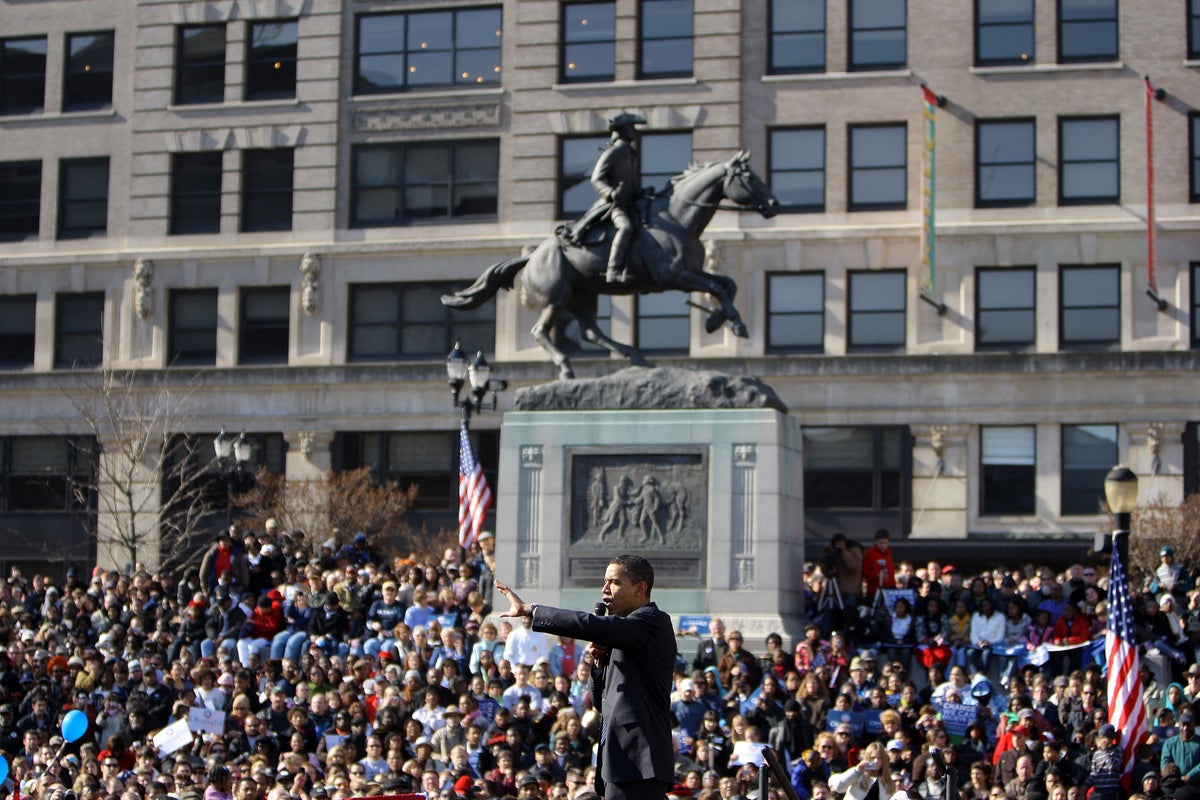
The National Park Service is about to spend your tax dollars on a glorified game of musical chairs.
By relocating the statue of Caesar Rodney—a Delaware Founding Father who owned 200 human beings—from a storage shed in Wilmington to a federal park in Washington, D.C., bureaucrats are performing a masterclass in moral optics. They call it "contextualization." I call it a failure of nerve.
The original article on this move frames it as a compromise, a way to preserve history while respecting modern sensibilities. That is the lazy consensus. It assumes that physically moving a bronze casting three hours south somehow changes the fundamental tension of American memory. It doesn’t. It just exports a local headache to the federal government’s front yard.
The Myth of the Neutral Pedestal
We have been conditioned to believe that statues are history. They aren't. Statues are trophies.
History is a messy, evidentiary process involving primary sources, peer-reviewed journals, and the tireless work of archivists. A statue is a 19th-century PR campaign frozen in metal. When the Rodney statue was erected in 1923, it wasn’t an objective classroom tool; it was a celebratory monument to a specific version of the American story that conveniently omitted the 200 souls Rodney kept in bondage.
The current plan to "install" him in D.C. with updated plaques is a half-measure. You cannot "fix" a monument designed for veneration by adding a small piece of bronze text at its feet. The physical scale of the statue—the high horse, the heroic pose—will always drown out the fine print.
I have watched organizations blow millions on "rebranding" problematic legacies. It never works because they refuse to address the core rot. They think if they change the lighting or the location, the ghost disappears. It doesn't. It just finds a new place to haunt.
Federal Dumping Grounds and the Context Trap
Why D.C.? Because the National Park Service (NPS) operates on a logic of preservation at all costs. They view every hunk of metal from the 1920s as a sacred artifact that must be saved from the "cancel culture" of local municipalities.
But here is the counter-intuitive truth: De-accessioning is a valid form of historical curation.
The NPS is treating the National Mall and its surrounding parks like a warehouse for the country’s unwanted baggage. By accepting the Rodney statue, they are signaling to every city in America that if a monument becomes too radioactive for local politics, the feds will take it off their hands. This isn't curation; it’s a bailout for cowardice.
Consider the "contextualization" argument. The plan is to place Rodney in a setting that explains his role in the Continental Congress alongside his role as a slaveholder.
Imagine a scenario where a corporation caught in a massive fraud scandal decides to keep its disgraced CEO’s portrait in the lobby, but adds a tiny sticker at the bottom explaining the embezzlement. Does that sticker change the fact that the portrait is still in the place of honor? No. It makes the institution look complicit.
The Cost of Keeping the Bronze
Let's talk about the money. Most people think these moves are free. They aren't.
- Transportation: Moving tons of bronze and granite requires specialized logistics and heavy machinery.
- Security: Relocated "controversial" statues become magnets for vandalism. That means increased patrols and surveillance.
- Maintenance: Bronze isn't forever. It requires regular cleaning and chemical stabilization.
We are committing to a perpetual maintenance bill for a monument that the people of Delaware—the very people Rodney supposedly represented—no longer want in their public square. If Delaware doesn't want him, why should the rest of the country pay to keep him polished?
True historical expertise requires knowing when to let go. We are obsessed with the physical object because we are too intellectually lazy to engage with the actual history. We think that if the statue is melted down or put in a museum basement, the history vanishes. This is a fundamental misunderstanding of how memory works. The history of Caesar Rodney is in the letters he wrote, the laws he passed, and the plantation records that name the people he enslaved. It is not in a horse’s hindquarters cast in 1923.
The Better Way Forward
If we actually cared about history rather than "heritage," we would stop trying to save the art and start funding the archives.
Instead of spending six figures to haul Rodney to D.C., that money should go toward digitizing the records of the people he enslaved. Give their descendants a name, a date, and a story. That is real history. That is "contextualization" that actually matters.
The move to D.C. is a sedative. It’s designed to make the controversy go away so everyone can go back to sleep. It allows Delaware to feel virtuous for "removing" it and the NPS to feel scholarly for "interpreting" it.
In reality, it’s just a relocation of the same old problem. We are still prioritizing the comfort of a bronze founder over the dignity of the people he oppressed. We are still afraid to admit that some monuments have a shelf life.
Stop treating the National Parks like a landfill for 20th-century myths. If a statue no longer reflects the values of the community that built it, it doesn't need a new zip code. It needs a museum crate or a furnace.
Everything else is just theater.
Stop asking where the statue should go. Start asking why we are still obsessed with keeping it on a pedestal at all.