Silence.
That is the first thing a mariner notices when the engines die in the middle of the night, three nautical miles off the coast of Oman, where the air tastes of salt and sulfur and the water below is black enough to swallow a star. For twenty-four hours a day, a modern supertanker hums with a low, comforting vibration—a mechanical heartbeat that travels up through the soles of a sailor’s boots, reminding forty or fifty tired men that three hundred thousand tons of steel and crude oil are still moving forward. When that vibration stops, replaced by the metallic shriek of tearing hull plates and the sudden, suffocating bloom of orange heat against the bridge windows, the ocean stops feeling like a highway. It becomes a trap.
Consider a hypothetical sailor on watch—let us call him Mateo, a thirty-two-year-old second mate from Manila, six months into a nine-month contract, counting down the days until he can afford the down payment on a concrete house two hours outside Cavite. Mateo does not read geopolitical white papers. He does not track Brent crude futures on a Bloomberg terminal in London or debate naval deterrence theory in Washington. To Mateo, the Strait of Hormuz is simply a narrow, nerve-wracking corridor of water squeezed between the jagged limestone cliffs of Oman and the low, watchful coastline of Iran—a stretch of sea twenty-one miles wide at its tightest pinch, where you keep one eye on the radar, one hand near the telegraph, and pray that the darkness stays quiet.
Until the night it doesn't.
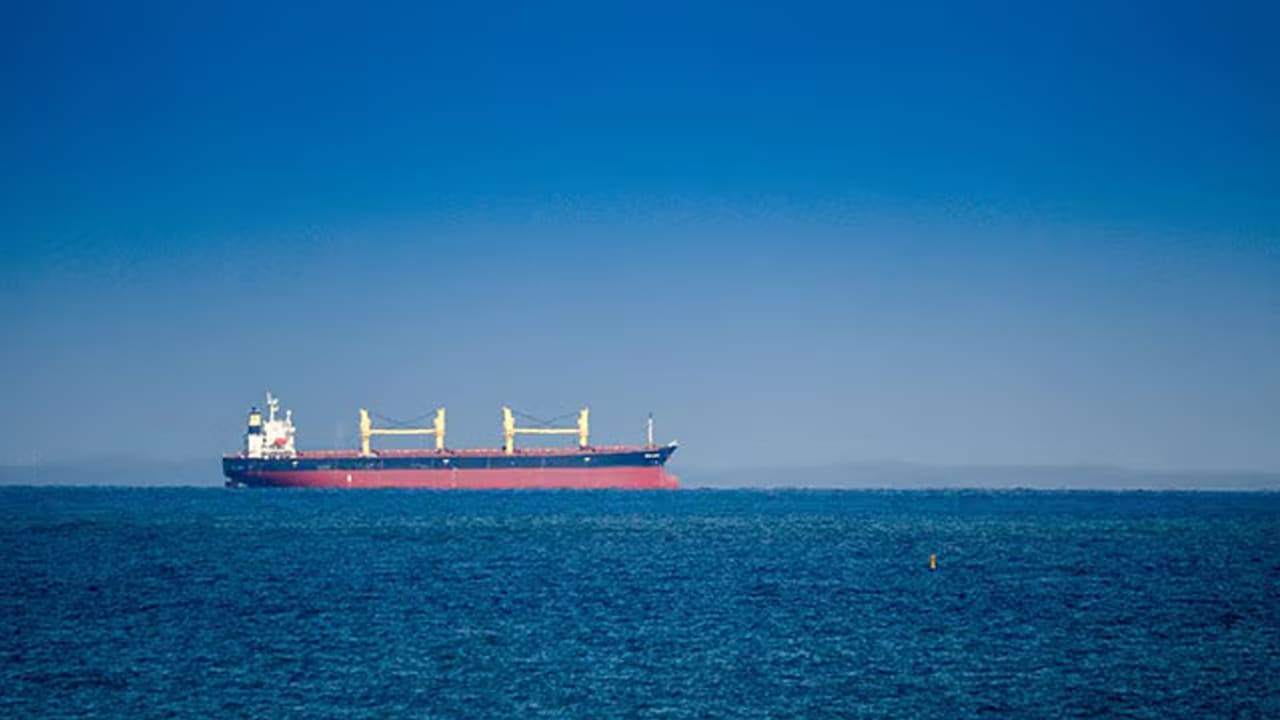
Reports confirmed that two tankers were struck in the Strait of Hormuz, with Iranian authorities stating that an oil vessel was actively on fire. To the casual reader scrolling past a headline between morning meetings, the news registers as a brief flicker of distant trouble—another flare-up in a region perpetually teetering on the edge of combustion. Two ships hit. Smoke on the horizon. Another bulletin buried beneath sports scores and celebrity gossip by lunchtime.
Look closer at that smoke, though, and you realize it is not distant at all. It is curling directly toward your kitchen table, your commute, your grocery bill, and the fragile, invisible plumbing that keeps modern civilization from grinding to a halt.
The Chokepoint Where Everything Passes
To understand why two burning hulls in a narrow strip of Persian Gulf water can send shockwaves through every economy on Earth, stop thinking of the global oil market as a vast, limitless ocean and start thinking of it as a single garden hose.
You can have the largest water tank in the world sitting in your backyard, brimming with millions of gallons, yet if someone steps on the hose with the heel of their boot, not a drop reaches the flowerbed. The Strait of Hormuz is that garden hose. Roughly a fifth of the world’s petroleum liquids—around twenty to twenty-one million barrels every single day—must squeeze through this narrow maritime throat to reach the open waters of the Arabian Sea and the Indian Ocean. Alongside that crude oil moves roughly a quarter of the world’s liquefied natural gas, carried in massive, spherical-tanked vessels bound for power plants in Tokyo, factories in Seoul, chemical complexes in Frankfurt, and fertilizer plants across India.
There is no easy detour. A handful of overland pipelines bypass the strait through Saudi Arabia and the United Arab Emirates, yet their spare capacity covers only a fraction of what moves by sea. When steel burns in Hormuz, the global energy system does not smoothly reroute like traffic around a fender-bender on a suburban highway. It backs up. Instantly.
I remember watching the shipping lanes off Fujairah—just outside the mouth of the strait—during an earlier spike in maritime tensions years ago. Hundreds of colossal vessels sat anchored in the haze like floating cities, waiting for clarity, waiting for insurance underwriters in London to decide whether the risk of a limpet mine, a drone, or an anti-ship missile had crossed the threshold from expensive to uninsurable. You could smell the bunker fuel hanging heavy in the humid air and feel the restless impatience radiating from captains whose schedules were unraveling by the hour. Every day a Very Large Crude Carrier sits idle costs tens of thousands of dollars. Every rumor of an attack sends war-risk insurance premiums leaping by hundreds of thousands of dollars per voyage.
That is the hidden mechanism most headlines miss. You do not need to sink twenty ships to choke the Strait of Hormuz. You do not even need to blockade it with destroyers. You only need to make two vessels burn in the dark, introduce doubt into the minds of shipowners and insurers, and watch fear do the rest.
The Anatomy of a Maritime Flashpoint
Why do tankers become targets in these waters? The answer lies in the brutal logic of asymmetric leverage.
A modern oil tanker is an engineering marvel, yet in military terms, it is a floating giant with no armor and no teeth. Built to maximize cargo capacity and fuel efficiency, a supertanker stretches longer than three football fields, sits low in the water when fully laden, and moves at a ponderous fourteen or fifteen knots. It cannot outrun a fast attack craft. It cannot dodge a low-flying drone or a sea-skimming projectile. Its crew consists of civilian seafarers trained to manage ballast tanks, navigation charts, and cargo manifolds—not to fight off naval strikes in the dead of night.
When an explosion breaches a hull near the waterline, the immediate danger is twofold. First comes the structural shock: seawater rushing into voids, steel buckling under thermal stress, and the terrifying possibility of toxic fumes or secondary ignitions if volatile hydrocarbon vapors meet a spark. Modern double-hull tankers—mandated globally after disasters like the Exxon Valdez—provide a crucial buffer between the outer shell and the inner cargo tanks. That space between the two steel skins has saved countless crews from catastrophic infernos and prevented coastlines from drowning in black sludge.
Yet double hulls are not invincible. When Iranian officials confirm an oil vessel is on fire, the calculus changes from a navigation incident to an environmental and humanitarian emergency. Firefighting tugs must race into contested waters where nobody is entirely sure who fired the shot or whether a second wave is coming. Crews must decide within minutes whether to fight the blaze with onboard foam cannons or abandon ship into orange lifeboats bobbing beside burning diesel.
Meanwhile, thousands of miles away, the financial contagion begins before the smoke even clears.
How a Fire at Sea Reaches Your Front Door
It is easy to dismiss energy market panic as the neurotic overreaction of Wall Street traders staring at flashing red and green numbers. That cynicism misses how tightly our daily lives are wired to the price of a barrel of oil.
Let us trace the chain reaction honestly, without jargon.
The moment reports surface that two tankers have been struck in Hormuz, algorithms in New York, London, and Singapore execute thousands of buy orders within milliseconds. Crude oil prices jump—sometimes by three dollars a barrel, sometimes by ten, depending on whether the fire is brought under control or whether satellite imagery reveals a widening oil slick. People often ask whether gas prices really rise because of events halfway across the planet when local refineries still hold weeks of inventory. They do, and not merely because of corporate greed. Refineries price fuel based on replacement cost—what it will cost them to buy the next barrel of crude to replace the one they are refining today.
What happens next reaches far beyond the fuel pump.
- The invisible tax on food: Modern agriculture runs on petrochemicals. Nitrogen fertilizers depend heavily on natural gas, while tractors, refrigerated trucks, and container ships burn diesel and heavy fuel oil. A sustained spike in Gulf shipping risk quietly inflates the cost of bread, milk, cooking oil, and fresh produce weeks later.
- The freight domino effect: Maritime insurers immediately designate the Persian Gulf and the Gulf of Oman as high-risk zones. Shipping companies either slap emergency war-risk surcharges onto every container or reroute vessels away from the region entirely, lengthening transit times and snarling supply chains that only recently recovered from pandemic-era disruptions.
- The inflation trap: Central banks spend years carefully calibrating interest rates to tame inflation. A sudden energy shock throws those calculations into chaos, forcing policymakers to choose between letting prices surge or keeping borrowing costs painful for ordinary families buying homes and businesses trying to expand.
For importing nations across Asia—India, China, Japan, South Korea—the vulnerability is acute. Over eighty percent of the crude oil passing through the Strait of Hormuz heads east to Asian refineries. When tankers burn in those waters, energy ministers in New Delhi and Tokyo do not sleep. They immediately check strategic petroleum reserves, call emergency meetings with state refiners, and scramble to line up alternative cargoes from West Africa, the Americas, or Russia—cargoes that take weeks longer to arrive and cost substantially more to haul.
The Fog of Blame and the Danger of Miscalculation
Here is the part that should make all of us uncomfortable, regardless of where our political sympathies lie: in the immediate aftermath of a maritime strike in the Gulf, truth is almost always the first casualty.
History offers a sobering warning. During the "Tanker War" of the 1980s, hundreds of commercial vessels were attacked in these very waters as conflict between Iran and Iraq spilled onto the high seas, eventually drawing the United States Navy into direct escort operations and culminating in tragic, irreversible mistakes—including the accidental shootdown of an Iranian civilian airliner in 1988. More recently, in the summer of 2019, limpet mines damaged multiple tankers off Fujairah and in the Gulf of Oman, triggering weeks of competing intelligence claims, grainy military videos, and razor-thin brushes with open regional war.
Notice the pattern. Every time an incident occurs in Hormuz, competing narratives rush to fill the vacuum before independent investigators can even board the damaged hulls. One side points to naval provocation or covert sabotage; another cites regional retaliation or rogue actors. Tehran frames itself as both a guardian of waterway security and a responder rescuing burning crews, while Western naval coalitions point to patterns of asymmetric harassment.
I will admit something that analysts rarely say out loud: in the first forty-eight hours of a crisis like this, nobody outside a handful of classified intelligence rooms knows the full picture with absolute certainty. Radar tracks can be spoofed. AIS transponders—the GPS beacons ships use to broadcast their identity and location—are routinely switched off or manipulated in sanctioned waters. Satellite passes take hours to capture high-resolution images of scorched decks.
That uncertainty is precisely what makes the situation so volatile. When naval destroyers, patrol boats, surveillance drones, and commercial supertankers share a body of water narrower than the English Channel, a single misread radar blip or a nervous finger on a trigger can escalate a localized strike into a full-blown conflict that nobody intended to start.
What Quietly Holds the Line
If the picture looks bleak, it is worth asking why the Strait of Hormuz has not closed permanently despite decades of crises, sanctions, and periodic attacks.
The answer is a strange, stubborn equilibrium built on mutual self-interest. Even the fiercest adversaries in the region depend on that narrow channel remaining open. Iran itself relies on the Strait of Hormuz to export its own crude oil and import essential goods; choking the waterway completely would sever its own economic lifeline and unite the world’s major naval powers—including key buyers in Asia—against the disruption.
At the same time, the maritime industry has grown remarkably adaptive. Bridge crews train relentlessly for electronic interference, GPS spoofing, and emergency damage control. Naval task forces from multiple nations maintain round-the-clock maritime domain awareness, sharing real-time threat advisories with merchant captains so commercial vessels can adjust transit windows, hug safer territorial corridors, and coordinate emergency rescues within minutes.
Still, technology and deterrence only stretch so far. At the heart of global trade sits a truth we prefer to forget while enjoying the effortless convenience of modern life: our entire interconnected world depends on ordinary people willing to steer giant, vulnerable ships through dark, contested waters while the rest of us sleep.
Picture that burning tanker again as dawn breaks over the Gulf of Oman—the blackened steel along the waterline, the acrid smell of scorched paint and extinguished foam, the exhausted crew huddled on the stern watching the coastline slip past through rising heat haze. Somewhere on a ship just a few miles behind it, another second mate is standing on the bridge wing with a pair of binoculars raised to his eyes, peering into the gray morning light, deciding whether to push the telegraph ahead.