Silence.
That is the first thing you notice when a supply line snaps, long before the breaking news banners flash across your phone or the diplomats begin booking flights to neutral capitals. You hear it in the sudden absence of diesel engines idling at a checkpoint, the eerie quiet of a railway siding where freight cars sit motionless under a bruised gray sky, and the nervous breathing of a dispatcher staring at a blinking cursor in a dimly lit office three hundred miles away.
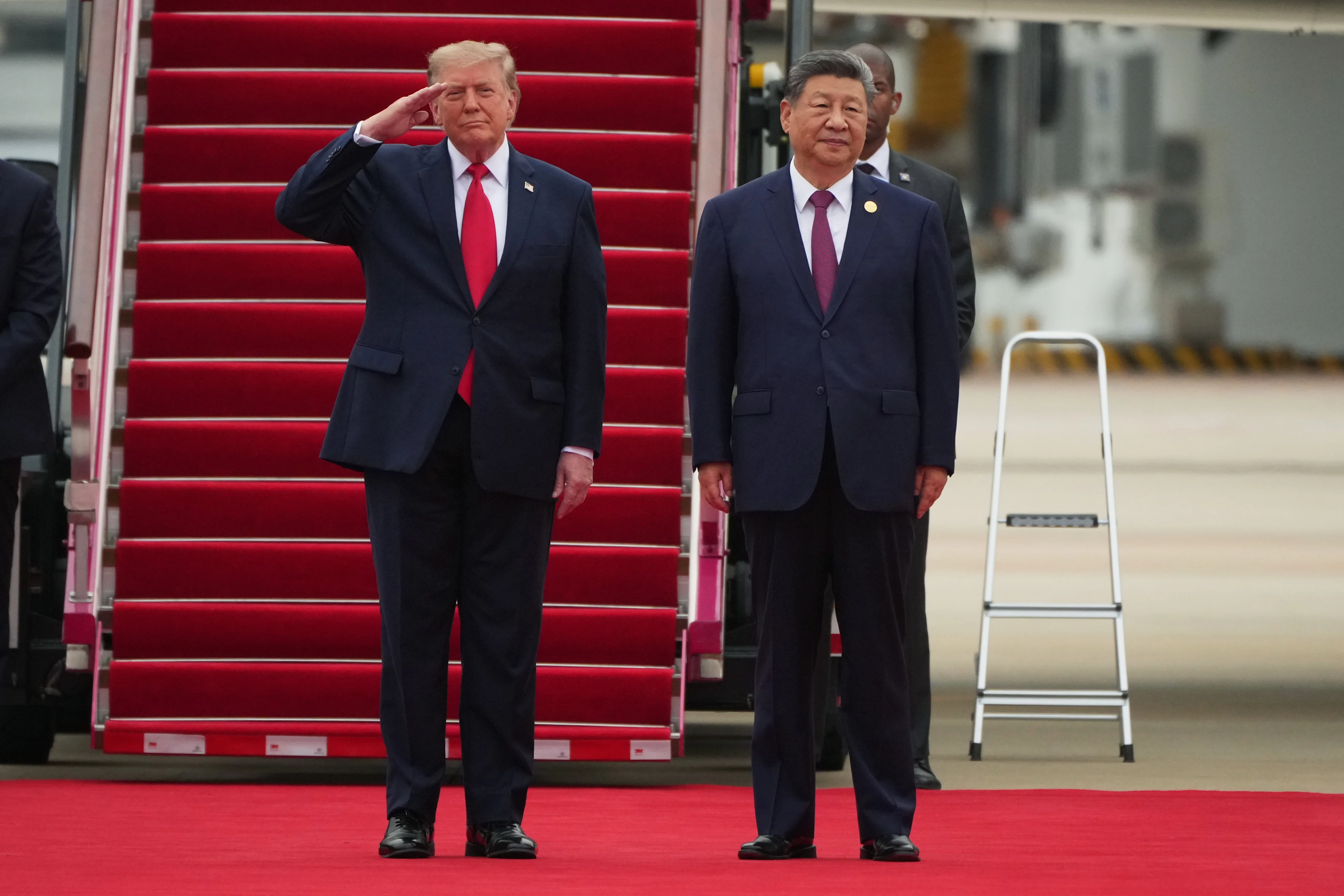
To understand why reports of Russian President Vladimir Putin preparing to meet with United States President Donald Trump and Chinese President Xi Jinping following a Ukrainian strike on a strategic Russian bridge have sent tremors through every foreign ministry on Earth, you have to step away from the podiums. You have to look at the concrete, the rebar, and the quiet terror of ordinary people who live along the arteries of modern warfare.
The Anatomy of a Chokepoint
Let us create a hypothetical character to ground what military analysts call "interdiction" in human reality. Picture Elena, a fifty-four-year-old logistics coordinator working out of a regional rail hub in southern Russia. Her job is not ideological. She tracks manifests—crates of ball bearings, pallets of canned rations, tank cars of aviation fuel, and occasionally, sealed wagons whose contents she is instructed never to verify.
For months, Elena’s life has been governed by the steady, predictable rhythm of steel wheels crossing a single span of reinforced concrete and iron over dark water. That bridge is not merely a feat of civil engineering; it is an umbilical cord. According to military logistics assessments published by Western defense think tanks and acknowledged in regional reporting, major bridge crossings linking Russian territory to occupied zones or forward staging areas carry the bulk of heavy equipment and fuel that cannot be moved efficiently by air or scattered dirt roads.
Then comes the flash in the pre-dawn dark.
When Ukrainian forces strike a critical Russian bridge—a tactic Kyiv has repeatedly employed throughout the conflict, most notably against the Kerch Strait Bridge and key crossings in the Kherson and Kursk regions, as documented by international news agencies including Reuters and the Associated Press—the physical explosion lasts less than two seconds. The shockwave, however, travels outward in concentric circles that eventually reach the gilded halls of Moscow, Washington, and Beijing.
For Elena, the war suddenly becomes a spreadsheet full of red error messages. Twenty thousand tons of cargo cannot simply swim across a wide river or an open strait. Rerouting means adding hundreds of miles of vulnerable highway, burning scarce fuel, and exposing slow-moving truck convoys to aerial reconnaissance.
When a bridge falls or buckles, an army does not immediately collapse. Instead, it begins to suffocate in slow motion.
Why Three Leaders Suddenly Need the Same Room
If you have ever watched a high-stakes poker game where the blinds keep doubling every ten minutes, you already understand the diplomatic mechanics driving a potential convergence between Putin, Trump, and Xi. Each man enters the room holding a very different hand, yet all three are staring at the exact same pile of chips: the future architecture of global security and trade.
Consider the timing. According to public statements from Kremlin officials, White House press briefings, and Chinese Foreign Ministry readouts across recent diplomatic cycles, the three powers have been circling one another over the terms of a potential settlement or freeze in the Russia-Ukraine war. A major Ukrainian strike on Russian infrastructure does not derail that conversation; paradoxically, it accelerates it.
Why? Because escalation exposes limits.
For Vladimir Putin, every successful Ukrainian strike deep into Russian-held or sovereign territory creates a dual pressure. Internally, it challenges the narrative of an insulated, untouchable homeland—a narrative that has sustained public acquiescence in Moscow and St. Petersburg even as casualties mount. Externally, it forces a cold calculation: how much more infrastructure can be degraded before the cost of continuing the offensive outweighs the political prize of holding territory?
For Donald Trump, whose public remarks and policy proposals have consistently emphasized rapid, transactional deal-making and a skepticism toward open-ended American financial commitments abroad, a dramatic flare-up on the battlefield is both a warning and an opening. Washington’s leverage lies in the spigot of Western intelligence, air defense interceptors, and long-range strike capabilities—the very tools that make hitting a heavily defended bridge possible in the first place. Sitting across from Putin and Xi allows Trump to test whether American pressure can force a cease-fire that he can present as decisive statesmanship.
And then there is Xi Jinping.
To understand Beijing’s role, think of a wealthy landlord watching two of his biggest tenants threaten to burn down the apartment building. China is neither a formal military ally of Moscow nor a friend to Washington’s alliance network, yet as trade data from China’s General Administration of Customs repeatedly demonstrates, Beijing has become Russia’s indispensable economic lifeline while remaining deeply entangled with Western consumer markets. As the Chinese Foreign Ministry has stated in its official position papers on the Ukraine crisis, Beijing opposes the use of nuclear weapons and calls for the protection of critical civilian infrastructure—not out of mere sentiment, but because uncontrolled escalation threatens Eurasian rail corridors, global energy prices, and the stability China needs to manage its own domestic economic headwinds.
The Invisible Stakes in Rooms Without Windows
I remember standing near a border crossing in Eastern Europe during the early months of the war, watching hundreds of families walk across asphalt slick with freezing rain, carrying everything they owned in plastic grocery bags. What struck me was not the sound of distant artillery, which sounded like someone dropping a heavy wooden wardrobe on a floor two stories up. It was the bewilderment in people’s eyes. Nobody in that line had been consulted about buffer zones, spheres of influence, or security guarantees. Yet their entire lives had been liquidated by decisions made in rooms with thick carpets and zero windows.
That is the human reality missing from standard diplomatic dispatches.
When headlines announce that Putin will meet with Trump and Xi after a Ukrainian strike on a Russian bridge, it is tempting to read it like a sports box score. Who scored? Who is on defense? Who is blinking first?
That framing is dangerously misleading.
In reality, a three-way summit under the shadow of escalating strikes is an admission by the world’s three most powerful nuclear-armed states that the war has entered a phase none of them can fully control from a distance. Let us be honest about the uncertainty here: nobody outside the innermost circles of the Kremlin, the West Wing, and Zhongnanhai knows whether such a meeting will produce a genuine framework for peace or merely a temporary pause while armies rearm. Anyone who tells you the outcome is guaranteed is selling certainty in a market that only deals in risk.
Look closely at what happens when superpowers negotiate over the heads of smaller nations.
In Kyiv, the reaction to any direct talks between Washington, Moscow, and Beijing is inevitably laced with historical memory. Ukrainians remember the 1994 Budapest Memorandum, in which Ukraine gave up the world’s third-largest nuclear arsenal in exchange for security assurances from the United States, the United Kingdom, and Russia—assurances that proved paper-thin when tanks crossed the border decades later. When Ukrainian forces strike a Russian bridge right before major diplomatic talks, they are sending an unmistakable message in steel and high explosives: We are not a passive subject on someone else’s agenda. We can still impose costs.
The Mechanics of Leverage
To grasp how a damaged bridge translates into diplomatic currency, imagine two neighbors arguing over a fence while a third neighbor holds the deed to the shared driveway.
Russia holds physical ground—roughly a fifth of Ukraine’s internationally recognized territory, seized at immense human and material cost, as tracked by open-source conflict monitors like the Institute for the Study of War. Moscow’s bargaining chip is its willingness to endure pain and keep grinding forward.
Ukraine, backed by Western intelligence and weaponry, holds the power of disruption. By targeting bridges, oil refineries, and ammunition depots, Kyiv proves that Russia cannot enjoy normal economic life while occupying Ukrainian cities. Every repaired span requires specialized engineering crews, air defense batteries pulled away from the front lines, and billions of rubles diverted from domestic budgets.
When Putin, Trump, and Xi sit down together, they are essentially trying to price those two realities against each other.
Trump brings the threat of either flooding Ukraine with advanced weaponry to break Russian logistics entirely or cutting off American aid to force Kyiv to the negotiating table—a dual-edged sword he has openly referenced in public interviews and campaign speeches.
Xi brings the quiet, overwhelming weight of commerce. Without Chinese machine tools, microelectronics, and purchases of discounted Russian crude oil, Moscow’s war economy would face severe contraction within months, according to economic analyses from institutions such as the Carnegie Endowment for International Peace and the Bank of Finland Institute for Emerging Economies. Xi does not need to pound his fist on the table; he only needs to remind both Putin and Trump that Beijing holds the power to either cushion Russia’s economy or tighten the screws.
Putin brings something darker and harder to quantify: the sheer unpredictability of a leader who has staked his historical legacy on reshaping the post-Cold War order, backed by the world’s largest stockpile of nuclear warheads.
What the Headlines Leave Out
Watch what happens in the hours after news of such a summit breaks.
Financial markets twitch. European defense stocks dip or surge depending on whether traders smell a cease-fire or a breakdown. Grain futures fluctuate because the Black Sea remains a contested waterway where every bridge, port, and shipping lane is tied to the price of bread in Cairo, Dhaka, and Lagos.
Meanwhile, back in our hypothetical rail hub, Elena stares at a revised timetable. Her superiors have told her to hold the fuel trains until further notice. Nobody tells her why. She only knows that for the first time in months, the phones have stopped ringing with urgent demands for midnight departures.
Could it be a pause? Could the men in tailored suits actually find a formula that stops the drones from falling out of the night sky?
History offers a sobering warning. During the Korean War, armistice negotiations dragged on for two full years—from July 1951 to July 1953—while tens of thousands of soldiers and civilians died fighting over ridges and hills that barely moved the front line. Diplomats argued over the shape of the negotiating table and the repatriation of prisoners while artillery leveled entire valleys. Talks do not automatically bring peace; often, they simply change the rhythm of the violence as each side tries to seize one last bargaining chip before the clock runs out.
And yet, refusing to talk carries its own catastrophic math. Every month the war continues, the risk of miscalculation—a stray missile crossing a NATO border, an attack on a nuclear power plant, a naval clash in international waters—compounds like unpaid interest.
The Weight of a Single Crossing
Step back and look at that bridge again.
Before the war, families drove across it on summer vacations, windows rolled down, radios playing pop songs, children arguing in the back seat over snacks. Fishermen cast lines from the banks below, watching ferries churn the water into white foam. It was built to connect—to shorten the distance between two points so human beings could trade, visit, and live without friction.
War turns every act of connection into a vulnerability. The wider the span, the bigger the target. The more vital the road, the harder the blow when it is severed.
Now, three men who command the largest armies, economies, and nuclear arsenals on the planet are preparing to sit across from one another because a ribbon of steel and concrete over dark water reminded them all that no fortress is impenetrable and no war stays neatly inside the lines drawn on a map.
Somewhere along that river tonight, engineers in hard hats are shining floodlights onto twisted girders and scorched asphalt, measuring how long it will take to pour new concrete, while miles away, diplomatic aides are adjusting the seating chart for a table where the future of millions will be decided without a single one of them in the room.