The desert wind at night doesn't just carry sand; it carries a silence so heavy it feels physical. In the control rooms of Kuwait City, where the glow of monitors paints faces in a ghostly ultraviolet, that silence is the enemy. It is the sound of waiting. When the sky over the Middle East turns into a chessboard of ballistic trajectories and loitering munitions, the distance between a normal evening and a national catastrophe is measured in seconds.
Britain has decided that those seconds belong to Kuwait.
The arrival of the Sky Sabre air defense system in the Gulf is not merely a logistical transfer of hardware. It is a loud statement made in a region that usually whispers. Following a surge in regional instability and direct aerial provocations from Iran, the United Kingdom has moved its most sophisticated shield into the heart of the oil-rich emirate. This isn't just about protecting refineries or runways. It is about the psychology of the skyline.
The Anatomy of a Modern Shield
To understand why this matters, you have to look past the olive-drab trucks and the technical manuals. Traditional air defense is like trying to swat a fly with a sledgehammer. Modern threats, however, don't fly like planes. They swarm. They hug the ground. They hide in the radar clutter of the horizon.
The Sky Sabre is different. It is a digital predator. Unlike the older Rapier systems that served for decades, this new architecture operates on a logic of pure connectivity. It can track twenty-four targets simultaneously—objects the size of a tennis ball traveling at several times the speed of sound.
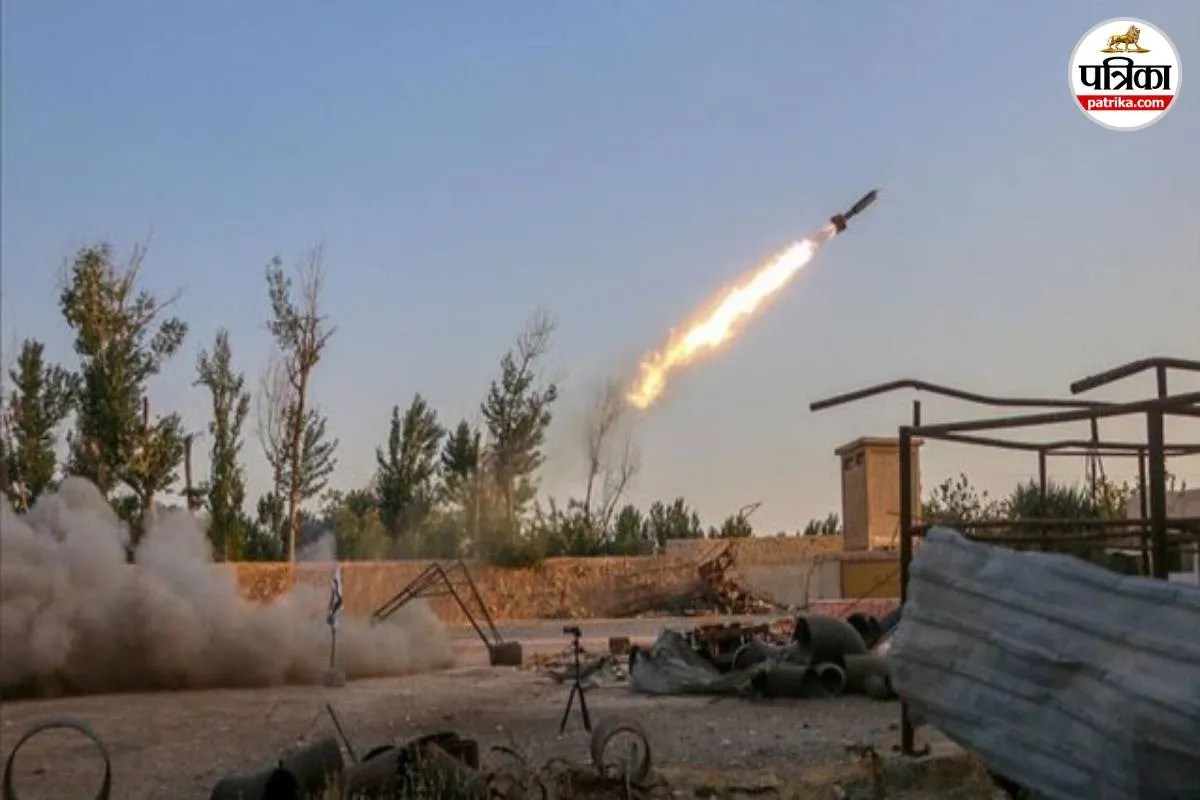
Imagine a net thrown over a city, but the net is made of invisible data. The system’s radar—the Giraffe—rotates like a restless eye, scanning 360 degrees. It feeds information to a battle management center that looks more like a high-end gaming suite than a traditional command post. When a threat is identified, the CAMM missiles are launched. They don't use a hot start that gives away their position; they are ejected cold from the silo before the engine ignites in mid-air. It is a terrifyingly graceful sequence.
A Neighborhood on Edge
The streets of Kuwait City are vibrant, a blend of ancient commerce and glass-and-steel ambition. But the shadow of the 1990 invasion never quite left the collective memory. For the people living here, regional tension isn't a headline—it’s the reality of their geography. When news broke of British batteries arriving, the reaction wasn't one of clinical interest in military specs. It was a sigh of relief mixed with a fresh jolt of anxiety.
Why now?
The answer lies in the changing nature of the "invisible war" between Iran and its neighbors. We are no longer in an era where wars are only declared with marching armies. Today, conflict is a series of "gray zone" activities—a drone strike here, a cyber-attack there, a mysterious explosion on a tanker. By placing Sky Sabre on Kuwaiti soil, the UK is drawing a hard line in that gray sand. It tells any potential aggressor that the cost of a "deniable" strike has just become prohibitively high.
Consider the hypothetical scenario of a merchant sailor on a tanker in the Persian Gulf. For years, his biggest worry was the weather. Now, he scans the blue for the tell-tale silhouette of a Shahed drone. The presence of British air defense doesn't just protect the land; it stabilizes the maritime corridors that keep the world’s lights on. If Kuwait feels secure, the markets breathe. If the markets breathe, the global economy avoids a spike that hits a family’s grocery bill in London or New York.
The British Calculation
London’s decision to move this equipment isn't an act of charity. It is a cold, calculated move of "Global Britain." Since exiting the European Union, the UK has been desperate to prove that its reach is still long and its friendships are still vital. Kuwait is a cornerstone of that strategy.
The British military footprint in the Gulf has been expanding quietly for years. From the permanent naval base in Bahrain to the joint flight squadrons in Qatar, the UK is stitching itself into the fabric of Middle Eastern security. Sending the Sky Sabre is the ultimate "buy-in." You don't send your most advanced, proprietary technology to a partner you don't intend to stand behind for the long haul.
But this move carries a heavy weight. Every time a Western power increases its "kinetic" presence in the Gulf, the rhetoric from Tehran sharpens. The Iranian leadership views these deployments not as defensive shields, but as provocative forward-positioning. It creates a feedback loop. More defense leads to more sophisticated offense, which necessitates even better sensors.
The Human Toll of High-Tech Peace
We often talk about these systems as if they are autonomous gods of the sky. They aren't. They are operated by young men and women who spend months in the blistering heat, staring at screens, waiting for a dot that they hope never appears.
There is a specific kind of exhaustion that comes with being an air defender. It is the exhaustion of constant vigilance. In the desert, the heat can reach 50°C. The electronics need constant cooling, and the human brain needs constant stimulus to stay sharp. These crews are the ones who actually bear the burden of the "tensions" we read about in news tickers. They are the ones who have to decide, in a heartbeat, if a signal is a flock of birds or a cruise missile heading toward a crowded shopping mall.
The stakes are invisible until they are catastrophic.
A single failure of an air defense system doesn't just mean a lost building. It means a loss of faith in the state’s ability to protect its own. In a region where perception is power, the Sky Sabre is as much a political tool as it is a military one. It is a signal of competence.
The Horizon
The sun sets over the Kuwaiti towers, casting long, thin shadows across the dunes where the British batteries are now perched. The sky turns a bruised purple. To the casual observer, it is a scene of profound peace.
Underneath that peace, the electrons are firing. The Giraffe radar is spinning. The CAMM missiles are sitting in their canisters, cold and ready. The tension hasn't left the Gulf; it has simply moved into a higher frequency, a digital register where the machines watch the sky so the people below don't have to.
Britain hasn't just sent a weapon system. It has sent a promise written in software and steel. Whether that promise is enough to keep the peace, or if it simply sets the stage for a more complex confrontation, is a question that will be answered in the seconds that the Sky Sabre was built to steal back from the brink of chaos.
The desert wind continues to blow, but for now, the silence is held in place by a very expensive, very British umbrella.