Steven Spielberg doesn't make science fiction anymore. He says so himself.
For nearly 50 years, the director treated the cosmos as a canvas for our collective imagination, a sandbox where friendly botanists left glowing finger trails and motherships communicated via synthesizer riffs. But something fundamental shifted inside Hollywood's greatest mythmaker. With his film Disclosure Day, Spielberg claims he's documenting our reality, not inventing a new one. Meanwhile, you can explore similar stories here: Why an Obscure Quebec Rock Duo Is Suddenly Hijacking the NFL Social Feed.
The filmmaker has officially crossed the line from hopeful speculator to full-blown believer. He isn't waiting for a personal sign in the night sky anymore. The sheer weight of real-world evidence forced his hand, and that shift reveals a lot about where our culture, our movie theaters, and our basic human instincts are heading.
The Evidence That Changed a Mythmaker's Mind
When Spielberg shot Close Encounters of the Third Kind back in 1977, he leaned on speculation. He built a beautiful, operatic fantasy out of light and sound. For decades, his official stance remained cautious. He'd tell interviewers that he loved the idea of cosmic neighbors, but wouldn't plant his flag in the ground until he saw a craft with his own eyes. To understand the bigger picture, check out the detailed report by Deadline.
That caution evaporated. The turning point didn't happen in a telescope lens. It happened in a congressional hearing room.
The 2023 House Subcommittee on National Security hearings on Unidentified Anomalous Phenomena (UAPs) fundamentally cracked open his worldview. Watching military pilots and intelligence officials testify under oath about unexplainable aerial objects changed the math for him.
The circumstantial evidence became too heavy to ignore. When an artist spent a lifetime imagining what sits beyond our atmosphere, seeing the dry, bureaucratic gears of government admit that something is out there acts as a massive shock to the system.
Spielberg dialed up his long-time screenwriting partner David Koepp, the pen behind Jurassic Park and War of the Worlds. The pitch was simple: aliens, but entirely different this time. No more pure fantasy. Disclosure Day became a fixation. Koepp recalls waking up to dozens of texts every single day in different time zones as Spielberg combed through the script, obsessing over every detail.
This obsessive drive directly followed a rare period of cinematic stillness for the director. After wrapping his highly personal, autobiographical 2022 drama The Fabelmans, which he openly called "$40 million of therapy paid for by Universal," Spielberg didn't know what came next. The reality of the UAP disclosures gave him his spark back.
Moving Past Fear and Finding Empathy in the Dark
The narrative structure of Disclosure Day acts as a bridge between the classic Spielberg chase spectacle and a deeply grounded piece of modern history. The protagonist, Margaret Fairchild, mirrors Richard Dreyfuss’s Roy Neary from 1977. Both characters are pulled forward by a strange, unexplainable force. But while Neary abandoned his family to climb aboard a spaceship, modern Spielberg heroes fight for survival by trying to understand the unknown rather than running from it.
The real core of this new cinematic vision isn't hidden in special effects or alien designs. It sits squarely in the human eye.
Spielberg explicitly designed the film to showcase the necessity of direct human connection. Emily Blunt’s character finds her clarity not by staring at data screens or looking up at the sky, but by looking other people dead in the eye.
The director is vocal about the fact that empathy has turned into a scarce commodity. People hold onto it tightly, sometimes refusing to use it because they're terrified of breaking alignment with their social circles or political belief systems. Disclosure Day argues that confronting a massive, cosmic mystery requires us to unlock that empathy. If we can't manage to understand each other on the ground, we don't stand a chance against whatever else is out there.
The Screen Is Still Alive
People have been writing obituaries for the traditional movie theater experience for years. They blame streaming platforms. They blame artificial intelligence. They blame the lingering hangover of altered pandemic habits.
Spielberg isn't buying the funeral narrative.
Even though ticket sales and box office returns haven't fully roared back to pre-2020 peaks, the trend lines show a steady, undeniable stabilization. Audiences are showing up. The director views this endurance as a profound testament to human nature.
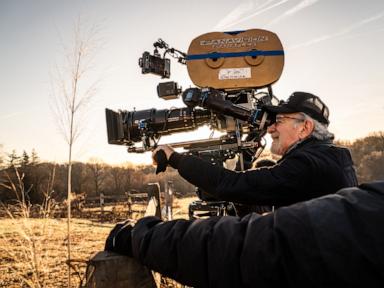
The urge to sit in a pitch-black room next to a crowd of total strangers, sharing the exact same emotional beats generated by a group of storytellers, isn't a habit that dies easily. It's a fundamental piece of communal human behavior. That baseline faith in the theater audience is precisely what keeps a 79-year-old filmmaker showing up to a chaotic movie set every morning.
The cinematic hunger hasn't faded for the director either. Even as he pushes into his 35th feature film with Disclosure Day, his creative bucket list remains unfulfilled. He still looks at horses on a movie set and feels a sharp pang of regret that he hasn't directed a true, classic Western yet. The drive to build worlds is still entirely intact.
To inject that same classic Spielberg energy into your own creative work, your next viewing habits, or your appreciation for modern sci-fi, keep these three practical principles in mind:
- Look for the human anchor: The next time you watch a massive blockbuster, ignore the explosions and the CGI. Look for the "Froot Loops" moment—the tiny, hyper-specific human detail that anchors the fantasy in real life. If a story lacks that, it's just noise.
- Audit your media empathy: Pay attention to how you react to stories about things you don't understand or people you disagree with. Notice if you're shutting down curiosity just to stay aligned with your peer group.
- Support the physical room: Pick one movie this month that you'd normally stream at home on your couch. Buy a ticket, sit in a theater with strangers, and pay attention to how the collective energy of the room alters your actual enjoyment of the story.