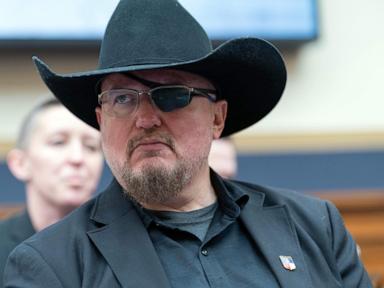
Stewart Rhodes, the founder of the Oath Keepers and a central figure in the January 6 Capitol attack, has publicly severed ties with Donald Trump. Speaking from Irving, Texas, in November 2026, Rhodes declared himself "absolutely done" with the president, labeling Trump a traitor and "one of the very worst in our nation's history". The rupture stems from three specific grievances that have quietly fractured Trump's base following the 2026 midterm elections. First, Trump granted Rhodes a sentence commutation rather than a full pardon in January 2025. Second, the administration dismissed supporters demanding the release of Jeffrey Epstein case files. Third, Rhodes accuses the White House of running a "pay-for-play" clemency and governance operation.
To understand why a man who once tattooed Trump's likeness onto his skin inside a federal prison cell is now plotting to cover that ink, you have to look past the surface spectacle of militia theatrics. You have to examine the transactional machinery of modern right-wing populism. Don't forget to check out our earlier post on this related article.
The Anatomy of a Prison Conversion and a Public Breakup
For years, Rhodes functioned as an ideological force multiplier for Trump. Founded in 2009 during the early months of the Obama administration, the Oath Keepers recruited heavily from current and former military, law enforcement, and first responders. Their pitch was simple and seductive to a specific slice of the American electorate. They claimed to defend the Constitution against domestic tyranny. When Trump challenged the legitimacy of the 2020 presidential election, Rhodes positioned his organization as the street-level enforcement arm of that grievance.
That alignment cost him his freedom. Convicted of seditious conspiracy—a rarely used Civil War-era statute—Rhodes received an 18-year federal prison sentence in 2023, one of the harshest penalties handed down in the sprawling Justice Department investigation into the Capitol riot. To read more about the background here, Associated Press provides an excellent breakdown.
Behind bars, his devotion appeared unshakable. When a would-be assassin opened fire at a Trump rally in Butler, Pennsylvania, in July 2024, Rhodes watched the footage from prison. Seeing Trump rise with blood on his face, pump his fist, and shout "fight" convinced Rhodes that divine providence was shielding the former president. He commemorated that loyalty permanently with a prison tattoo of Trump.
Fast forward to November 2026. Sitting outside a gastropub in Irving, Texas, the same man described that permanent mark as a monument to "treason". He confirmed via text message that he plans to have the tattoo modified to reflect his new reality.
The speed of that reversal reveals an uncomfortable truth about political movements built on personal loyalty rather than institutional principles. When the leader stops delivering the exact ideological outcomes the foot soldiers expect, devotion curdles into venomous betrayal overnight.
Commutation Versus Pardon The Legal Slight That Started It All
The initial fracture began on January 20, 2025, the very day Trump returned to the Oval Office.
True to his campaign promises, Trump moved rapidly to grant clemency to hundreds of individuals charged or convicted in connection with January 6, including defendants who had physically assaulted police officers. Most received full, unconditional pardons.
Rhodes did not. Along with a handful of other high-profile Oath Keepers and Proud Boys leaders, Rhodes received a commutation of his sentence to time served. He walked out of federal prison on January 21, 2025, a free man physically, yet legally branded.
In constitutional law, the distinction between a pardon and a commutation is vast, and for a Yale-educated former lawyer like Rhodes, the insult was unmistakable.
| Legal Mechanism | Effect on Prison Sentence | Effect on Criminal Record | Restoration of Civil Rights |
|---|---|---|---|
| Full Pardon | Ends incarceration immediately | Forgives the offense and removes legal guilt | Restores voting, jury service, and firearm rights |
| Commutation | Reduces or ends incarceration | Leaves the underlying conviction intact | Does not restore lost civil or firearm rights |
"He let us out of prison. We were grateful. I didn't get a pardon though," Rhodes explained, calling the snub "the first inkling" of a break.
While the Justice Department later moved to vacate his seditious conspiracy conviction in 2026—effectively lifting his felon status and allowing him to appear at Capitol Hill hearings—the initial hierarchy of clemency left a lasting scar. In the status-obsessed ecosystem of the far right, where martyrdom carries immense social currency, being treated as a second-tier beneficiary while rank-and-file rioters received total exoneration signaled that Trump viewed Rhodes as a political liability rather than a hero.
The Epstein Files and the "PAST Supporters" Backlash
If the commutation planted the seed of doubt, Trump's handling of the Jeffrey Epstein investigation watered it into open rebellion.
Throughout the 2024 campaign and into the early months of his second term, Trump and his allies leaned heavily into populist demands for radical transparency regarding the late financier's network of powerful associates. For militant factions like the Oath Keepers, releasing the complete, unredacted Epstein files wasn't merely tabloid curiosity. It was the ultimate litmus test of whether Trump would actually dismantle the entrenched Washington establishment.
Instead, the administration balked. When vocal segments of the base pressed the White House to make the documents public, Trump publicly dismissed those demanding the files as "PAST supporters".
That single phrase detonated across fringe message boards and militia networks. For years, activists had swallowed policy compromises, personnel missteps, and legal peril under the assumption that Trump was their exclusive champion against a corrupt elite. Hearing the president casually discard loyalists the moment their demands became politically inconvenient shattered the illusion of mutual devotion.
Rhodes took the dismissal personally. In his view, calling transparency advocates "past supporters" proved that loyalty in Trump's orbit flows strictly in one direction.
Accusations of a "Pay-for-Play" Swamp
Rhodes' sharpest attacks center on corruption—specifically, the allegation that Trump abandoned his signature "drain the swamp" mandate in favor of transactional self-enrichment.
"We elected him to end the corruption in Washington, D.C. 'Drain the swamp,'" Rhodes stated during his Irving interview. "Unfortunately his administration has been one of the most corrupt administrations in U.S. history. The pardons are pay-for-play and everything is pay-for-play".
The irony is thick. Critics of the administration had warned for years that clemency power in a second Trump term would operate as a reward system for wealthy donors and political insiders rather than an instrument of justice. Now, that exact critique is coming from a man who spent years organizing armed standoffs and recruiting volunteers to overturn an election on Trump's behalf.
The White House declined to respond to requests for comment regarding Rhodes' allegations. Yet the silence from Washington underscores a broader reality. By late 2026, following bruising Republican losses in the midterm elections, the administration faces growing mutiny from its right flank.
Why This Defection Matters Beyond One Militia Leader
It is easy to dismiss Stewart Rhodes as a fringe figure whose organizational infrastructure was largely dismantled by federal prosecutions, civil lawsuits, and financial ruin. The Oath Keepers of 2026 are a shadow of the paramilitary network that marched in tactical gear through Washington in 2021.
Writing off his defection as irrelevant, however, misses the wider political signal.
Rhodes functions as a bellwether for the hardline, anti-institutional wing of the conservative coalition. His grievances mirror the exact talking points circulating among Christian nationalists, paleoconservatives, and disillusioned populism-first voters who feel the administration traded ideological purity for corporate and donor appeasement.
Consider the structural vulnerabilities this exposes for the remainder of Trump's term:
- Loss of street-level mobilization. Throughout his political career, Trump relied on militant grassroots enthusiasm to intimidate primary challengers and project overwhelming popular support. When key organizers view him as a "traitor," that rapid-response intimidation machine stalls.
- Fractured post-midterm messaging. Following the 2026 midterm setbacks, competing factions on the right are already maneuvering to define the post-Trump era. Public denunciations from January 6 figures give rival conservative leaders permission to criticize the president from the right without appearing disloyal to the broader populist cause.
- The erosion of victimhood narratives. Trump successfully framed the January 6 prosecutions as a shared persecution endured by both him and his followers. By turning on the president and accusing him of running a corrupt clemency racket, Rhodes dismantles that shared mythology from the inside.
The Limits of Transactional Loyalty
History offers a consistent lesson regarding populist leaders and their militant vanguards. Movements united purely by a shared enemy eventually fracture once they capture power and have to govern.
During the opposition years, ambiguity works in the leader's favor. Every faction projects its own radical desires onto the candidate. Militias see a constitutional insurgent. Libertarians see a deregulator. Christian nationalists see a religious crusader.
Governing destroys that ambiguity. Every executive order, every budget compromise, every withheld file, and every selective commutation forces the leader to choose which constituency actually matters. Invariably, wealthy donors, institutional allies, and political self-preservation win out over the street-level true believers who took the greatest personal risks.
Stewart Rhodes learned that lesson the hard way, first in a federal courtroom, then in a prison cell, and finally at a rickety yellow table outside a Texas gastropub. The ink on his skin was meant to signify permanent allegiance. Instead, it has become a physical reminder that in Washington, loyalty is always leased, never owned.