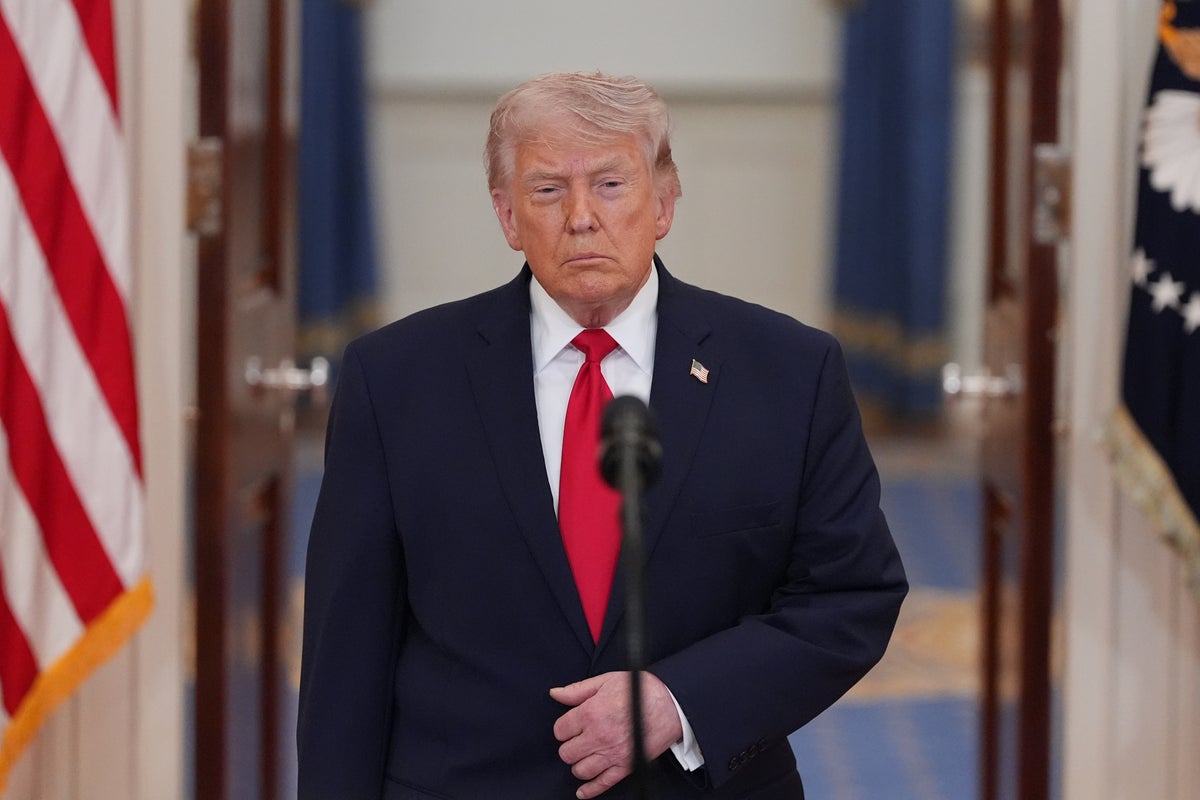
The consensus among the beltway commentariat is that President Trump’s April 1 address was a standard display of "peace through strength" bravado. They are dissecting the rhetoric about "finishing the job" and debating the semantics of "nearing completion" as if we are watching a traditional military wrap-up.
They are wrong.
What we witnessed from the Cross Hall wasn't a victory lap or a coherent exit strategy. It was a fundamental admission that the United States has traded a tactical nuclear headache for a permanent global economic migraine. By threatening to bomb Iran back to the "Stone Ages" while simultaneously abdicating responsibility for the Strait of Hormuz, the administration is attempting to perform a geopolitical magic trick that the math simply doesn't support.
The Strategic Fallacy of the Finite War
The "lazy consensus" suggests this conflict ends when the bombing stops in two to three weeks. This is a fairy tale for voters who still think in terms of flags and dirt. In 2026, war is not defined by who holds the ground, but by who controls the flow of energy and the integrity of the supply chain.
Trump’s claim that "core strategic objectives" are met because the Iranian Navy is at the bottom of the Persian Gulf is a 20th-century metric applied to a 21st-century problem. You don't need a blue-water navy to keep the Strait of Hormuz closed. You need cheap drones, sea mines, and a desperate population with nothing left to lose—all of which Iran has in surplus.
The Hormuz Absurdity
The most dangerous moment of the speech was the President's pivot on the Strait of Hormuz. Telling France and other allies to "fend for themselves" in the world’s most critical maritime chokepoint is not an "America First" masterstroke; it is the demolition of the global security architecture that keeps the $4-per-gallon gas he's complaining about from hitting $10.
Consider the mechanics:
- The Insurance Death Spiral: No commercial tanker will "fend for itself" against Iranian shore-to-ship missiles without insurance.
- The Underwriter's Reality: Lloyds and other major insurers won't cover ships in a zone where the U.S. has explicitly stated it has "nothing to do with" security.
- The Supply Shock: If the Strait remains a "go-it-alone" zone, the 20% of the world’s oil supply that passes through it stays locked in the Gulf.
The President is essentially telling the world he has destroyed the fire department while the house is still smoldering, then suggesting the neighbors bring their own buckets if they want to save their furniture.
The Nuclear Enrichment Mirage
Trump’s dismissive attitude toward Iran’s Highly Enriched Uranium (HEU) is the ultimate contrarian's nightmare. Arguing that we don't need to worry about the HEU because it’s "deep underground" and we can watch it with satellites is a staggering miscalculation of how nuclear breakout actually happens.
I have seen administrations burn through trillions of dollars chasing "surgical" solutions to ideological problems. You cannot bomb an enrichment level. If the material exists and the knowledge remains, the "Stone Age" is just a temporary renovation project. By leaving the HEU in place, the administration has ensured that this "short" war is merely a high-velocity pause in a much longer, much more expensive conflict.
The Fossil Fuel Imperialism Cost-Benefit Failure
The talk of "taking the oil" at Kharg Island ignores the technical reality of the 2026 energy market. We are no longer in 1988. Seizing an export hub in a hot war zone requires a massive, permanent ground presence—the very thing the President is promising to avoid.
The "nuance" the media missed is that you cannot "take the oil" without also taking the liability of the region’s stability. If you destroy the Iranian power grid and "hit each and every one of their electric generating plants," as threatened, you create a humanitarian vacuum that will swallow any potential oil profits whole.
The Economic Reality Check
Let’s dismantle the "success" metrics:
- The Stock Market: The immediate 6% jump in oil and the bloodbath in Asian markets tell the real story. The markets don't believe the "two to three weeks" timeline. They see a protracted disruption that will bake inflation into the global economy for the rest of the decade.
- The Geopolitical Shift: By alienating NATO and telling allies to protect their own shipping, the U.S. is effectively handing the keys of Middle Eastern mediation to Beijing and Moscow.
We are told we are "winning bigger than ever before." But when the "win" involves $5 gas, fractured alliances, and a cornered adversary with a stockpile of enriched uranium, we need to redefine what losing looks like.
The administration isn't finishing the job; they are walking away from a crime scene they still have to live in. The real war hasn't even started—it’s just moving from the cockpit to the gas pump and the grocery aisle. If you think this ends in three weeks, you haven't been paying attention to the last thirty years.