The media has found its latest favorite climate scapegoat: the Hajj.
Following recent tragic heatwaves in Mecca, a wave of standard-issue journalism rushed to publish the same copy-pasted narrative. The thesis is always identical: rising global temperatures are shrinking the "safe" window for the Islamic pilgrimage, making the ritual inherently unsustainable without drastic global carbon cuts. For a different view, consider: this related article.
It is a lazy, mathematically flawed consensus.
To blame these tragedies entirely on a shifting global climate is to fundamental misunderstand thermodynamic realities on the ground, urban microclimates, and crowd dynamics. Worse, it shifts the blame away from immediate, solvable engineering failures and onto a nebulous, decades-long global policy goal. Related analysis regarding this has been shared by AFAR.
Mecca is not getting too hot to handle because of a 1.5°C shift in global baselines. Mecca has always been a hyper-arid, punishingly hot desert during the summer months. The real crisis is not atmospheric; it is architectural and logistical.
The Thermoradical Fallacy of the "Shrinking Safe Season"
Mainstream reporting relies on wet-bulb temperature projections to claim that the Hajj will soon become impossible. The argument hinges on the fact that the Islamic calendar is lunar, meaning the Hajj rotates through all four seasons over a roughly 33-year cycle. When it hits the dead of summer, the media panics.
Here is what the standard narrative gets wrong about desert thermodynamics:
- The Baseline Reality: In July and August, the average high in Mecca has hovered between 40°C and 45°C (104°F to 113°F) for as long as modern meteorological data has existed. The human body cannot survive prolonged, unmitigated exposure to these temperatures without artificial cooling, regardless of global warming trends.
- The Relative Humidity Paradox: Wet-bulb temperature measures the combination of heat and humidity. While coastal cities suffer from suffocating humidity, Mecca sits in a valley surrounded by desert mountains. It experiences extreme dry heat. In dry heat, sweat evaporates efficiently—if the individual is hydrated and out of direct sunlight.
- The Real Killer: The true danger in Mecca is not ambient air temperature. It is direct solar radiation combined with the Urban Heat Island (UHI) effect.
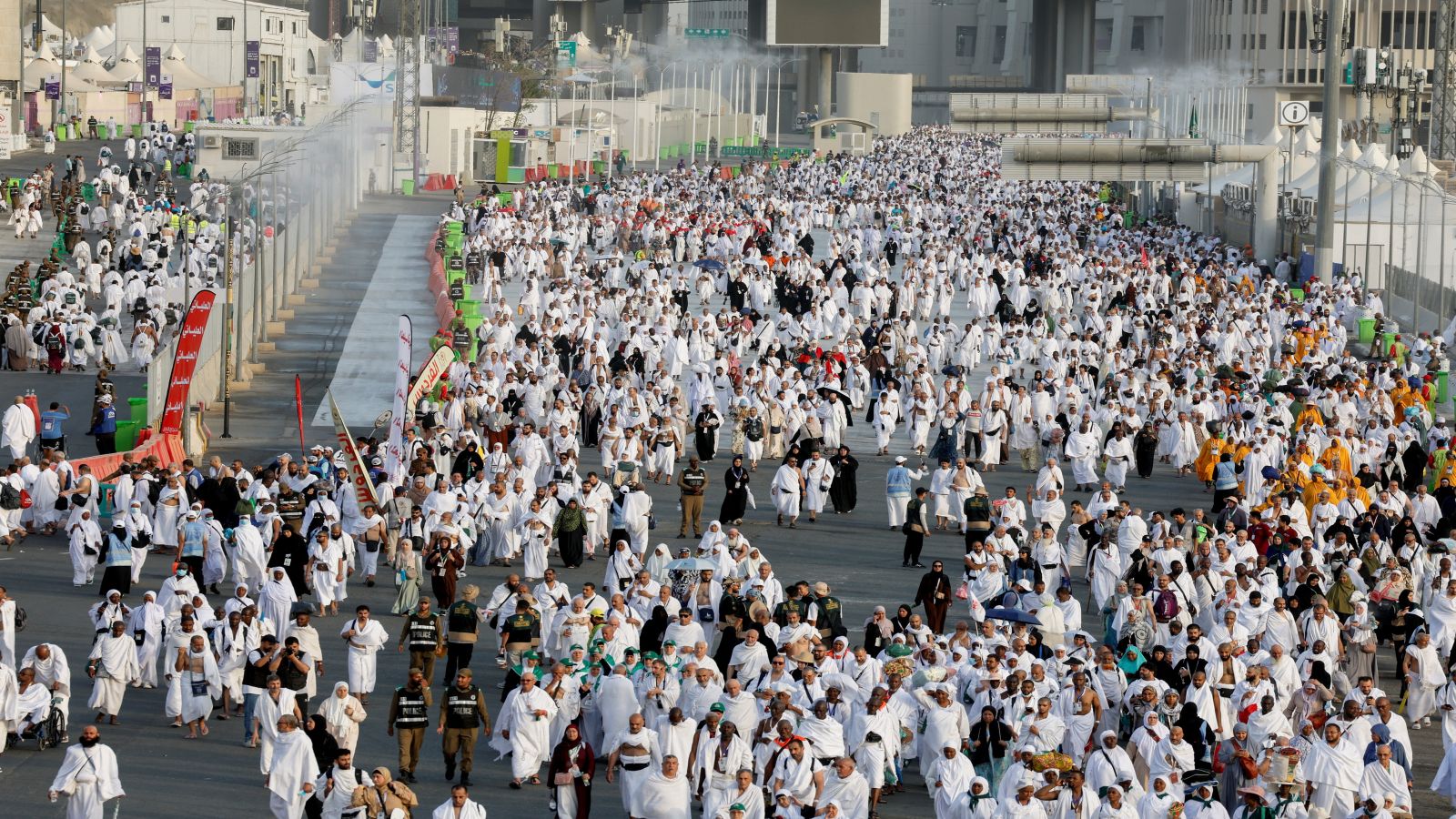
When you pack nearly two million human bodies into a concrete valley, the concrete absorbs solar radiation all day and radiates it back out at night. The crowd itself generates massive metabolic heat.
If you want to save lives, stop staring at global emissions charts. Start looking at the concrete under the pilgrims' feet.
The Real Culprit: The Failure of Microclimate Engineering
I have spent years analyzing urban crowd safety and thermal comfort models in extreme environments. I have seen organizations pour millions into high-level sustainability consultants while completely ignoring basic fluid dynamics and shading geometry.
The tragic deaths during recent hot Hajj seasons were not caused by an unavoidable climate apocalypse. They were caused by microclimatic failures.
1. The Albedo Deficit
Mecca and the surrounding holy sites (Mina, Arafat, and Muzdalifah) have undergone massive modernization. This means vast expanses of asphalt, granite, and standard concrete. These materials have a low albedo, meaning they absorb up to 90% of solar radiation. During the peak afternoon hours, the ground temperature can skyrocket past 60°C (140°F). Pilgrims are essentially walking on a giant frying pan.
2. Canopy Discontinuity
While Saudi Arabia has installed massive, world-class umbrellas in Medina, the pedestrian routes in and around Mecca lack continuous, unbroken shading. A pilgrim moving through a 500-meter stretch of unshaded asphalt in 43°C heat can experience heatstroke in less than 30 minutes if their core temperature spikes.
3. The Informal Pilgrim Vulnerability
This is the uncomfortable truth that mainstream outlets gloss over to keep their narratives clean: the vast majority of heat casualties occur among unregistered pilgrims.
Because they lack official Hajj permits, these individuals do not have access to the air-conditioned tents in Mina, cooling stations, or dedicated transport vehicles. They are forced to walk dozens of miles in direct sunlight without a home base. This is a socioeconomic and enforcement failure, not a meteorological one.
Dismantling the "Move the Hajj" Fallacy
People Also Ask: Can the Hajj be moved to cooler months to protect pilgrims?
This question reflects a total ignorance of Islamic jurisprudence and logistics. The timing of the Hajj is fixed by the Islamic lunar calendar (occurring from the 8th to the 12th of Dhu al-Hijjah). It cannot be rescheduled by a committee anymore than Christmas can be moved to July to avoid winter blizzards.
Because the event must happen, the solution must be engineering-centric, not chronological.
How to Actually Cool Mecca: Three Unconventional Fixes
If we accept that the Hajj will continue to cycle through the summer months, we must design for the absolute worst-case scenario using aggressive, localized microclimate intervention.
+-----------------------------------------------------------------+
|                    HAJJ COOLING PARADIGM SHIFT                  |
+-----------------------------------------------------------------+
| OLD APPROACH:                                                   |
| - Wait for global carbon reduction                              |
| - Rely on localized, spot-cooling fans                         |
| - Treat heat as an unpredictable natural disaster               |
+-----------------------------------------------------------------+
| NEW APPROACH:                                                   |
| - Total surface albedo overhaul (Hyper-reflective coatings)      |
| - Sub-surface radiative cooling grids                           |
| - Algorithmic crowd-flow based on real-time thermal indexing   |
+-----------------------------------------------------------------+
1. Hyper-Reflective Surface Overhauls
We need to ban standard asphalt and concrete along all Hajj pedestrian routes. The entire pathway system from Mecca to Arafat should be coated with ultra-white, high-albedo materials or cooling tiles—similar to the ones developed by researchers that reflect over 95% of sunlight. By keeping the ground temperature close to ambient air temperature, you eliminate the massive upward thermal radiation that cooks pedestrians from below.
2. Sub-Surface Radiative Cooling
Instead of trying to cool the open air of a desert valley with massive, inefficient outdoor air conditioning units, we should look downward. Installing closed-loop, solar-powered chilled water pipes beneath the main walking tracks can physically cool the ground surface. This creates a chilled walking plane that absorbs human body heat rather than radiating heat back into the crowd.
3. Micro-Targeted Mist and Wind Tunnels
Current misting fans are useful, but they are deployed haphazardly. In high-density crowds, stagnant air creates micro-pockets of extreme humidity from sweat and breath, breaking down the body's ability to cool itself.
The valley of Mina needs to be treated like an aerodynamic wind tunnel. Passive architectural baffles should be constructed to capture and accelerate the natural mountain breezes, forcing airflow through the pedestrian corridors to maximize sweat evaporation.
The Cost of True Safety
The contrarian approach is never free of downsides. Implementing these radical engineering fixes requires a massive capital expenditure and a willingness to alter the aesthetic of historic routes. It means covering ancient pathways with high-tech materials and strictly, ruthlessly banning unregistered entry to ensure crowd densities never exceed safe thermal limits.
It is easy to write an article blaming global emissions for heat deaths. It requires zero accountability. It asks the reader to change nothing except their feelings about global policy.
It is much harder to admit that the deaths are happening because we are failing to manage the immediate, localized environment of two million people.
Stop treating the Mecca heat as an unprecedented climate mystery. It is a known, static, brutal variable. Design for it, build for it, or step aside for engineers who will.