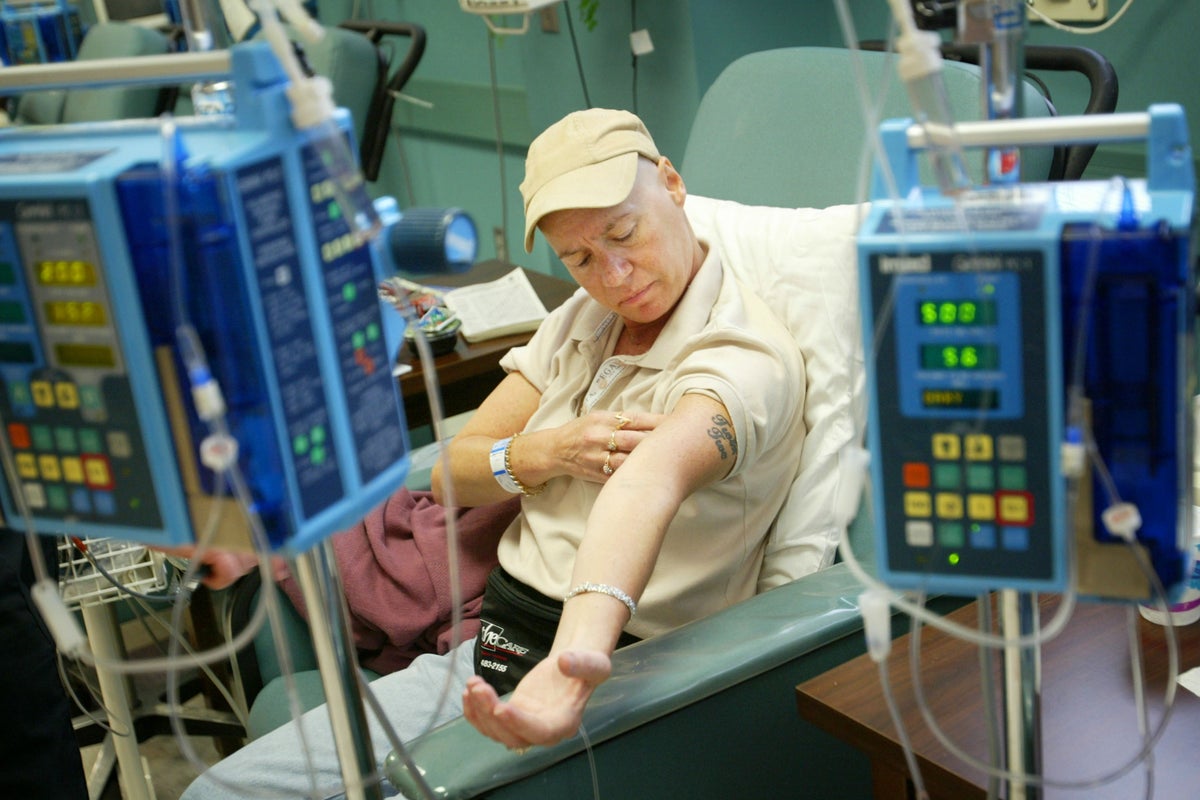
A cancer patient in Hong Kong dies after a nurse mistakenly inserts a feeding tube into the lung instead of the stomach. The headlines scream "Medical Blunder." The public demands a head on a spike. The hospital issues a bowed-head apology.
We have seen this movie before. It is a script written in the blood of patients and the burnout of clinicians. But if you think the "incorrect opening" is the story, you are looking at the finger pointing at the moon. For another look, check out: this related article.
The obsession with "human error" is the greatest lie in modern healthcare. It is a convenient fiction that allows administrators to sacrifice a single practitioner to protect a rotting infrastructure. When we frame these tragedies as individual failures, we guarantee they will happen again.
The Myth of the Careless Clinician
The lazy consensus suggests that if we just "train harder" or "pay more attention," these errors vanish. This is statistically illiterate. Similar insight on the subject has been published by National Institutes of Health.
In the case of the 61-year-old patient at Queen Mary Hospital, the narrative focuses on the misplaced tube. What the narrative ignores is the environment that makes such a mistake inevitable. I have spent two decades inside the gut of tertiary care centers. I have seen nurses managing ratios that would be considered illegal in a daycare center, let alone a high-dependency oncology ward.
When a human being is deprived of sleep, bombarded by "alarm fatigue," and forced to navigate 400 micro-decisions an hour, the brain stops functioning as a precision instrument. It reverts to heuristics. It takes shortcuts.
It is not a "blunder." It is a mathematical certainty.
If you design a system where a single misplaced tube leads to death, you haven't built a medical facility; you've built a Rube Goldberg machine where the final trigger is a tired human hand.
The False Security of Checklists
Post-incident reports always call for "enhanced protocols." We love protocols. They make us feel safe. They also create a phenomenon known as "compliance theater."
In many Hong Kong hospitals, and indeed globally, the sheer volume of paperwork required to "verify" a procedure now exceeds the time taken to perform the procedure itself. When the checklist becomes the goal, the patient becomes a distraction.
I’ve watched surgeons "time out" while thinking about their next three cases because the bureaucracy has squeezed the humanity out of the room. We are over-regulated and under-resourced. Adding a fourteenth signature to a feeding tube insertion doesn't make the patient safer; it just adds one more person to blame when the system inevitably cracks.
The Anatomy of a Systemic Kill
Let’s look at the mechanics. A feeding tube insertion (nasogastric or "incorrect opening" in the abdomen/stoma area) relies on anatomical landmarks and, ideally, pH testing or X-ray confirmation.
The "contrarian" truth? X-rays are often misread by residents who haven't slept in 24 hours. pH strips can be inconclusive. But the real killer is the Normalization of Deviance.
This is a term coined by sociologist Diane Vaughan. It occurs when people within an organization become so accustomed to a deviant behavior—like skipping a secondary check because the ward is "too busy"—that it no longer feels like a risk. It feels like efficiency.
Until someone dies.
Then, suddenly, the "efficient" nurse is a "criminal." The hospital board, which created the conditions for the shortcut, sits in the judge's chair.
The High Cost of the "Safety" Mirage
There is a downside to my argument. If we stop blaming individuals, we have to admit that modern medicine is inherently high-risk. We have to admit that the "zero harm" mantra is a marketing slogan, not a clinical reality.
If we want to actually fix this, we have to talk about things that don't fit in a 30-second news clip:
- Architecture over Accountability: We need tubes that physically cannot fit into the wrong port. If the technology exists to prevent a "wrong-route" error, and a hospital hasn't bought it, the CEO should be the one in the dock, not the nurse.
- The Fatigue Mandate: We treat clinician fatigue as a moral failing. It’s a biological one. A clinician at the 16th hour of a shift is legally equivalent to a drunk driver. We wouldn't let a drunk person insert a feeding tube. Why do we let a resident do it?
- Radical Transparency: Stop the "internal investigations." They are designed to mitigate legal liability, not to find the truth.
Why Your "Why" is Wrong
People ask: "How could they miss the lung?"
The better question: "What was the cognitive load of that nurse in the ten minutes preceding the error?"
People ask: "Who is being punished?"
The better question: "What structural redundancy failed to catch this?"
When we focus on the "incorrect opening," we are obsessed with the mechanics of the tragedy. We need to be obsessed with the environment of the tragedy.
The Hong Kong incident isn't an outlier. It’s a preview. As populations age and healthcare systems remain underfunded while over-managed, these "blunders" will accelerate. You can fire every nurse in the city, and the errors will continue because the chairs are being rearranged on the Titanic.
The Hard Truth
If you are a patient, you are not entering a temple of healing; you are entering a high-stakes logistics hub. The "quality care" you receive is often just the margin of error that hasn't been exhausted yet.
Stop looking for a villain in a nursing uniform. Look for the board members who think "lean management" is a viable strategy for human life.
Demand the data on staff-to-patient ratios. Demand to know the last time your surgeon slept. Demand systems that are "idiot-proof" because, under enough stress, we are all idiots.
Anything else is just waiting for the next headline.
Go to the hospital and ask the head of nursing what their "near-miss" rate was last month. If they say they don't have one, leave immediately. They aren't safe; they're just lying to themselves.