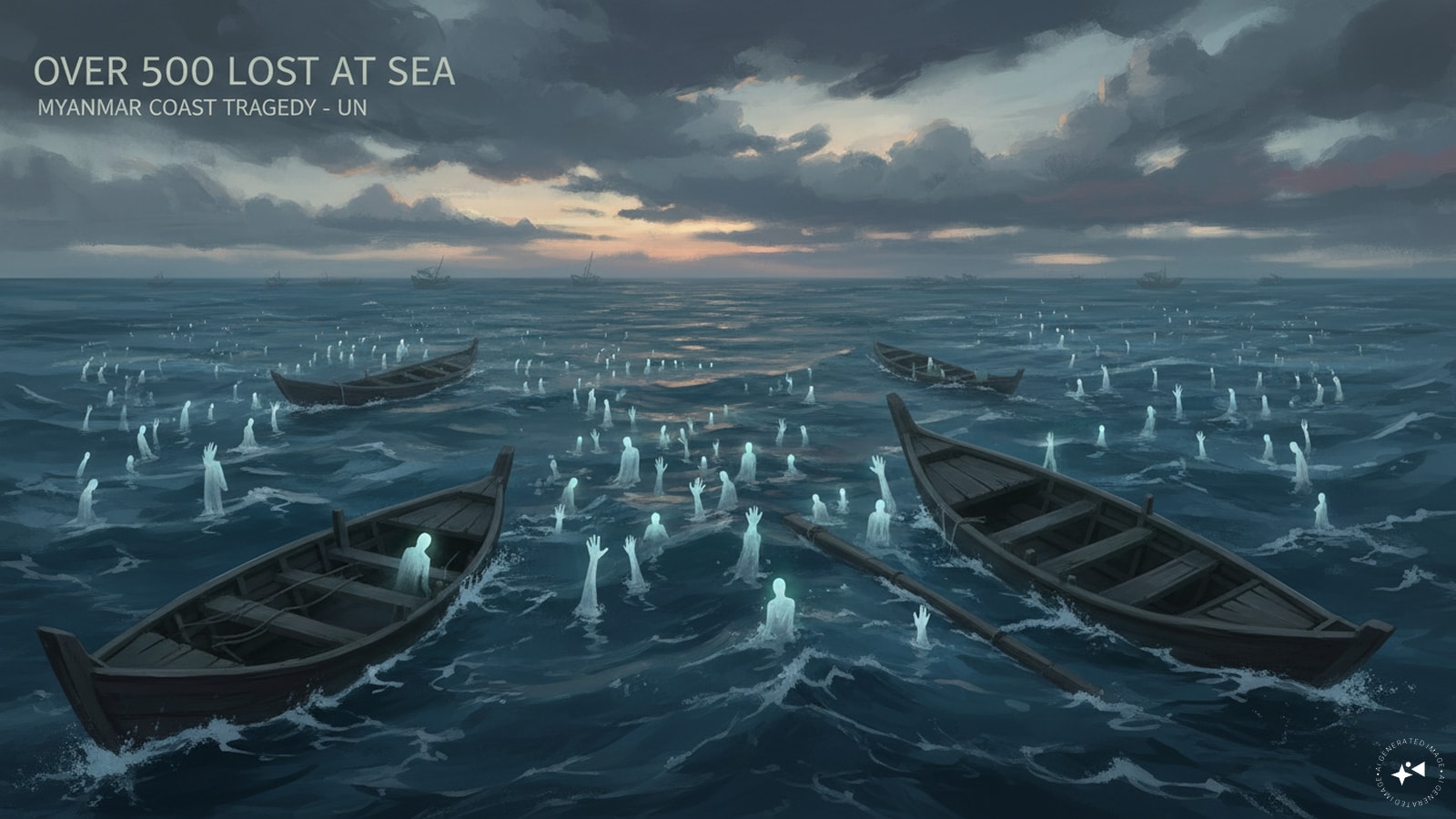
The United Nations has issued another predictable, hand-wringing press release. More than 500 Rohingya refugees are feared dead after two overcrowded wooden boats reportedly capsized in the Bay of Bengal and Andaman Sea. The UN High Commissioner for Refugees (UNHCR) and the International Organization for Migration (IOM) immediately deployed their standard boilerplate: blame the "smuggling and trafficking networks" that "exploit the desperation of people".
This narrative is comfortable, clean, and completely wrong. Don't miss our earlier article on this related article.
By treating maritime mass casualties as a criminal problem driven by greedy human traffickers, international bodies and regional governments deliberately ignore the economic and structural realities that make these tragedies inevitable. Smugglers do not create the demand for lethal sea crossings; they merely fulfill a market need that global immigration policies refuse to address.
If you want to understand why 500 people vanish beneath the waves during monsoon season, you have to stop looking at the criminals steering the boats and start looking at the bureaucratic failure of the international refugee apparatus. To read more about the background of this, The Washington Post provides an in-depth breakdown.
The Myth of the Vulnerable Dupe
The foundational lie of the humanitarian press release is that refugees are passive victims tricked by predatory smugglers into boarding unseaworthy vessels.
Having analyzed maritime migration patterns and supply chain logistics in high-risk corridors for over a decade, I can tell you that refugees are rational economic actors operating under impossible constraints. They know the risks. They know the Andaman Sea is a graveyard, particularly when traveling outside the regular sailing season amid torrential rains and regional flooding.
They board the boats anyway because the alternative is guaranteed, slow-motion destruction.
Consider the baseline reality for the Rohingya. Those remaining in Myanmar’s Rakhine State are trapped in the crossfire of a brutal civil war between the military junta and the Arakan Army. Those who escaped to Cox’s Bazar in Bangladesh are packed into squalid, fenced-in encampments holding over a million people, where international aid budgets are drying up and ration allocations have plummeted.
When a human being faces a 100% chance of misery, poverty, and violence in a camp, a journey with a 15% mortality rate looks like a calculated, justifiable gamble. The smuggler isn't a silver-tongued predator selling a lie; they are a high-risk service provider selling the only available ticket out.
The Hypocrisy of "Enhanced Search and Rescue"
Every time a boat sinks, the UN calls for "enhanced search and rescue efforts" and "greater regional cooperation". It sounds noble. In practice, it is an empty demand that ignores the geopolitical alignment of Southeast Asian states.
Southeast Asian nations view the Rohingya crisis not as a humanitarian emergency, but as a national security threat and an economic burden.
- Malaysia routinely detains undocumented arrivals in notorious immigration depots.
- Indonesia faces growing local backlash in provinces like Aceh, where local populations have begun pushing migrant boats back out to sea.
- Thailand maintains a strict "push-back" policy, supplying drifting boats with fuel and food before steering them back into international waters.
When regional governments do deploy naval or coast guard assets, their mandate is rarely "rescue." It is interdiction and deterrence. Calling for better search and rescue without changing the underlying legal status of the migrants ensures that any intercepted vessel becomes a diplomatic hot potato, passed from one maritime border to the next until the hull disintegrates.
Defunding the Solution
The real culprit behind the rising body count isn't the criminal syndicates operating out of Cox's Bazar or Sittwe. It is the international donor community.
Humanitarian operations in Bangladesh are chronically underfunded. When Western nations slash food aid budgets for refugee camps, they directly subsidize the human smuggling market. Every time a ration coupon is cut, the value proposition of boarding a rickety wooden boat to Malaysia improves.
The UN blames trafficking networks because doing so protects their donors. It shifts accountability away from wealthy Western nations cutting aid budgets, and away from ASEAN states refusing to grant basic labor rights to displaced populations. Blaming a nameless, faceless syndicate allows everyone to express moral outrage without spending a dollar or altering a single visa policy.
The High Cost of Prohibition
The current approach to maritime migration mirrors the failed economics of the War on Drugs. Increased enforcement and harsher penalties for smugglers do not reduce the volume of travelers; they merely drive up the price of passage and force operators to take more dangerous routes.
When authorities tighten coastal surveillance during the safe, calm sailing windows, they do not stop the trade. They simply shift the departures to the dangerous monsoon season, using even more precarious embarkation points. The 500 people feared dead off the Ayeyarwady coast are the direct casualties of this enforcement asymmetry.
Until the international community acknowledges that migration is a market driven by an absolute deficit of safety and economic survival, the Bay of Bengal will remain an open grave. Criminalizing the supply side of human movement while deliberately worsening the demand side guarantees that the next UN press release is already being written.