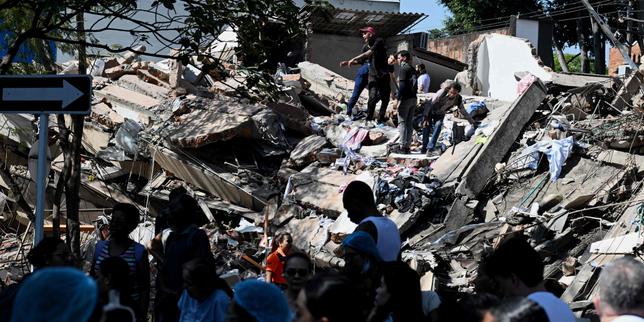
Every time tectonic plates shift and concrete pancakes into dust, mainstream journalism runs the exact same lazy script. They point to a Richter scale number, gasp at the tragedy, and frame the death toll as an act of god. Following the 7.4 magnitude strike in western Colombia, headlines are obsessing over the epicentre depth and panicked evacuees from Cali to Bogotá.
This narrative is a dangerous distraction.
Earthquakes do not kill people. Bad construction, corrupt municipal permitting, and systemic infrastructural neglect kill people. Focusing on the seismic force while ignoring structural vulnerability is why we keep writing identical obituaries year after year.
The Magnitude Fallacy
Seismology data from the United States Geological Survey confirms the tremor hit at an intermediate depth of roughly 110 kilometers. That depth is crucial. Deep-focus earthquakes generally disperse a massive amount of energy before reaching the surface, which explains why cities hundreds of kilometers away felt heavy swaying without catastrophic structural failure.
Yet local authorities in Pereira, Manizales, and Valle del Cauca are currently sifting through the rubble of dozens of collapsed buildings. Why did modern commercial blocks and older urban structures fail while neighboring buildings stood completely intact?
Because building codes in developing seismic zones are treated as optional suggestions rather than life-or-death engineering mandates. I have seen municipal inspection budgets slashed to zero while corrupt contractors pocket margins on substandard rebar and unreinforced masonry. When a 7.4 magnitude shock hits, it acts as a brutal, unbiased auditor of every single shortcut taken during construction.
The Geography Of Inequality
The lazy consensus loves to blame the rugged topography of the Andean corridor and the Chocó littoral. Reporters highlight remote pockets like San José del Palmar as if isolation is an acceptable excuse for zero structural mitigation.
Let us look at the data without the emotional padding. Seismic engineering has solved how to build structures that survive high-magnitude shocks. Japan and Chile routinely absorb far more violent subduction zone movements with minimal loss of life because their codes are aggressively enforced.
When a structure crumbles in Cali, it is because enforcement agencies looked the other way. Blaming the Nazca plate for sliding beneath the South American plate is an easy way for local politicians to wash their blood-stained hands of municipal failure. Nature provided the stress test; human corruption wrote the failing grade.
The Real Emergency Response Is Prevention
Emergency management teams are currently scrambling to clear debris, establish triage centers, and manage airport shutdowns across western Colombia. Politicians are rushing to social media to broadcast their grief and promise state assistance.
This is post-disaster theater.
By the time rescue workers are pulling grandmothers off stretchers in Cali, the system has already failed completely. Pouring resources into rescue logistics while ignoring structural retrofitting is like spending millions on hospital ventilators while refusing to ban toxic waste in the water supply.
Imagine a scenario where municipal governments treated structural engineering audits with the same aggressive criminal prosecution currently directed at street gangs. The death toll would drop from dozens to zero.
Stop asking if people felt the tremor in Panama or how many buildings lost their facades. Start demanding building records, contractor registries, and structural liability trials for every single developer whose cheap concrete turned a natural tectonic shift into a man-made graveyard.