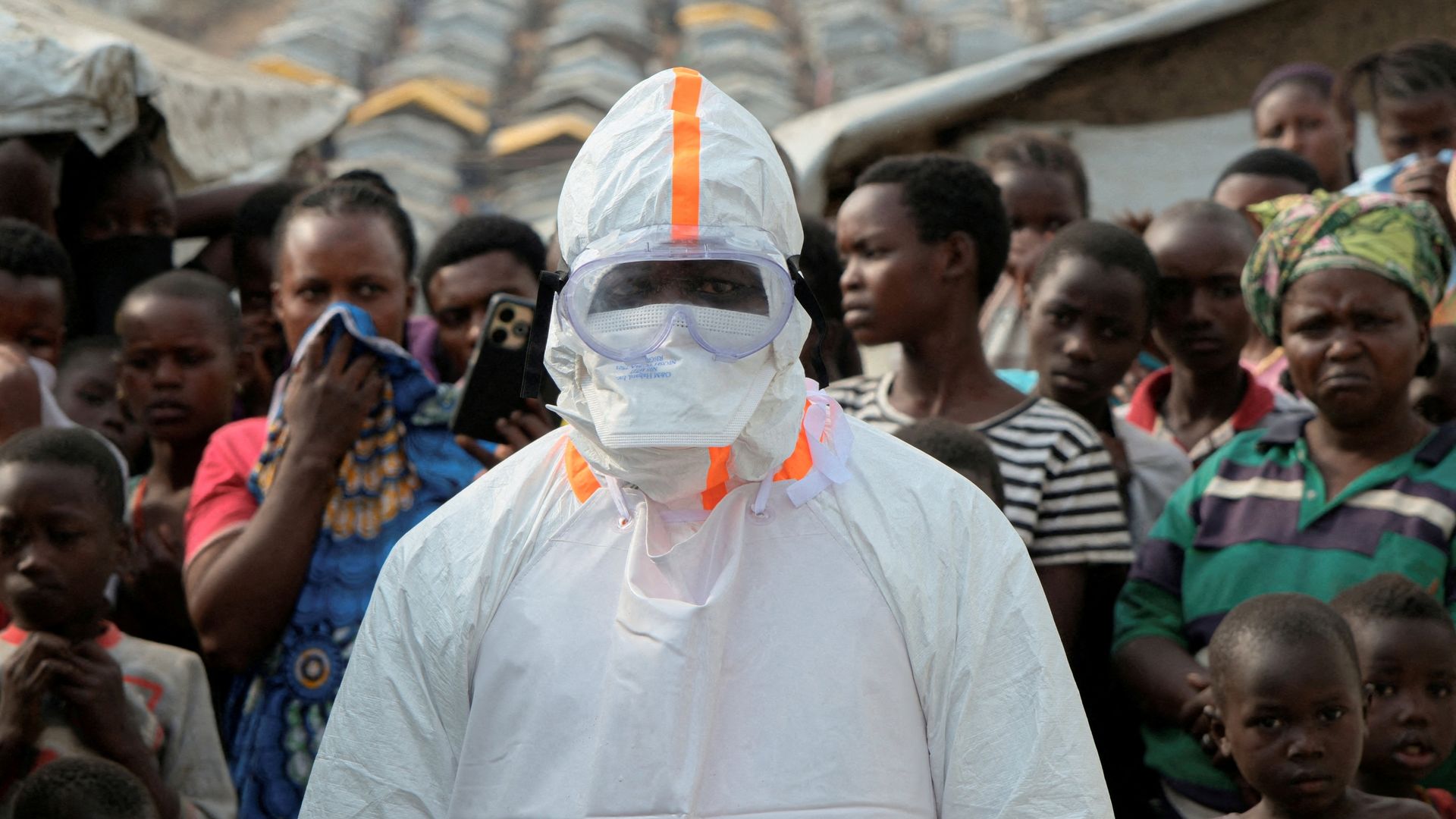
The headlines are screaming about a grim milestone. Over 2,300 dead. Nearly 5,000 confirmed cases. The 17th Ebola outbreak in the Democratic Republic of Congo has officially surpassed the 2018-2020 disaster to become the deadliest in the nation's history.
The mainstream press wants you to point your finger straight at the pathogen. They whisper about the Bundibugyo species. They throw around rising case fatality ratios—hovering near 47 percent—as if the virus woke up one morning and decided to get meaner.
It is a lazy, comfortable narrative. It allows international health agencies to wash their hands of institutional failure and blame nature for what is fundamentally a structural collapse.
The virus has not changed its DNA to spite us. We have simply refused to change our playbook.
The Myth of the Hyper-Lethal Strain
Let us define the core deception driving the panic. When the case fatality ratio spikes from 20 percent to nearly 50 percent over a few weeks, armchair epidemiologists on cable news lose their minds. They assume biological mutation.
I have watched organizations blow millions chasing phantom virological shifts while ignoring the basics on the ground.
Data from the field tells a completely different story. The spike does not mean the Bundibugyo strain grew fangs. It means surveillance systems are failing, mistrust is peaking, and people are dying in their homes without ever touching a treatment center. When only the most catastrophic, end-stage cases get registered in official tallies, your mortality math skews violently upward.
You are not looking at a hyper-lethal pathogen. You are looking at a surveillance desert.
The Weaponization of Top-Down Protocols
Imagine a scenario where a foreign medical team rolls into an eastern DRC health zone with high-tech containment gear, zero cultural fluency, and an armed security detail. How do you think the local population reacts?
They hide their sick.
For decades, international response units have repeated the exact same behavioral loop. They impose centralized mandates designed in Geneva or Atlanta, treat local communities as vectors rather than partners, and then act shocked when community resistance turns hostile.
The lazy consensus is that local populations are simply uneducated or superstitious. That is code for "we refuse to listen to them."
When you treat public health like a military occupation, compliance plummets. Contact tracing becomes impossible. Every stranger with a clipboard looks like an agent of quarantine rather than a healer. The 17th outbreak is proving that top-down authoritarian medicine does not save lives. It drives transmission underground.
Why the Standard Response Fails
The World Health Organization loves to compare current trajectories to West Africa in 2014. They warn of exponential curves and impending global doom to pry checks open from donor nations.
Yet, treating the Kivu and Ituri provinces like West Africa ignores the reality of prolonged civil conflict, fractured state infrastructure, and populations displaced multiple times over.
- The Supply Chain Delusion: Pumping experimental vaccines and therapeutics into a region lacking basic cold-chain logistics and clean water is security theater.
- The Trust Deficit: Medical workers cannot operate effectively when communities trust local traditional healers more than foreign epidemiologists backed by state militaries.
- The Metric Trap: Bureaucrats are obsessed with case counts and death tallies because those numbers look good in donor presentations, while ignoring the social friction causing those numbers to rise.
The Counter-Intuitive Fix
If we want to stop breaking grim historical records, we have to stop treating Ebola outbreaks primarily as medical emergencies. They are crises of social geography and political trust.
First, decentralize the response entirely. Hand the keys over to local nurses, community elders, and grassroots leaders who already possess the social capital to trace contacts without armed guards.
Second, abandon the magic bullet mindset. While experimental therapies matter, they are useless if patients arrive at clinics on the verge of multi-organ failure because they waited three weeks out of fear.
Stop funding massive international logistics hubs that consume 80 percent of response budgets before a single syringe reaches a remote village. Redirect that capital directly into local primary healthcare infrastructure that stays standing long after the international press corps packs up and flies home.
The numbers out of Kinshasa are tragic, but they are not inevitable. Until global health bureaucrats realize that people matter more than protocols, the body count will keep climbing.