Handing a medal to an airline crew for safely landing a damaged jet feels great on the evening news, and it completely misses the point of modern aviation.
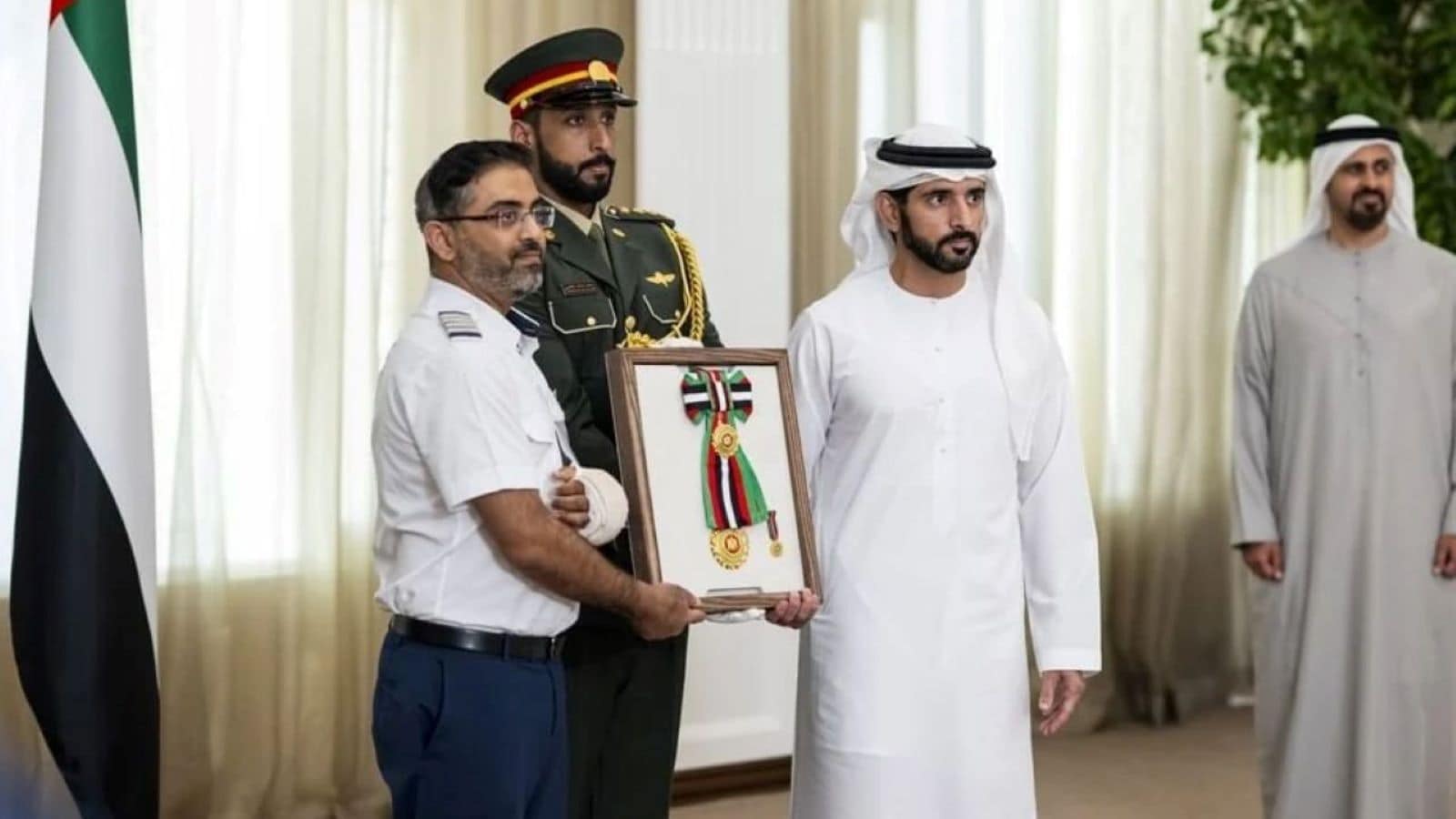
Every time a commercial flight suffers an engine failure, a bird strike, or an abrupt depressurization and touches down safely, the press releases follow the exact same script. Authorities pin medals on the captain’s chest. Headlines celebrate the crew’s extraordinary bravery. The public applauds the superhuman instincts of the men and women at the controls. That exact narrative played out again when the UAE honoured Indian pilot Smit Machchhar and his flydubai crew for bravery following an in-flight emergency.
Respect to Captain Machchhar and his team for doing their jobs under pressure. Getting a commercial airliner back on the ground without a scratch on the passengers is the only metric that matters in the end.
The problem isn't the crew. The problem is the lazy, Hollywood-soaked consensus surrounding why they succeeded.
Calling a successful emergency landing an act of "bravery" insults the brutal, unglamorous engineering and psychological conditioning that actually saved those lives. When you frame aviation safety around individual heroism, you are actively obscuring the system that makes commercial flight the safest mode of transport in human history. Worse, you are validating a mindset that gets people killed in every other high-stakes industry.
The Myth of the Lone Maverick
Aviation spent its first fifty years worshiping the "Right Stuff" archetype. The lone wolf with nerves of steel, relying on gut instinct and raw physical courage to wrestle a dying machine out of the sky.
That culture produced a staggering body count.
In the 1970s, commercial jets were crashing at rates that would shut down the global airline industry overnight today. Investigators kept finding the same root cause. The airplanes weren't breaking beyond repair. The crews were breaking down. Captains with massive egos refused to listen to junior officers. Crews improvised solutions on the fly instead of following basic procedures. Bravery wasn't saving flights; bravado was burying them.
I have sat in simulator debriefs where seasoned captains with twenty thousand hours of flight time completely unraveled during a compound emergency. Why? Because they tried to be heroes. They skipped the checklist to "fly the airplane by feel," missed a secondary hydraulic failure, and turned a manageable malfunction into a simulated smoking crater.
Modern aviation safety did not evolve by breeding braver pilots. It evolved by designing out the need for bravery altogether.
Systems Beat Instincts Every Single Time
When an engine swallows a bird at V1—the critical decision speed during takeoff—or an electrical bus fries at thirty-five thousand feet, the human brain wants to panic. Adrenaline dumps into the bloodstream. Tunnel vision sets in. Fine motor skills evaporate.
If a pilot relies on courage in that moment, everyone in the back is in serious trouble.
Instead, what happens inside a modern cockpit like a Boeing 737 MAX or an Airbus A320 is the exact opposite of heroic improvisation. It is cold, scripted, repetitive execution.
- Aviate: Fly the plane. Pitch for airspeed, trim the controls, engage the autopilot as soon as safely possible to offload cognitive strain.
- Navigate: Turn away from terrain, enter a holding pattern, point the nose toward a suitable runway.
- Communicate: Tell Air Traffic Control what is happening, declare an emergency, and coordinate with the cabin crew.
None of this requires bravery. It requires Crew Resource Management (CRM) and thousands of hours of muscle memory forged in Level D full-flight simulators.
Before Captain Machchhar or any other commercial aviator ever touches a real passenger jet, they are subjected to recurrent simulator checks every six months. Instructors throw the absolute worst-case scenarios at them: dual engine failures, cabin fires, windshear on short final, runaway stabilizers. They fail. They debrief. They run it again until running the Quick Reference Handbook (QRH) becomes an automatic nervous system response.
Calling that "bravery" is like calling a concert pianist brave for playing Beethoven without looking at their hands. It wasn't courage. It was preparation.
Why Airlines and Governments Love the Hero Narrative
If the industry knows that standard operating procedures (SOPs) and redundant engineering deserve the credit, why do we still see formal ceremonies honoring crews for bravery?
Follow the incentives.
First, PR damage control. When an airline experiences a high-profile incident—an engine fire caught on passenger smartphones, an aborted takeoff, an emergency diversion—the brand takes an immediate hit. Nervous flyers start googling safety records. By shifting the spotlight onto a shiny medal ceremony and praising the crew’s "extraordinary valor," the airline turns a mechanical failure or operational scare into a triumphant human-interest story. You stop asking why the plane broke in the first place, and you start admiring the uniforms.
Second, national pride and diplomacy. Aviation is a massive geopolitical flex, especially in the Middle East. Carriers like Emirates, Etihad, Qatar Airways, and flydubai are crown jewels of state infrastructure. When a foreign national like an Indian captain executes a flawless recovery for a Dubai-based carrier, honoring him publicly strengthens bilateral goodwill and projects competence to a massive expatriate workforce.
There is nothing inherently sinister about a government recognizing good work. The danger lies in how the public—and worse, corporate leaders outside aviation—internalize the wrong lesson.
What Makes a Pilot Truly Exceptional
People frequently ask what separates a great airline pilot from an average one during a crisis. The public assumes it is quick reflexes, razor-sharp eyesight, or fearlessness under fire.
Ask any check airman or crash investigator, and you will get a radically different answer.
The best pilots are aggressively boring.
They are paranoid pessimists who assume something will go wrong on every single leg. They brief the engine-out procedure before every takeoff, even on a clear, sunny Tuesday in Dubai. They manage their fatigue. They check fuel burn rates obsessively. They leave their egos in the crew lounge.
During an actual emergency, a great captain does not bark dramatic orders like a movie star. They speak slowly. They deliberately lower their vocal pitch to keep the first officer calm. They ask questions rather than dictating every move: "What do you see on the ECAM?" "Do you concur with shutting down engine number two?" "Give me your thoughts on the diversion to Muscat."
Consider the most famous "miracle" in modern aviation: US Airways Flight 1549, the Miracle on the Hudson.
The media instantly crowned Captain Chesley "Sully" Sullenberger a fearless hero. Sully himself spent the next decade trying to correct the record. When the birds knocked out both engines over New York, Sullenberger and First Officer Jeff Skiles did not invent a miracle. They split the workload instantly—Skiles ran the emergency checklist while Sullenberger flew the glide profile—maintained optimal airspeed, and executed a water ditching maneuver that had been engineered into the Airbus A320's flight control laws.
Sullenberger didn't need to be brave. He needed to be disciplined.
The Dark Side of Hero Worship in Cockpit Culture
When you over-index on "heroic" intervention, you subtly encourage pilots to override automation or ignore SOPs when they think they know better.
Aviation history is littered with accidents where a captain thought they could out-fly the airplane's warning systems. Take Air France Flight 447. When pitot tubes iced over at high altitude and the autopilot disconnected, the pilot flying pulled back on the side-stick—an instinctive, "heroic" reaction to climb away from perceived danger. He held that nose-up input for nearly four minutes, stalling the aircraft all the way into the Atlantic Ocean, ignoring the automated stall warnings screaming in the cockpit.
If the crew had simply done nothing—let go of the controls and followed the unreliable airspeed drill—the airplane would have flown itself out of the ice crystals.
Heroism demands action. Aviation safety demands restraint.
What Corporate Leaders and Everyday Flyers Get Wrong
The obsession with emergency heroism blinds us to two critical realities: how you should evaluate airline safety as a passenger, and how you should build high-reliability teams in your own career.
For the Passenger: Stop Judging Safety by Close Calls
When travelers read about a dramatic emergency landing, two opposite and equally flawed reactions occur:
- "I’m never flying that airline again; their planes are falling apart."
- "I’m definitely flying that airline; look how heroic their pilots are."
Both conclusions are garbage.
Mechanical failures happen to every airline on earth. Jet engines operate at temperatures hot enough to melt their own turbine blades, spinning at tens of thousands of RPMs for years on end. Stuff breaks. Birds fly into intakes. Sensors fail.
Do not judge an airline by whether an incident occurred. Judge it by how transparent the investigation is and whether the airline punishes crews for conservative decisions.
The real gold standard of aviation safety isn't the pilot who lands a burning plane. It is the pilot who delays a flight by four hours because a maintenance log looks slightly off, or the pilot who executes a go-around from two hundred feet above the runway because the wind shifted by twelve knots—burning thousands of dollars in extra fuel and causing passengers to miss connections.
If an airline’s management pressures crews to save fuel, avoid delays, or push through marginal weather to protect on-time performance metrics, that airline is a ticking time bomb. You won't see a medal ceremony for the captain who cancels a flight due to fatigue, yet that mundane decision saves far more lives than dramatic cockpit saves ever will.
For Business Leaders: Stop Rewarding Firefighters
Outside the cockpit, modern corporate culture is addicted to the exact same hero complex we see in those news headlines.
Executives love the "hero employee." The engineer who pulls three straight all-nighters to patch a catastrophic server crash. The account manager who swoops in at the eleventh hour to save a client relationship that was falling apart for six months. Companies hand out spot bonuses, praise their "grit," and hold them up as cultural icons.
This is organizational malpractice.
If your company regularly requires heroic effort to survive crises, your systems are broken. You are rewarding arsonists who put out their own fires.
Look at the principles that actually keep commercial airplanes in the sky, and apply them to your operations:
- Blameless Post-Mortems (Just Culture): In aviation, if a pilot makes an honest mistake—busts an altitude restriction, misreads a clearance—and self-reports it immediately through programs like NASA’s ASRS, they are immune from punitive action. The industry wants the data to fix the systemic flaw that allowed the error to happen. If you fire or humiliate employees when they make mistakes, they will hide errors until they become fatal.
- Mandatory Checklists for High-Stakes Work: Dr. Atul Gawande famously documented how introducing a simple, aviation-style surgical checklist in hospitals slashed post-operative deaths and infections by over 35%. Smart people hate checklists because they feel beneath their intelligence. Yet human memory is deeply flawed under stress. If surgeons and 777 captains aren't too smart for a checklist, neither is your leadership team.
- Flattened Hierarchies Under Pressure: In a modern cockpit, a 25-year-old first officer is legally and culturally empowered—and expected—to challenge a 60-year-old captain if something looks wrong. If the captain ignores the warning, the first officer is trained to take over the controls. Compare that to your last boardroom meeting, where junior analysts stayed silent while a senior vice president drove a multi-million-dollar project straight into the ground.
Admitting the Limits of the System
Let’s be brutally honest: systems and checklists cannot account for everything.
There is a legitimate counterargument to stripping away the "hero" label. Sometimes, an aircraft suffers a failure so bizarre, so far outside the flight manual, that the Quick Reference Handbook offers zero guidance.
Take United Airlines Flight 232 in 1989. An uncontained engine failure severed all three hydraulic lines on a DC-10, leaving the crew with zero flight controls. No ailerons, no rudder, no elevators. According to the engineers who built the jet, surviving that scenario was mathematically impossible.
Captain Al Haynes, along with a deadheading check airman named Dennis Fitch who volunteered from the passenger cabin, figured out how to steer the crippled jet using asymmetric thrust—throttling the remaining two wing engines up and down to bank and pitch the aircraft. They crash-landed in Sioux City, Iowa. 112 people died, which was tragic, yet 184 people walked away from an unsurvivable failure.
That wasn't in a checklist. That was pure, terrifying, creative airmanship under extreme duress.
Even in those ultra-rare black swan events, however, notice what made survival possible. It wasn't blind courage. It was Haynes immediately welcoming Fitch into the cockpit, flattening the hierarchy, delegating tasks, and maintaining rigorous communication with air traffic controllers right up to the moment of impact. Even when the manual ran out, the training held.
Give Them Their Due—Just Get the Words Right
When Smit Machchhar and his flydubai colleagues walked onto that stage in the UAE to accept their honors, they deserved every ounce of gratitude from the passengers who got home safely to their families.
Flying commercial jets is an unforgiving profession. You spend half your life fighting circadian rhythm disruption in sterile hotel rooms, enduring relentless medical exams, and carrying the weight of two hundred lives on your shoulders every time you push the thrust levers forward. When an emergency hits at thirty thousand feet, there is no pulling over to the side of the road. You have to solve the problem before gravity solves it for you.
Honour the crew. Shake their hands. Put their names in the paper.
Just stop calling it bravery.
Bravery is running into a burning building without a hose. Professionalism is spending ten thousand hours learning how to build fireproof walls, installing redundant sprinklers, drilling the evacuation route until you can walk it blindfolded, and calmly turning the valve when the smoke alarm goes off.
The next time your flight lands safely through a violent crosswind or diverts smoothly because of a cockpit warning light, don't thank the pilots for being fearless. Thank them for being ruthlessly, relentlessly prepared.