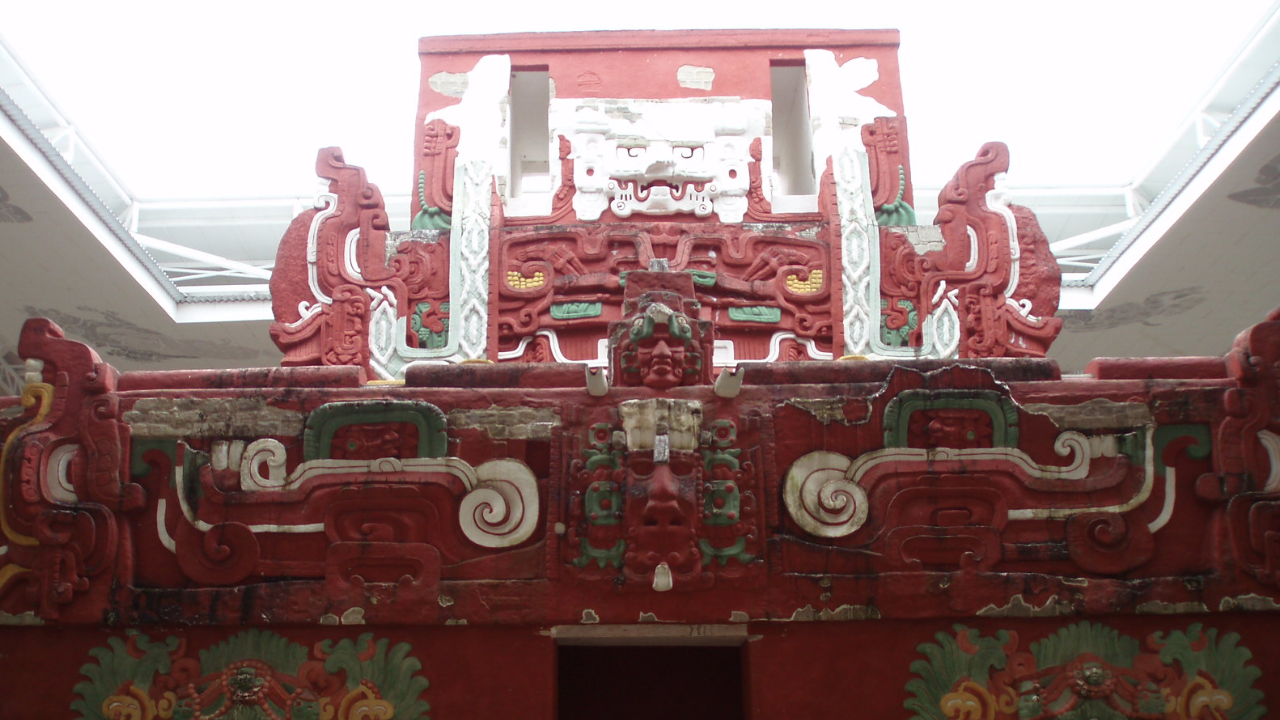
They painted their temples blood red, poisoned their own water supplies, and collapsed in a cloud of heavy metal toxicity.
That is the lazy, click-hungry narrative dominating archaeological headlines right now. Every time a geochemistry team pulls a sediment core out of a Mesoamerican lake and finds elevated levels of mercury, the press releases write themselves. Modern journalists love a simple morality play. They want a neat, tidy cautionary tale where ancient elites destroy their own environment through hubris and vanity, mirroring our modern climate anxieties.
It makes for great copy. It is also fundamentally dishonest about how ancient cities actually worked, what the data actually shows, and why the Classic Maya survived for centuries in one of the most challenging environments on Earth.
If you read the mainstream coverage of the recent findings regarding cinnabar use in ancient Maya cities—specifically the widely cited 2022 Frontiers in Environmental Science review led by Duncan Cook and colleagues—you walk away thinking the Maya were recklessly dumping neurotoxins into their drinking water like nineteenth-century industrialists. The truth is far more complex, far more interesting, and completely ruins the simplistic "Maya eco-suicide" myth.
The Lazy Consensus Around Cinnabar
Let’s look at what actually happened. Between 250 and 1100 CE, Maya cities across Mesoamerica—places like Tikal, Palenque, Copán, and Calakmul—used massive quantities of bright red pigment to coat pyramids, plazas, elite residences, and funerary goods. That pigment was cinnabar, a naturally occurring mineral composed of mercury sulfide ($HgS$).
When rain washed over those painted limestone surfaces for centuries, trace amounts of mercury ran off into the soil and settled into nearby reservoirs and lake beds. Geochemists sampling those sediments today find mercury concentrations well above natural background levels, occasionally crossing modern Environmental Protection Agency toxicity thresholds.
That is the hard data. Nobody in the field disputes the chemical signatures in the mud.
What deserves scrutiny is the leap from "mercury is in the sediment" to "the Maya poisoned themselves into collapse." Having spent years analyzing geoarchaeological site reports and watching science communicators butcher paleoclimate data for clicks, I have seen this exact interpretive trap spring shut dozens of times. Reporters see the word "mercury," immediately picture Minamata disease or Mad Hatter syndrome, and assume ancient populations were staggering around with tremors and kidney failure.
They weren't. And understanding why requires looking at basic chemistry rather than headline sensationalism.
Cinnabar Is Not Liquid Mercury
Here is the critical distinction that mainstream science reporting routinely glosses over: elemental mercury and methylmercury are wildly different beasts from cinnabar.
Cinnabar is mercuric sulfide. In geochemical terms, it is remarkably insoluble in water and poorly absorbed by the human gastrointestinal tract. If you swallow a small amount of raw cinnabar, the vast majority of it passes straight through your body without ever entering your bloodstream. It is a stable crystalline solid, not the volatile, bioaccumulating methylmercury found in modern tuna or industrial runoff.
For cinnabar to become a severe neurological threat to an entire urban population through water consumption, specific anaerobic bacteria in oxygen-starved lake bottoms have to convert that inorganic mercury into organic methylmercury. Then, that methylmercury has to move up the aquatic food chain into fish, which humans then consume in large quantities.
Did some methylation happen in Maya reservoirs? Almost certainly. Did elite artisans grinding raw cinnabar ore in poorly ventilated workshops inhale toxic dust and suffer chronic mercury poisoning? Yes, and osteological evidence from elite burials—including the famous Red Queen of Palenque, whose bones were literally coated in cinnabar dust—shows elevated mercury levels in royal remains.
Scaling an occupational hazard for royal painters and ritual specialists up to an empire-wide public health apocalypse is bad science. Most Maya commoners lived in thatched-roof pole houses with plaster floors that were whitewashed with simple burnt lime, not slathered in imported mercury sulfide. Cinnabar was expensive, difficult to mine—sourced largely from highland volcanic zones like the Sierra Gorda in Querétaro or regions in Honduras—and strictly controlled by the nobility. A Maya farmer living three miles outside the monumental core of Tikal was not licking temple walls or drinking concentrated runoff from the royal palace.
What the Maya Actually Knew About Water
The modern arrogance embedded in these headlines is staggering. Commentators treat the ancient Maya as if they were bumbling amateurs who accidentally fouled their own nests because they lacked modern chemistry textbooks.
In reality, the Classic Maya were among the most sophisticated hydraulic engineers in the pre-industrial world. Living in the karst lowlands of the Yucatán Peninsula meant dealing with porous limestone bedrock where rainwater vanishes underground almost instantly, followed by brutal seasonal droughts lasting four to five months. To keep cities of 50,000 to 100,000 people alive, Maya engineers turned entire urban centers into engineered watersheds.
They paved plazas with sloped, impermeable stucco specifically designed to capture rainfall and channel it into massive, clay-lined reservoirs. At Tikal, excavations led by researchers like Vernon Scarborough and Nicholas Dunning revealed that the Maya didn't just collect water—they actively filtered it. They built quartz and zeolite sand filtration systems at the intakes of their reservoirs, using minerals imported from miles away that specifically trap heavy metals, microbes, and particulate matter.
Think about that. Over a thousand years before modern municipal water treatment existed, Maya engineers were building molecular sieves out of zeolite to purify urban drinking water.
Furthermore, they planted water lilies (Nymphaea ampla) across the surfaces of their reservoirs. Water lilies only thrive in clean, shallow, non-turbid water. They acted as a living biological indicator of water quality while shading the surface to prevent evaporation and toxic algal blooms. When a Maya reservoir became stagnant or contaminated, the lilies died, giving engineers an immediate visual warning that the water was compromised.
Does a civilization that invents zeolite water filtration and biological bio-indicators blindly drink itself to death from paint runoff? No.
The Real Reason Red Pigment Mattered
To understand why the Maya covered their cities in cinnabar despite its cost and labor intensity, you have to abandon modern materialist assumptions and look at Maya cosmology.
To the Maya, red was not an aesthetic choice. It was not interior design. Red was the color of the east, the rising sun, human blood, and k’uh—the sacred life force that animated everything from kings to maize stalks. When Maya architects coated a pyramid in red pigment, they were not decorating a building; they were bringing a mountain to life. They were transforming dead limestone into a breathing, sacred ancestor capable of mediating between the human world and the underworld.
In a society where political legitimacy rested entirely on a ruler's ability to guarantee rainfall and agricultural fertility through ritual performance, sparing expense on sacred pigments was not an option. If the gods required blood-red temples to keep the monsoon rains coming on schedule, you mined the cinnabar, hauled it hundreds of miles through mountainous jungle, and painted the stone.
Comparing that to modern industrial pollution—where chemical companies dump toxic waste into rivers simply to pad quarterly profit margins—is a category error. One is a calculated cosmological investment made by a society with zero knowledge of heavy metal toxicology; the other is willful negligence driven by short-term greed.
Dismantling the "Collapse" Obsession
The deeper problem with the mercury-in-the-lakes narrative is how desperately it tries to hitch itself to the tired, discredited trope of the "mysterious Maya collapse."
Let’s get one thing straight: the Maya did not vanish. Millions of Maya people live in Mexico, Guatemala, Belize, Honduras, and El Salvador today, speaking over thirty distinct Mayan languages. What happened between the eighth and tenth centuries CE was a political and demographic transformation in the southern lowlands—specifically, the collapse of the divine kingship system (k’uhul ajaw) and the abandonment of major Classic-period urban centers.
That collapse was driven by a brutal convergence of prolonged multi-decadal megadroughts, endemic warfare between rival dynasties, soil exhaustion, and the breakdown of trade networks. It was not caused by temple paint.
Yet whenever a new geochemical study drops, media outlets rush to crown a new silver-bullet villain. Last decade it was deforestation. Five years ago it was drought. Now it is mercury pollution. This obsession with finding a single environmental sin that doomed the Maya tells us far more about modern Western guilt than it does about ancient Mesoamerica. We are terrified of our own ecological footprint, so we project our anxieties backward onto ancient ruins, turning complex historical civilizations into simple morality fables.
What Geochemical Data Actually Gives Us
If we strip away the breathless apocalyptic framing, what is the actual value of finding mercury in Maya lake sediments?
It is an extraordinary archaeological fingerprint.
Because cinnabar is not naturally occurring in the limestone lowlands of the Petén or the Yucatán, every single atom of mercury found in those lake cores had to be imported by human hands. Geochemists like Duncan Cook, Tim Beach, and Sheryl Luzzadder-Beach have essentially handed archaeologists a high-precision chemical clock.
By measuring mercury spikes layer by layer in lake sediments, researchers can now:
- Track trade network intensity without needing to dig up intact ceramic vessels or obsidian blades. When mercury spikes in a lake bed, long-distance trade routes with the volcanic highlands were humming.
- Map urban expansion and elite wealth across time. A drop-off in mercury deposition tells you precisely when a city's ruling dynasty lost the economic clout required to import luxury minerals, often decades before the last stone monument was carved.
- Identify forgotten ritual zones buried beneath thick jungle canopy where surface architecture has eroded away, simply by testing soil chemistry across grids.
This is the real breakthrough. Mercury in the soil is not a smoking gun for an ancient environmental suicide; it is a diagnostic tool that lets us reconstruct ancient economies with surgical precision.
The Risk of Over-Correcting the Narrative
To be fair, dismissing the environmental impact of Maya urbanization entirely would be just as foolish as exaggerating it. You cannot pack tens of thousands of people into a tropical rainforest without altering the local ecosystem.
The Maya cleared massive tracts of forest for maize agriculture and burned immense quantities of timber to produce quicklime for plaster. They altered local hydrology, accelerated soil erosion on hillsides, and created localized pockets of heavy metal contamination inside city centers. For the unfortunate individuals who spent their lives grinding cinnabar blocks into powder without masks, or the rulers buried in tombs saturated with red pigment, mercury toxicity was a real, painful physical reality. Modern archaeologists excavating Maya sites still have to wear respirators and protective gear when opening cinnabar-lined tombs to avoid inhaling 1,200-year-old neurotoxins.
Acknowledging that localized toxicity existed is good science. Pretending it brought down an entire civilization is fiction.
Stop Reading Ancient History Through a Modern Panic
The next time you see a headline claiming scientists have discovered the "hidden poison" that destroyed an ancient empire, look closely at the numbers buried in paragraph twelve. Check whether the researchers are talking about localized soil contamination in an elite courtyard or systemic poisoning across an entire population. Check the chemical compound involved.
The ancient Maya sustained complex, literate, mathematically brilliant cities in a fragile tropical environment for well over a millennium—far longer than modern industrial society has existed. They engineered water filtration systems, managed complex agroforestry networks, and built monuments that still stand a thousand years after the jungle reclaimed them.
They didn't die out because they were too stupid to realize their paint was toxic. They fell victim to the same forces that topple every empire eventually: political rigidity, endless war, and an inability to adapt when the climate shifted beneath their feet. Reducing a thousand years of human ingenuity to a cautionary tale about red paint isn't journalism—it's lazy storytelling.