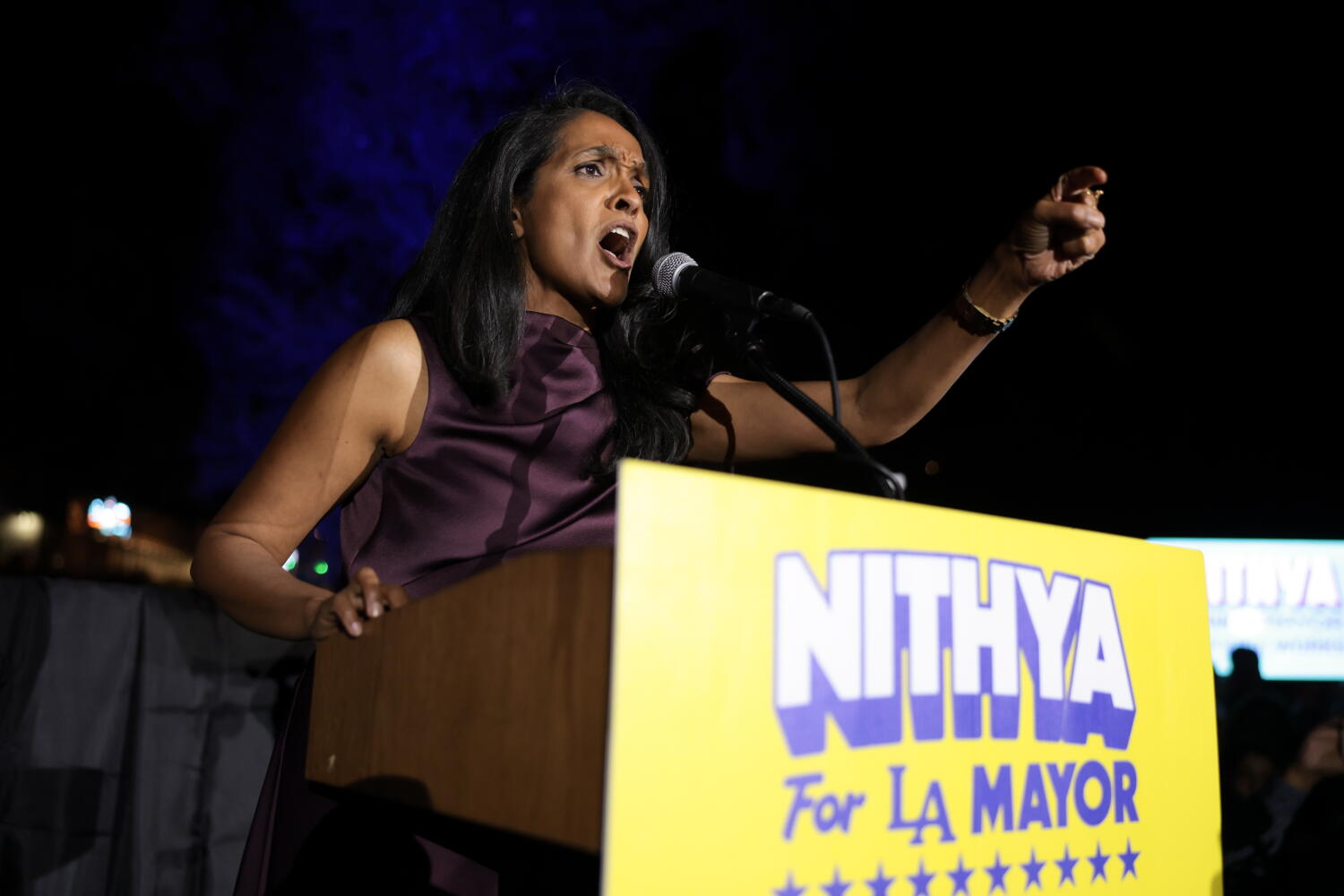
Political columnists love a fairy tale. When an outsider wins, the press corps reaches for the same tired playbook. They call it luck. They call it timing. They call it an unexpected wave of grassroots magic.
Look at the prevailing narrative surrounding Nithya Raman and her potential path to the Los Angeles mayor's office. Pundits want you to believe she is simply riding a lucky streak, blessed by a sudden progressive shift or the stumbles of her opponents. That analysis is lazy. It misses the structural mechanics of how power actually shifts in America's second-largest city.
Raman is not a beneficiary of good timing. She is the direct result of a decaying political machine that priced out its own voters and left a massive vacuum at the center of municipal governance. Calling her rise "savvy" or "lucky" reduces a systemic collapse to a personality trait.
If you want to understand why a former urban planner who once struggled to get meetings at City Hall is suddenly a viable contender for the top job, stop looking at her campaign strategy. Start looking at the complete failure of the establishment she is replacing.
The Myth of the Political Outsider
Every election cycle, Los Angeles media outlets rediscover the concept of the "progressive insurgent" as if it were a brand-new phenomenon. They treat Raman's 2020 City Council victory over incumbent David Ryu—and her subsequent survival against well-funded challengers—as anomalies.
They are not anomalies. They are the predictable outcome of demographic and economic math.
For decades, Los Angeles politics operated on a simple, transactional model. Real estate developers, public sector unions, and downtown business interests funded moderate candidates who promised stability, incremental change, and protection for single-family homeowners. In exchange, voter turnout in local off-cycle elections hovered in the single digits or low teens. As long as nobody rocked the boat, the machine ran smoothly.
Then two things happened that broke the machine permanently.
First, California moved local elections to align with statewide and presidential cycles. Suddenly, municipal races were no longer decided by a tiny sliver of hyper-engaged, older homeowners. Millions of younger, working-class, and renter-heavy voters showed up to the polls. The electorate changed overnight, yet the political establishment kept running the same 1990s playbook.
Second, the housing and homelessness crises moved from abstract policy debates to daily realities on every street corner in the city. You cannot tell a voter paying sixty percent of their income in rent—while stepping over encampments on their walk to the bus—that the status quo just needs a few minor tweaks.
I have watched dozens of municipal campaigns burn through millions of dollars trying to sell "competence" and "experience" to an electorate that views the experienced class as the exact people who broke the city. When the establishment fails visibly, outsider status stops being a liability. It becomes the only credential that matters.
Why Timing Is a Distraction From Infrastructure
The lazy consensus argues that Raman simply caught a wave. Waves are temporary. They crash, recede, and leave nothing behind.
What Raman and her allies built in Council District 4—and what makes a mayoral run genuinely threatening to the downtown establishment—is not a wave. It is permanent parallel infrastructure.
Traditional political campaigns in Los Angeles rely on paid media, slate mailers, and institutional endorsements. You raise money from special interests, hand it to consultants, and buy television ads and glossy brochures in the final six weeks before Election Day. Once the election ends, the campaign vanishes.
The Democratic Socialists of America and their aligned volunteer networks operate on an entirely different model. They do not rent an electorate every four years; they organize neighbors year-round. When thousands of volunteers knock on doors not just to drop off a flyer, but to have twenty-minute conversations about tenant rights and city budgets, paid television ads lose their potency.
Let us be precise about what this means. Field organization is not merely having people hold signs on street corners. True field organization is data-driven relational persuasion. It tracks voter sentiment at the precinct level, builds trust long before ballots drop, and turns passive voters into active recruiters.
Establishment consultants routinely underestimate this because you cannot see it on a campaign finance disclosure form. You cannot track the dollar value of a neighbor convincing three other neighbors to vote for a candidate they trust. When pundits attribute these victories to "good timing," they are admitting they do not know how to measure grassroots labor.
Is Los Angeles Actually Moving Left?
Whenever a progressive candidate gains traction in a major American city, national commentators immediately ask whether the electorate has undergone a radical ideological transformation. Are Angelenos suddenly committed socialists?
No. That is the wrong question entirely.
Voters in Los Angeles are not reading political theory before filling out their bubbles. They are reacting to material conditions. When a city becomes functionally unaffordable for the people who teach its children, staff its hospitals, and serve its food, voters will reach for whoever promises to disrupt the arrangement.
Let us look at the actual grievances driving this shift:
- Housing Scarcity: Decades of restrictive zoning and bureaucratic gridlock created a massive deficit in housing supply, driving rents to historic highs.
- The Homelessness Apparatus: Billions of dollars approved by voters through measures like Proposition HHH failed to produce rapid, visible reductions in street homelessness, destroying public trust in traditional governance.
- City Hall Corruption: A string of federal indictments involving sitting councilmembers—ranging from bribery and extortion to leaked racist audio recordings—shattered the moral authority of the city's political class.
You do not need an ideological awakening to explain why voters reject a system plagued by corruption and stagnation. You just need basic human frustration. Raman's appeal is less about an abstract commitment to democratic socialism and more about the fact that she represents a clean break from a discredited institution.
The Governance Trap Nobody Mentions
Here is where the contrarian reality cuts both ways. If you think Raman's path to the mayor's office is inevitable, you are ignoring the massive trap waiting for every outsider who wins executive power.
Running as a critic of the system is exhilarating. Governing the system is brutal.
As a councilmember representing one of fifteen districts, you can champion systemic reform, vote against budgets you dislike, and maintain ideological purity while still delivering constituent services to your specific neighborhoods. You share the blame with fourteen other people and a mayor.
The mayor of Los Angeles has nowhere to hide.
Los Angeles operates under a "weak mayor" charter system compared to cities like New York or Chicago. The mayor does not unilaterally control the City Council, cannot easily fire department heads without navigating civil service protections, and must negotiate constantly with powerful municipal unions and county agencies that control health and social services.
Imagine a scenario where a progressive mayor takes office promising rapid structural reform on housing and public safety. On day one, they confront a multi-hundred-million-dollar budget deficit, a police department struggling with recruitment and overtime costs, and a City Council where moderate and conservative members hold enough votes to block major zoning overhauls.
If the new mayor compromises to pass a budget or clear a major encampment, their grassroots base accuses them of betrayal. If they refuse to compromise, nothing moves, and the broader electorate punishes them for gridlock. We have seen this exact pattern play out in cities from Chicago to San Francisco. Winning the election is the easy part; surviving the bureaucracy is where movements go to die.
What the Establishment Still Refuses to Learn
If moderate leaders and business coalitions in Los Angeles want to stop losing ground, they need to stop blaming "bad luck" or "unfair media coverage" and look at their own structural failures.
Right now, the establishment strategy consists almost entirely of defensive spending. Independent expenditure committees dump millions of dollars into attack ads painting progressive candidates as dangerous extremists who want to destroy neighborhoods.
That tactic has diminishing returns. Fear only works when voters feel they have something to lose. When a majority of the city's residents are renters watching their financial security evaporate, threatening them with "change" does not scare them. It sounds like a promise.
To compete, traditional political actors would have to do three things they currently refuse to consider:
- Abandon Single-Family Exclusivity: You cannot claim to care about homelessness while defending zoning laws that make it illegal to build apartments across more than seventy percent of the city's residential land.
- Demand Accountability From City Agencies: Stop blindly defending municipal departments when basic services—from permitting to street repairs—take years instead of weeks.
- Build Year-Round Voter Engagement: Stop treating voters like ATM withdrawals every four years and actually invest in community presence between election cycles.
Until they do that, they will keep losing to candidates who actually show up.
The Real Lesson of the Raman Phenomenon
Whether Nithya Raman ultimately wins the mayor's office or hits the ceiling of Los Angeles's fractured coalition politics, reducing her rise to "political savvy" or "good timing" is a comforting lie told by people who want to believe the old system is still fundamentally sound.
It is not sound. The machine broke because it stopped delivering basic quality of life to the people paying the bills.
Political power never disappears; it just changes hands when the current owners become too arrogant to maintain it. Raman didn't steal the keys to City Hall. The people inside left the door wide open.