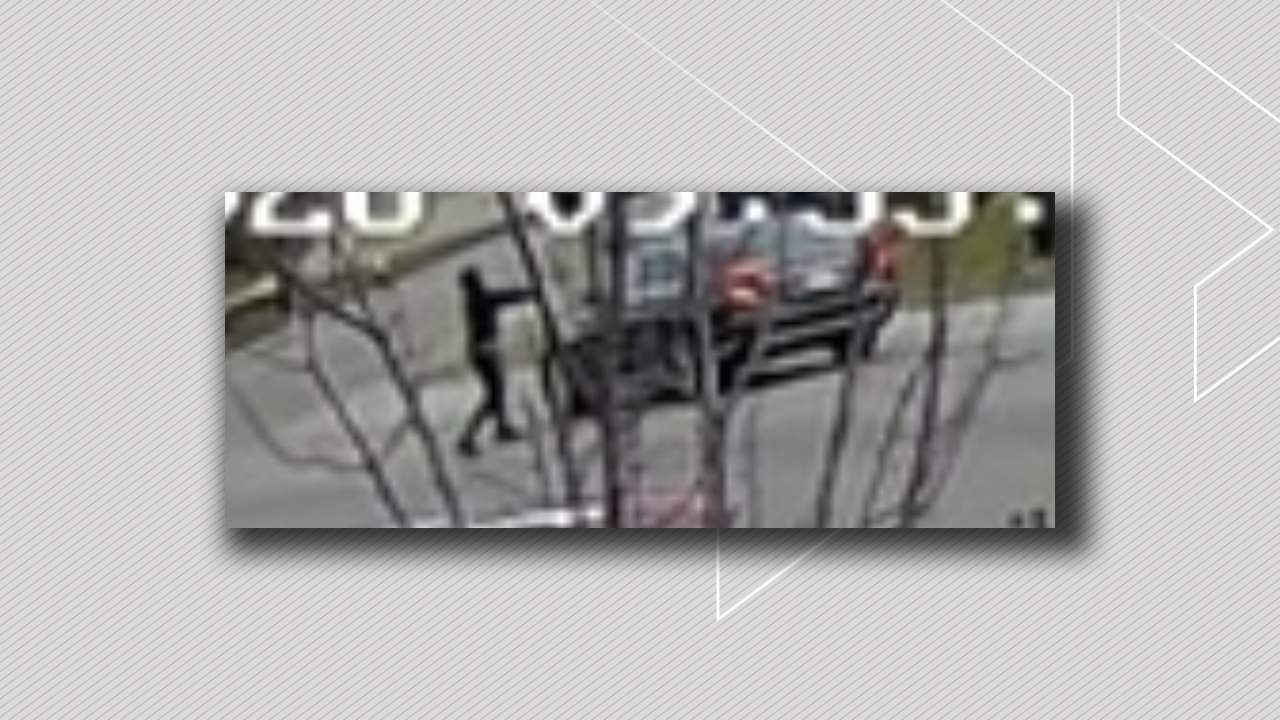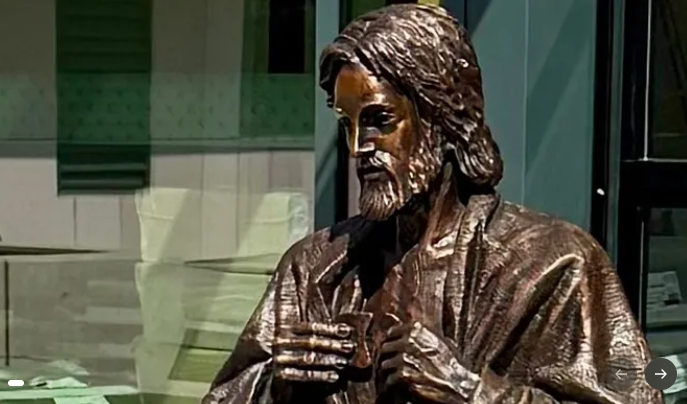
The local news coverage of the stolen Jesus statue in Surrey, British Columbia, reads like a predictable Sunday sermon mixed with a standard police blotter. Three men rammed a white van through a security fence at Saint John Paul II Academy around 3:00 a.m. on November 11, 2026. They took power saws to a life-size bronze sculpture by Canadian artist Timothy Schmalz, severed it at the knees, loaded the pieces into their van, and vanished.
Predictably, the public reaction split into two lazy camps. Politicians called it a disgraceful attack that wounds an entire Christian community. Online commentators immediately labeled it an anti-Christian hate crime. School administrators prayed for the thieves to repent and return the statue. Recently making news in related news: Why Rural New Brunswick Is Finally Rethinking How Seniors Age at Home.
Everyone is looking at the iconography. Nobody is looking at the spot price of copper.
Calling this a religious attack or a "brazen" act of sacrilege completely misses the cold, mechanical reality of the modern scrap metal black market. The thieves did not care that the statue depicted Jesus Christ. They cared that it was hollow-cast bronze—an alloy made of roughly 88% copper and 12% tin—sitting unguarded in a suburban courtyard. When you treat an industrial commodity theft like a theological crisis, you misdiagnose the threat, waste money on the wrong security upgrades, and guarantee the exact same crew will hit another school next month. Additional insights regarding the matter are covered by Al Jazeera.
The Anatomy of a Scrap Yard Hit
Look at the operational details reported by the Surrey Police Service and school officials. This was not a drunken vandal throwing red paint on a church door. It was a coordinated, three-man extraction executed with commercial demolition gear.
- Reconnaissance: Police noted the suspects had prior knowledge of the compound layout. They knew where the gates were, where the cameras pointed, and how far their van could drive onto the property.
- Tooling: You do not cut through cast bronze with a hacksaw from a hardware store. Severing a life-size statue at the knees in the dead of night requires high-torque reciprocating saws, carbide-tipped demolition blades, and spare battery packs.
- Extraction: A life-size bronze sculpture weighs between 300 and 600 pounds, depending on wall thickness and internal armature. Three men brought a cargo van specifically sized to haul heavy, awkward industrial loads.
If your goal is to offend Catholics, you spray-paint a slogan and run. You take zero risk of getting caught with 400 pounds of evidence in your vehicle. You do not spend twenty minutes running loud power tools in a residential neighborhood at 3:00 a.m.
You only take that risk when the payload converts directly into untraceable cash before sunrise.
Why Bronze Statues Are Just Above-Ground Mines
To understand why Saint John Paul II Academy lost its centerpiece, stop reading local crime reports and start reading the London Metal Exchange.
Global copper prices have surged to historic highs, driven by electric vehicle manufacturing, grid expansion, and AI data center construction. When primary copper prices spike, secondary scrap markets ignite. In British Columbia, this price surge has triggered an epidemic of infrastructure stripping. Just prior to the Surrey school theft, thieves ripped 1.3 kilometers of copper cable directly out of BC Hydro manholes in the exact same city. Electric vehicle charging stations across the Lower Mainland are routinely amputated for a few feet of thick gauge wire.
A bronze statue sitting on a concrete pad in a school courtyard is, from an economic standpoint, an unguarded deposit of refined non-ferrous metal.
The Math Behind the Saw
Let us break down the street economics of this theft. A commercial bronze casting like Timothy Schmalz’s The Last Supper Table—which features Jesus seated with twelve empty stools—is a masterpiece of public art. To an art collector or a diocesan insurer, its replacement value is tens of thousands of dollars.
To a shady scrap broker, its artistic value is zero. Its melt value is everything.
- Weight: Roughly 400 pounds of architectural bronze.
- Scrap Rate: Clean red brass and bronze scrap fluctuates between $2.50 and $3.50 CAD per pound depending on the yard and local market conditions.
- Gross Payout: $1,000 to $1,400 CAD for thirty minutes of work.
That is why the thieves cut the statue off at the knees. They did not care about preserving the face or the hands. Cutting it into manageable chunks accomplished two critical objectives: it allowed three men to lift the dead weight into a van quickly, and it destroyed the piece's visual identity. By the time school staff reported the theft at 10:30 a.m., that statue had likely already been chopped into unrecognizable ingots or mixed into a shipping container bound for overseas smelting.
Why Appeals to Conscience Fail Completely
In the aftermath of the theft, school leaders publicly hoped the perpetrators would repent and bring the statue back. While compassionate, that response reveals a fundamental misunderstanding of who commits these crimes.
I have consulted on physical security for municipal utilities and private campuses for over a decade, and I have watched institutions burn hundreds of thousands of dollars on emotional PR campaigns and useless perimeter upgrades after metal thefts. Institutions consistently fail to stop repeat hits because they project their own moral framework onto their adversaries.
You cannot shame a commodity thief into returning melted bronze.
The crew that hit Saint John Paul II Academy did not target the school because they hate Catholicism. They targeted it because religious institutions, municipal parks, and public schools share three fatal vulnerabilities:
- Predictable Empty Hours: Between midnight and 5:00 a.m., campuses are completely deserted. Unlike a 24-hour industrial yard, nobody is walking the perimeter.
- Aesthetic Over Security: Schools and churches refuse to make their courtyards look like maximum-security prisons. They install decorative wrought-iron or chain-link gates that a standard minivan can flatten in three seconds.
- Zero Internal Tracking: Unlike utility companies that embed microdots or chemical markers into copper spools, schools treat statues as static furniture. Once it leaves the property, there is no forensic way to prove a melted chunk of bronze came from Surrey.
Dismantling the Common Myths About Public Art Theft
When high-profile thefts like this hit the news cycle, the same flawed questions dominate search engines and community forums. Let us dismantle them with hard reality.
Is this part of a wave of anti-Christian hate crimes?
No. While religious vandalism happens, the mechanics of this incident point entirely to organized property crime. Hate crimes are expressive; the perpetrator wants the public to see the message. Commodity thefts are extractive; the perpetrator wants the asset gone as quietly and quickly as possible. Lumping a scrap metal heist into hate crime statistics distorts law enforcement resource allocation. Police do not need a hate-crime task force to solve this; they need commercial vehicle enforcement inspecting flatbed trucks and regulatory audits of local scrap yards.
Will higher-definition security cameras stop the next theft?
Cameras do not stop saws. Every major metal theft in British Columbia over the last two years has been captured on crisp, high-definition security footage. Thieves wear hoodies, masks, and gloves, and they drive vans with stolen plates or no plates at all. Footage only gives the local news station dramatic B-roll to air at 6:00 p.m. If your security strategy relies on recording a crime rather than physically preventing vehicle access, you have already lost your asset.
Why do scrap yards accept obviously stolen statues?
Legitimate, licensed recyclers in British Columbia are governed by the Metal Dealers and Recyclers Act. Under this legislation, dealers are strictly required to record seller identification, log transaction details, and hold suspicious items—and they are explicitly prohibited from buying obvious public infrastructure or religious artifacts without verified provenance.
However, the criminal ecosystem does not use legitimate front-door counters. Stolen bronze moves through unlicensed middlemen, mobile scrap haulers, and rogue operators who consolidate stolen metal in private warehouses before shipping it out in bulk containers. Until regulators aggressively prosecute the brokers at the top of the chain, street-level crews will always have a buyer.
The Uncomfortable Downside of Hardening Your Campus
Before any school board or church rushes out to buy steel bollards and infrared sensors, you need to accept an ugly truth: true physical security ruins the exact atmosphere you are trying to create.
Timothy Schmalz designed The Last Supper Table with twelve empty stools specifically to invite the public to sit down, reflect, and feel welcomed. The entire theological point of placing that sculpture in a courtyard is openness.
If you surround that courtyard with concrete-filled steel bollards, razor-wire fencing, and blinding motion-activated floodlights, you save the bronze, but you kill the invitation. You turn a sanctuary into a fortress. Furthermore, pouring concrete cores inside hollow statues or welding them to deep rebar footings creates a massive liability: when thieves return with bigger saws and realize they cannot take the statue intact, they will often mutilate it out of spite, leaving you with a ruined sculpture that costs just as much to repair as a total replacement.
How Institutions Actually Protect High-Value Metal
If you manage a school, church, or municipality and want to keep your bronze out of a smelter without turning your property into a bunker, stop buying cameras and start changing your engineering and procurement standards.
1. Abandon Bronze for New Commissions
Stop putting six-figure scrap metal targets in unguarded outdoor spaces. Modern cast stone, high-density fiberglass reinforced polymer (FRP), and bonded marble resins can replicate the exact patina, weight, and visual depth of cast bronze at a fraction of the cost. More importantly, they have zero scrap value. A thief with a reciprocating saw will walk right past a polymer statue because nobody at a scrap yard will pay a dime for plastic dust.
2. Install Disguised Vehicle Barriers
The Surrey thieves succeeded because they could drive a van directly up to the courtyard. Heavy metal cannot be carried a quarter-mile by hand. You do not need ugly yellow industrial bollards to stop a van. Heavy architectural planters filled with reinforced concrete, strategically placed granite boulders, and deeply anchored steel benches spaced four feet apart will stop a cargo van dead in its tracks while looking like intentional landscaping.
3. Deploy Active Vibration Alarms on the Asset
Perimeter motion sensors generate too many false alarms from raccoons, wind, and stray cats, causing security companies to deprioritize responses. Instead, mount wireless seismic or tilt sensors directly inside the hollow cavity of existing bronze statues. The moment a carbide blade touches the metal, the high-frequency vibration triggers an instant silent alarm directly to private mobile patrol and police dispatch, cutting response time from hours to minutes.
4. Mark the Metal at the Molecular Level
If you already own historic bronze that cannot be replaced, coat it in forensic synthetic DNA markers—such as SmartWater—and stamp the interior walls with the institution's postal code in multiple locations. Alert every local scrap dealer and metal recycler within a 100-mile radius that your property is forensically tagged. Thieves avoid marked assets when they know local buyers are actively scanning for the signature.
The theft at Saint John Paul II Academy is a painful loss for a tight-knit school community, and the GoFundMe campaign to replace the piece will likely succeed. Yet if the school simply buys another hollow bronze statue and bolts it to the exact same concrete pad behind the exact same gate, they are not rebuilding a memorial. They are just restocking the shelves for the next guy with a white van and a cordless saw.