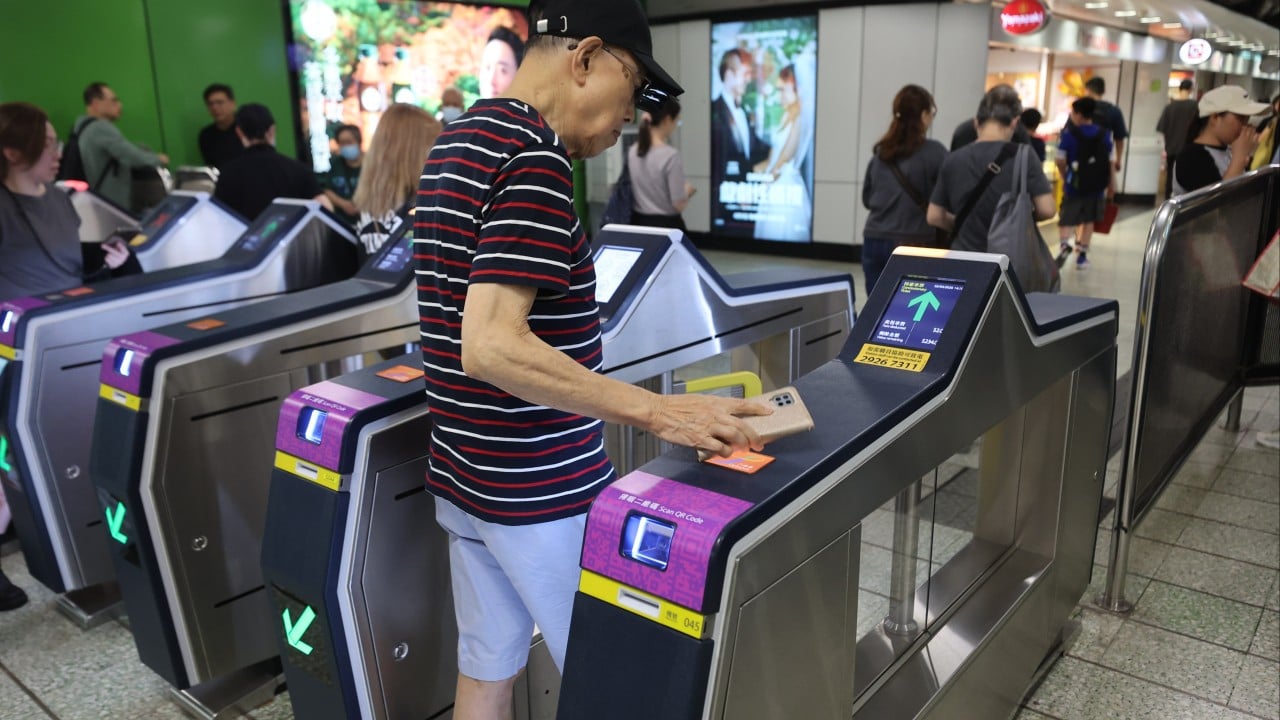
Hong Kong is panicking over the fiscal sustainability of its HK$2 scheme. Bureaucrats are crunching numbers, calculating the cost of elderly citizens taking "joyrides" from Central to Chai Wan just to buy fresh vegetables. Government ministers are defending the decision not to cap trips because the tracking systems would cost more than the savings.
They are missing the entire forest for a single, cheap tree.
The lazy consensus dominating the debate is that the HK$2 scheme is an expensive piece of social welfare that needs to be disciplined, managed, or capped to protect the public purse. The conventional wisdom treats public transport as a business that must balance its books on a per-ride basis.
That view is fundamentally wrong. The fiscal bleed isn’t coming from the elderly tapping their Octopus cards too many times. The crisis is born from an archaic, distance-based fare structure and a property-rail model that forces the government to subsidize the very inefficiency it created.
The Myth of the Expensive Joyrider
Let’s dismantle the math that keeps policymakers awake at night. Critics point to the rising cost of the Public Transport Fare Subsidy Scheme, noting that government expenditure on this specific line item has ballooned over recent years. The gut reaction from fiscal conservatives is to demand limits: cap the trips per day, restrict the hours, or raise the flat rate to HK$3 or HK$4.
But the transport minister was accidentally right about one thing: implementing a tracking and capping mechanism is a logistical nightmare that burns capital for negligible returns.
Imagine a scenario where the government deploys an automated capping system across thousands of buses, minibuses, and MTR stations. You have to build infrastructure to track individual travel histories in real-time, handle exceptions, manage disputes at customer service centers, and update software across a legacy network. The administrative overhead, data processing costs, and system maintenance would swallow the exact pennies you are trying to pinch from a retiree traveling three stops to see their grandchildren.
The problem isn't that people are traveling too much. The problem is that the structure of Hong Kong's transit pricing makes short trips artificially expensive and long trips weirdly subsidized for operators.
When a senior citizen boards a cross-harbour bus for a two-stop journey, the government reimburses the bus operator for the full, long-distance fare minus HK$2. The bus company gets a massive payday for a passenger who occupied a seat for five minutes. That is a failure of fare-stage design, not a failure of welfare policy. We are subsidizing corporate inefficiency under the guise of elder care.
The Distance-Based Trap
Hong Kong’s transit network relies heavily on distance-based pricing. On paper, it sounds fair: you travel further, you pay more. In practice, it creates massive market distortions.
Distance-based fares punish mobility and concentrate economic activity. They incentivize bus operators to run long, winding routes that maximize fare collection per passenger, rather than efficient, point-to-point shuttle networks that feed into rail trunks.
Look at London’s Hopper fare or the flat-fare systems in New York and Paris. These cities understand that public transit is a utility, not a premium product. A flat-fare system or a simplified zonal system completely eliminates the administrative nightmare of calculating complex cross-operator transfers.
If Hong Kong shifted to a flat-fare or highly simplified zonal model for its bus and rail networks, the HK$2 scheme wouldn't need a cap. The baseline fare for short-to-medium trips would drop naturally, drastically reducing the size of the subsidy the government has to pay out of pocket to private operators.
The Flaw in the Property-Rail Golden Goose
For decades, the MTR Corporation has been hailed as a global genius for its "Rail plus Property" model. The narrative goes like this: the MTR builds a station, develops the land above it into luxury malls and high-rises, and uses the real estate profits to fund the railway operations. No direct government subsidies required.
I have spent years analyzing urban transit financing, and I can tell you that this model has a dark underbelly that nobody wants to talk about.
The property-rail model only works when property values go up forever. The moment the real estate market cools, the cross-subsidization mechanism stutters. More importantly, this model aligns the MTR’s incentives with property developers, not commuters. It forces the transport network to prioritize high-density commercial hubs over logical, decentralized community transit.
Because the MTR operates as a listed, profit-maximizing corporation, it resists fare restructuring that would cut into its core transit margins. The government, as the majority shareholder, gets caught in a bizarre conflict of interest: it needs the MTR to make hefty profits to look good on the balance sheet, but it has to use taxpayer money via the HK$2 scheme to make those same high fares affordable for a massive segment of the population.
The money is just moving from the government’s left pocket (the treasury) to its right pocket (MTR dividends), while bleeding billions in friction costs to private bus franchises along the way. It is an accounting illusion.
The Brutal Truth About Universal Basic Mobility
Let’s answer the question the public is afraid to ask: Should public transport be free for everyone?
No. Total elimination of fares leads to capacity strain and a complete loss of data on commuter preferences. But we need to accept a different reality: public transport is public infrastructure, just like roads, streetlights, and police stations. We do not demand that a highway turn a profit on toll collection alone. We understand that the highway creates economic value by moving goods and people.
The real goal should be Universal Basic Mobility.
Instead of debating caps on the elderly, we should be debating why working-age citizens in remote districts like Tuen Mun or Tin Shui Wai are paying an absolute premium just to commute to their jobs in Central. High transit costs act as a direct tax on employment, discouraging lower-income workers from seeking opportunities outside their immediate neighborhoods.
If we want a sustainable fiscal path, the strategy requires three structural shifts:
- Abolish the Cross-Harbour Fare Premium: The historical anomaly that makes crossing Victoria Harbour exponentially more expensive than traveling an equivalent distance within Kowloon or Hong Kong Island must end. It distorts traffic patterns and inflates subsidy payouts.
- Enforce Flat-Fare Zones for Buses: Stop letting bus companies charge full-route fares to passengers boarding near the end of a line. Implement strict zonal drop-offs or flat regional pricing.
- Restructure the MTR Dividend Flow: Directly earmark the government’s annual MTR dividend payouts to fund transit subsidies, creating a closed-loop system that doesn't touch general tax revenue.
The downside to this contrarian approach? It requires confronting powerful corporate monopolies and rewriting a fare system that has existed for half a century. It will cause short-term friction for corporate balance sheets. But continuing to tweak the edges of a broken, distance-based model while blaming retirees for traveling too much isn't just bad economics—it is political cowardice.
Stop looking for ways to cap the mobility of your citizens. Start fixing the pricing architecture that makes mobility an unbearable expense in the first place.



:max_bytes(150000):strip_icc()/how-many-types-of-dwarfism-are-there-2860725-v1-8dae2c531b4b47d9ae36ae404d3308a0.png)