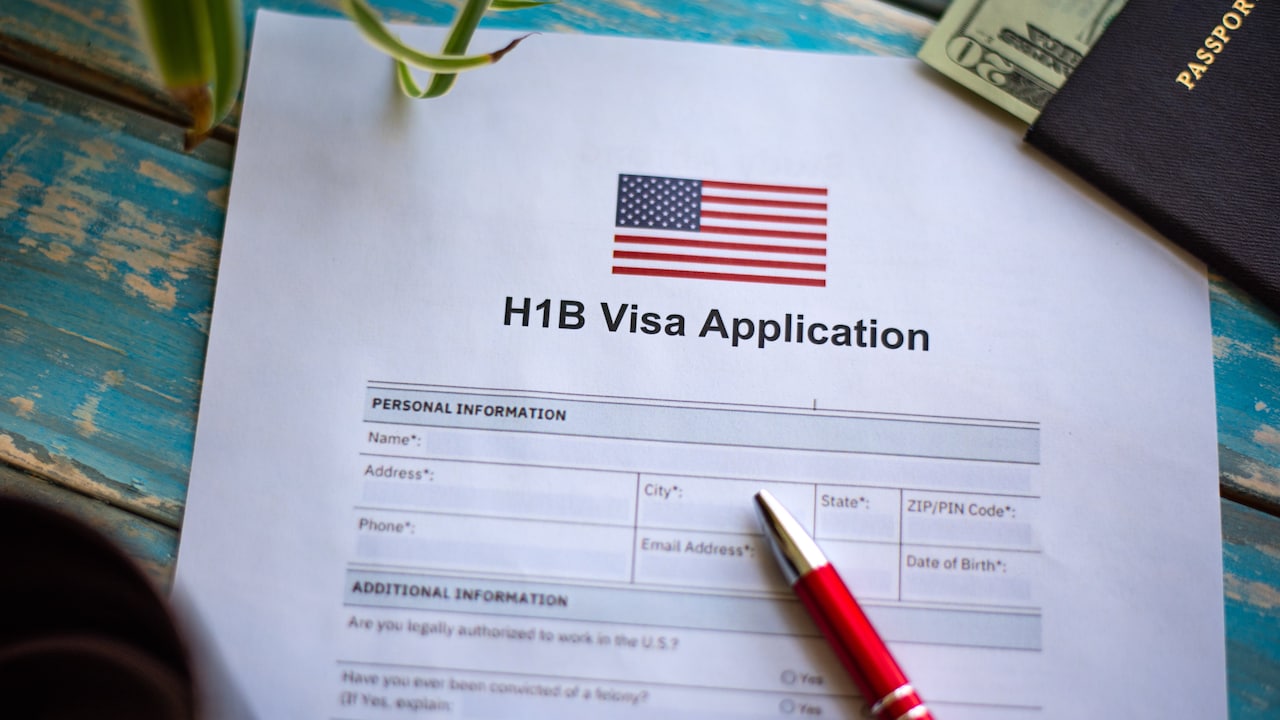
The collective sigh of relief echoing through Silicon Valley and the Indian tech diaspora right now is a masterclass in delusion.
On May 21, the Trump administration dropped a policy memo that hit like an artillery shell. The directive was blunt: if you are in the US on a temporary visa—including dual-intent lifelines like the H-1B—and you want a green card, you must pack your bags, return to your home country, and navigate the bureaucratic quicksand of consular processing from abroad. The domestic Adjustment of Status process (Form I-485) was effectively dead for the masses. If you enjoyed this post, you should look at: this related article.
Then came the "clarification." USCIS spokesperson Zach Kahler scrambled to the press to walk it back just enough to stop an immediate tech stock sell-off. He promised that current H-1B holders who provide an "economic benefit" or serve the "national interest" will likely be able to continue their current domestic path.
Mainstream financial media rushed out the soothing headlines. “Don’t panic!” “Indians with H-1B visas may not need to leave!” For another angle on this development, see the recent update from MarketWatch.
It is a lie.
I have spent nearly two decades watching immigration attorneys bill millions to desperate tech workers while corporate HR departments treat human beings like depreciating software assets. Here is the unvarnished reality the talking heads are ignoring: this clarification is not a reprieve. It is a lethal trap. By shifting the domestic green card path from a statutory right to an arbitrary, case-by-case discretionary test, the government has just weaponized the bureaucracy to accelerate a quiet, administrative purge of the Indian tech workforce.
The Illusion of the National Interest Blanket
Let us dismantle the most dangerous piece of consensus lazy thinking: the belief that working as a senior software engineer at a FAANG company or a hot AI startup automatically equals "economic benefit" or "national interest."
It does not.
Historically, "National Interest" in US immigration has a hyper-specific legal definition. It belongs to the realm of the EB-2 National Interest Waiver (NIW). To clear that bar, your work cannot just be profitable for your employer; it must have substantial merit and national importance on a macro scale. Developing a slightly faster ad-targeting algorithm or refactoring legacy code for a financial institution does not qualify.
By inserting the words "economic benefit" and "national interest" into discretionary I-485 adjustments, USCIS has not granted an exemption. They have raised the goalposts to an impossible height.
Imagine a scenario where a frontline adjudication officer with zero technical background reviews an Indian engineer's I-485. The officer looks at the new May 2026 guidance. The guidance explicitly warns that merely maintaining a valid dual-intent H-1B status is no longer enough to warrant a favorable exercise of discretion. The burden is entirely on the worker to prove that kicking them out would actively harm America.
What happens next? Mass RFEs (Requests for Evidence). Months of processing delays. Sudden, unappealable denials based on subjective "discretionary analysis."
The media is telling you the door is open. In reality, the door is closed, and they are charging you a premium just to knock.
Consular Processing is a One-Way Ticket
The competitor articles suggest that applying from abroad is a mere logistical hurdle—a temporary inconvenience involving a flight back to Hyderabad or Bengaluru, a quick interview, and a return ticket.
This ignores how the infrastructure actually operates. Consular processing is where immigration dreams go to die.
+-----------------------------------------------------------------+
|               THE CONSULAR PROCESSING TRAP                      |
+-----------------------------------------------------------------+
|  Domestic Adjustment (Old Way)  |   Consular Processing (New)   |
+---------------------------------+-------------------------------+
|  Stay in US with valid EAD       |  Forced departure from US     |
|  Protected by 60-day grace period|  Subject to systemic backlogs |
|  Access to US federal courts    |  No judicial review/appeals   |
|  Continuous employment allowed  |  Stranded indefinitely abroad |
+-----------------------------------------------------------------+
If you are forced into consular processing, you lose the safety net of the United States legal system. Under the doctrine of consular nonreviewability, a visa refusal by a consular officer overseas cannot be appealed in a US court. If an officer in Mumbai denies your immigrant visa because they feel your corporate sponsor could hire an American, you are done. Your life, your mortgage, your 401(k), and your children’s schooling in the US evaporate overnight.
Furthermore, the wait times for immigrant visa appointments at US consulates in India are already catastrophic. Sending hundreds of thousands of backlogged Indian EB-2 and EB-3 applicants back into that system will completely break it. You are not going home for a holiday; you are being exiled to a processing queue that could last years.
The Corporate Betrayal and the H-1B Trap
For years, the tech industry has relied on a transactional arrangement. Indian tech talent traded low wage growth, lack of career mobility, and absolute dependence on an employer for the vague promise of an eventual green card.
This new USCIS policy shatters that contract. And your employer will not save you.
When Google and Amazon suspended green card applications for certain roles during the recent wave of tech layoffs, they proved that corporate loyalty to visa holders ends the moment the bottom line dips. Under this new framework, sponsoring an adjustment of status will require corporate legal teams to compile exhaustive, bespoke portfolios proving each individual worker's "national economic necessity."
Most legal departments will look at the cost, look at the compliance risks, and simply decline. Why spend $15,000 fighting an uphill discretionary battle with USCIS for a mid-level engineer when they can hire local talent or outsource the role entirely?
The H-1B was already a golden cage. The 60-day grace period after a layoff is a joke in a brutal job market. Now, even if you keep your job, your path to permanence is dictated by the mood of an anti-immigration administration that has realized it does not need to pass new laws through Congress to stop legal immigration—it just needs to issue internal memos.
Sridhar Vembu Was Right (For the Wrong Reasons)
When Zoho CEO Sridhar Vembu publicly urged Indian professionals to Pack up, come home, and prioritize self-respect over the endless green card wait, the diaspora reacted with anger. Commentators pointed out how difficult it is to uproot families.
But looking at the mechanics of this 2026 USCIS directive, Vembu’s conclusion is the only logical one left, even if his reasoning was purely patriotic.
Staying in the US under the current H-1B regime is no longer a calculus of risk; it is a certainty of exploitation. You are betting your productive years on a system that is actively engineering your exit while whispering sweet nothings about "clarifications" through the press.
If you are an advanced-degree professional from India, you have been sold a lie that hard work and tax contributions buy you a place in American society. They do not. They buy you a temporary pass until the political winds shift.
Stop waiting for a legislative fix. Stop trusting the reassuring corporate HR emails. The administrative deportations have begun, disguised as discretionary reviews. Gather your capital, secure your intellectual property, and build your future where you cannot be erased by the stroke of a bureaucratic pen.