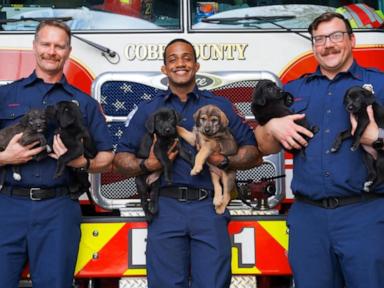
Every few months, the news cycle spits out the exact same predictable comfort food. A local news crew rolls up to a fire station. B-roll rolls of burly firefighters holding wriggling bundles of fur. An anchor with a grave yet heartwarming tone tells you about a heroic rescue of seventeen puppies found under a porch or inside a burning shed. America collectively melts, hits share, and feels a warm glow about our civil servants.
It is a brilliantly packaged distraction. And it is entirely masking how broken the system actually is. Meanwhile, you can explore related stories here: The Jeffrey Donaldson Sentencing by the Numbers What Standard Coverage Misses.
Let us get something straight immediately. Nobody hates puppies. Firefighters doing community outreach or saving animals are operating with good intentions at the micro level. The problem is not the individuals wearing the bunker gear. The problem is the institutional reliance on feel-good animal rescue narratives to whitewash a systemic failure in municipal funding, emergency preparedness, and basic resource allocation.
When a fire department is spending prime operational hours doubling as an animal shelter expansion team, your tax dollars are not going where they need to go. To see the bigger picture, check out the recent analysis by USA Today.
The Illusion of Capability
For years, I have watched local governments slash emergency response budgets while leaning heavily on the public relations goldmine of pet rescue stories. It is a brilliant trade-off for city halls. You do not have to explain why response times for structural fires have crept up past national averages if you can feed the local morning news team a basket of golden retriever mixes on Tuesday morning.
The lazy consensus in modern media coverage treats every municipal worker as a universal savior who effortlessly balances advanced hazardous materials containment, medical response, structural fire suppression, and veterinary obstetrics. This is fantasy. Jack-of-all-trades management is a recipe for catastrophic failure when a major emergency hits.
When municipal departments absorb animal control duties or informal veterinary triage without a proportional expansion in headcount and specialized funding, core competencies erode. We are romanticizing operational creep.
The Cost of Virality
Why do networks love these segments? Because outrage and doom are exhausting, so newsrooms desperately hunt for wholesome human interest stories to pad the broadcast. A litter of puppies pulled from a smoky crawlspace is ratings kryptonite. It plays on every primal human instinct.
Meanwhile, the actual infrastructure of emergency services is starving. Take a look at equipment replacement logs across mid-sized American cities. Fire apparatus running past twenty years of frontline service. Structural gear that absorbs carcinogenic toxins because departments cannot afford frequent replacements or proper decontamination industrial units. Dispatch centers operating with software designed in the late nineties.
Yet, there is always budget for the photo op. There is always time to coordinate with the local humane society for the evening broadcast.
I have seen municipal leaders authorize overtime for public information officers to manage a puppy press conference while simultaneously deferring maintenance on station bay doors. The priorities are inverted.
Dismantling the Hero Worship Trap
We have built a culture that worships the aesthetic of heroism while neglecting the logistics of keeping heroes safe and effective. When you praise a fire department for delivering puppies, you are implicitly validating a system that forces underfunded, overextended public servants to stretch themselves across non-emergency domains just to maintain public goodwill and justify their next bond measure.
True reform requires treating emergency services as what they are: high-stakes logistical operations designed to preserve human life and property during catastrophic failures. They are not a petting zoo with sirens.
If your local fire station has more time for animal delivery photo ops than it does for rigorous, modern tactical training and hazardous material drills, your municipality has a governance problem.
Stop clicking the puppy video. Look at the balance sheet.