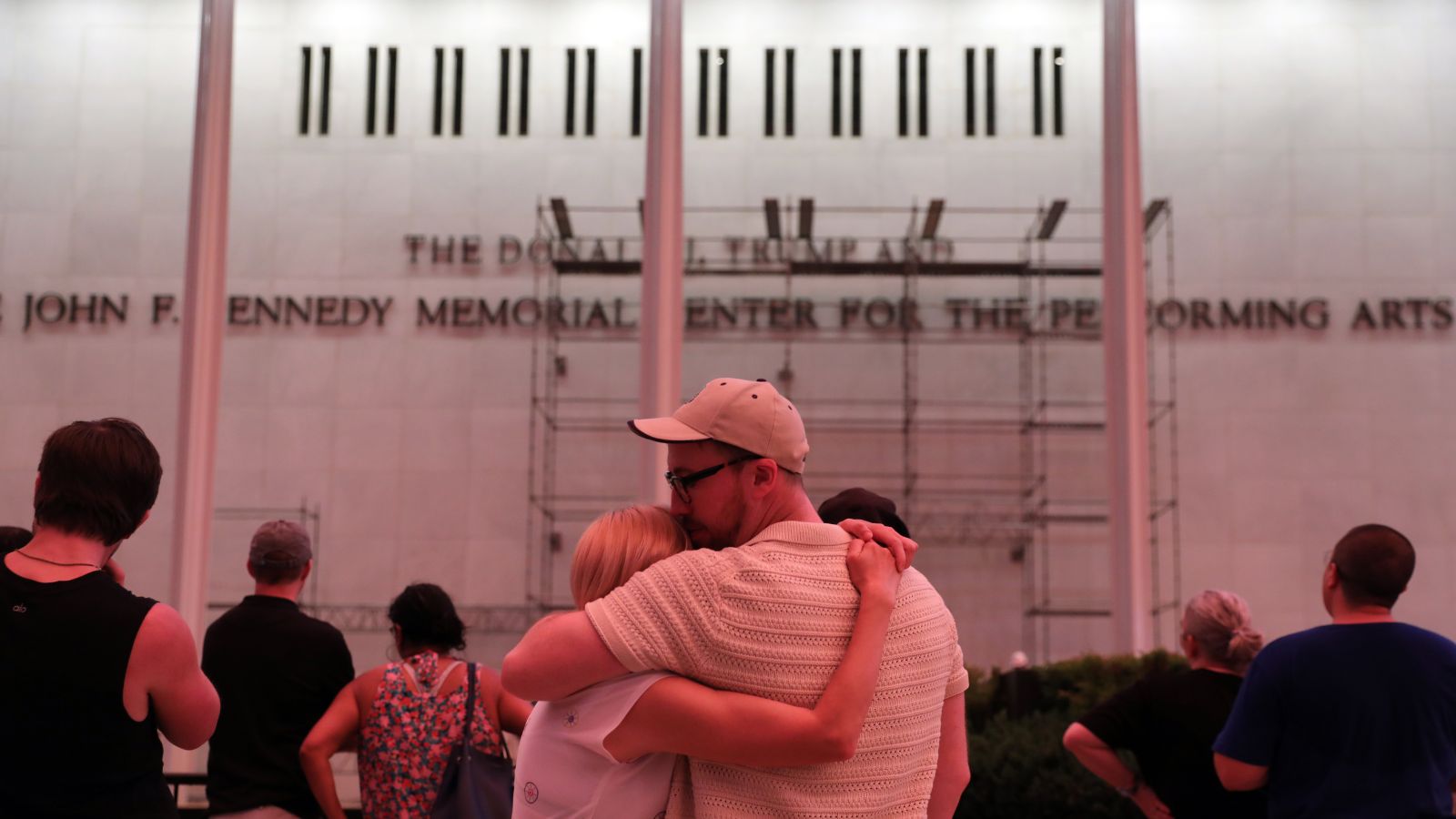
The media is treats the middle-of-the-night scrub of Donald Trump’s name from the Kennedy Center facade like a classic D.C. operational drama. Crews in high-visibility vests erecting scaffolding under the cover of darkness. Tarpaulins hoisted at 2:00 AM to shield the work from rain and smartphone cameras. A crowd of protestors outside chanting, counting down the minutes to a court-imposed deadline.
Mainstream reporters are framing this as a definitive, clean-cut victory for the rule of law. They tell a neat story: a federal judge steps in, checks executive overreach, and a beloved cultural landmark is saved from partisan branding.
They are completely misreading the board.
What happened under the tarps in the early hours of Saturday morning was not a permanent defeat for the administration, nor was it a triumph for the long-term operational health of the performing arts venue. It was a tactical retreat that sets up an even more disruptive structural conflict. By focusing entirely on the physical brass letters on a marble wall, the current commentary misses the actual mechanisms of institutional leverage being deployed right now.
The Facade Fallacy
The lazy consensus rests on the idea that public branding is the ultimate prize. It assumes that because U.S. District Judge Christopher Cooper ruled that only Congress has the statutory authority to rename a center established as a living memorial to John F. Kennedy, the status quo has been restored.
This is amateur analysis. In the realm of institutional asset management, signage is a secondary concern. The real battle is always over asset deployment, operational control, and budget allocation.
Consider the facts the mainstream reporting glosses over. The very same court order that demanded the removal of the letters also issued a temporary block on the board's plan to institute a total, two-year operational shutdown of the facility for massive infrastructural overhauls. The board’s official legal filings argued that the building suffers from "life-threatening structural damage" including heavily rusted structural beams and deteriorating parking garage ceilings.
When the court blocked that shutdown, the response from the administration wasn't a desperate plea to keep a grip on the committee. Instead, the executive branch signaled it was relinquishing formal chair control of the venue's governance.
This is a classic corporate decoupling strategy. When a highly politicized asset becomes choked by litigation and regulatory compliance costs, an aggressive operator does not double down on the brand. They abandon the brand equity to the legacy stakeholders while maintaining structural leverage over the physical plant and the funding pipelines.
The High Cost of Aesthetic Victories
I have watched public-private partnerships and civic boards blow millions of dollars chasing symbolic, aesthetic victories while their core operational foundations rotted from underneath them. The Kennedy Center is currently staring down that exact barrel.
The legal teams representing the opposition celebrated the midnight removal as a restoration of an environment where artists and audiences can return without political baggage. But look at the underlying mechanics of how a major performing arts venue actually survives. It requires immense, continuous capital expenditure to maintain 1970s brutalist architecture.
By using the courts to block the proposed two-year closure, the venue's defenders have inherited a massive, looming liability. If the board's assessments of structural deterioration are even partially accurate, the facility is now forced to operate under a cloud of deferred maintenance.
Imagine a scenario where a commercial real estate firm is forced by a city council to keep an aging, unprofitable theater open under the guise of historical preservation, all while blocking the capital improvements necessary to make the space structurally sound for modern use. The result isn't a cultural renaissance. It is operational paralysis via inertia.
The Strategy of Forced Inertia
The legal challenge mounted by congressional representatives argued that the center cannot fulfill its statutory obligations if there are no public performances. That argument won the day in court, but it completely falls apart when applied to real-world operational logistics.
A performing arts center cannot safely or efficiently run major structural remediation projects around a live performance schedule. Trying to repair rusted load-bearing beams or crumbling concrete ceilings while simultaneously hosting world-class orchestral performances is an operational nightmare that drives costs up exponentially.
By forcing the venue to stay open, the legal victory achieved something entirely counter-productive:
- It locked the institution into an inefficient, high-cost operational model.
- It gave the executive branch a perfect justification to divert federal oversight and future capital improvement funds elsewhere.
- It shifted the financial risk of building maintenance entirely onto the legacy board structure.
When the administration dropped its insistence on the name and walked away from the chair, it wasn't a capitulation. It was an exercise in risk shifting. They left the opposition with the keys to an aging, expensive building, a mountain of deferred maintenance, and an alienated donor base.
Redefining the Institutional Scoreboard
The public is asking the completely wrong question: "How did the administration lose the battle for the building's name?"
The brutal reality is that the name was always a lightning rod designed to draw focus. While the media and the legal establishment spent weeks hyper-focusing on 94-page judicial opinions regarding congressional naming mandates, the structural reality of how federal cultural entities are funded was completely ignored.
A physical sign can be taken down in thirty minutes by a handful of workers with basic tools. Rebuilding a shattered donor ecosystem, securing hundreds of millions in federal appropriations from a hostile or gridlocked legislature, and managing major structural degradation without closing the doors is a multi-year logistical crisis.
The cheering crowds on the plaza got their photo opportunity. The letters are gone. The original name remains intact on the official letterhead and the website. But the victory is entirely cosmetic. The structural and financial vulnerabilities of the institution are worse today than they were a week ago, and the playbook for starve-and-shift institutional management has just been handed a roadmap on how to exit a toxic asset while leaving the defenders holding the bill.