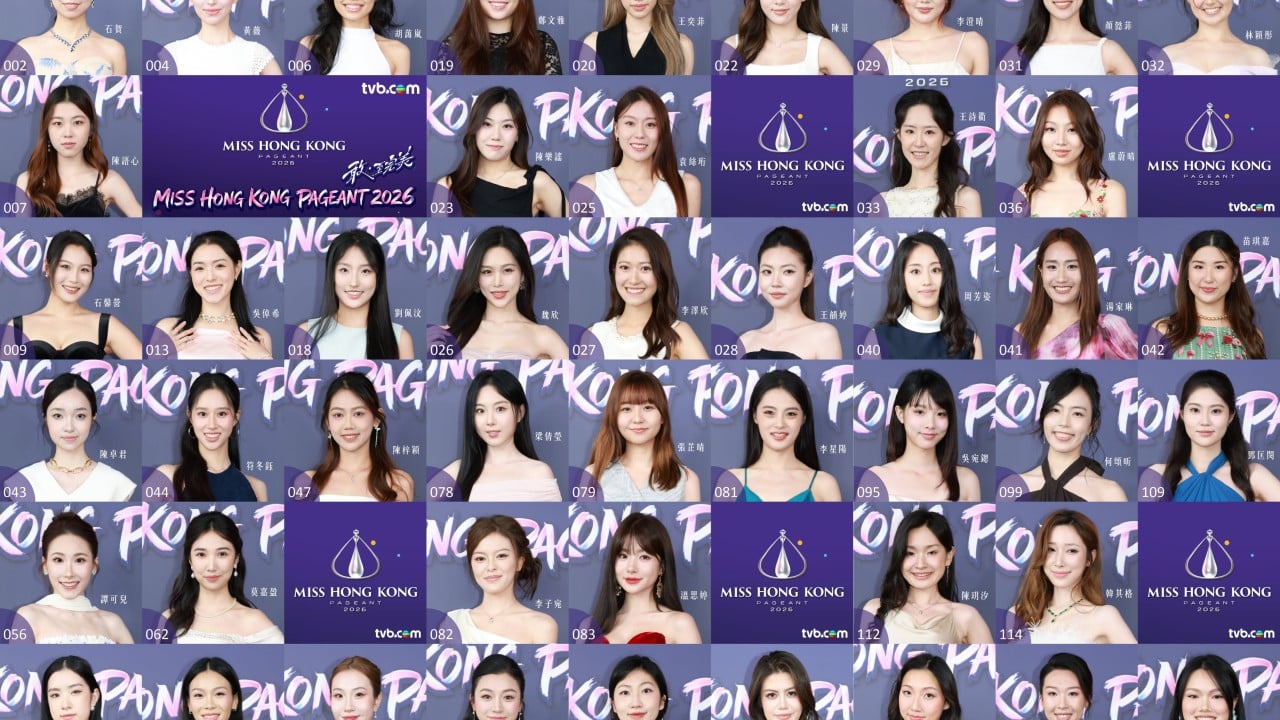
The internet is losing its mind because a Miss Hong Kong hopeful from mainland China botched the Cantonese word for tomato sauce. The comment sections are flooded with self-righteous purists claiming this is the death of Hong Kong culture, an assault on local identity, and proof that the pageant is losing its soul.
What a fragile, hyper-sensitive take.
The lazy consensus dominating the media right now frames this as a tragic cultural clash. Outraged netizens argue that if you cannot immediately distinguish between faan-ke-zap (tomato sauce/ketchup) and the Mandarin xihongshi jiang, you have no business representing the city. They treat Cantonese as a static, sacred relic that must be defended against outside corruption.
They have it completely backward. Hong Kong’s linguistic identity did not become a global powerhouse by hiding in a corner and checking people's accents at the border. It became a powerhouse because it was a ruthless, adaptive sponge. Obsessing over a mainland contestant’s mispronunciation isn't protecting Hong Kong culture; it is exposing a deep, insecure elitism that accelerates the very decline people claim to fear.
The Fraud of the Authentic Cantonese Purest
Let’s dismantle the premise of this entire uproar. The critics claim they are defending the "purity" of the Hong Kong dialect. That is a historical fiction.
Hong Kong Cantonese is a magnificent, bastardized product of colonialism, global trade, and refugee migration. The very vocabulary local gatekeepers fight to protect is riddled with English loanwords adapted to local phonetics.
Consider how deep the linguistic borrowing goes:
- Bus: baa-si (巴士)
- Taxi: dik-si (Dik-si)
- Store: si-do (士多)
- Cream: gei-lim (忌廉)
If you trace the root of the language, it is a history of aggressive assimilation. When locals order a sai-do-si (French toast) at a cha chaan teng, they are participating in a culture that grew by absorbing foreign elements, not by rejecting them.
Yet, when a contestant from Shenzhen or Guangzhou stumbles over Cantonese terms, the reaction isn't a helpful correction. It is a digital execution. This double standard proves the outrage isn't about linguistic preservation; it is a thinly veiled proxy war over political anxieties and changing demographics.
The Miss Hong Kong Paradox
I have watched the entertainment industry navigate these cultural shifts for years. Pageant organizers are not running a local historical preservation society. They are running a commercial enterprise that requires eyeballs, sponsorships, and relevance.
The argument that every Miss Hong Kong contestant must speak flawless, unaccented Cantonese to represent the city ignores the actual reality of who lives, works, and thrives in Hong Kong today. The city has always been an international transit hub.
"Imagine a scenario where a multinational firm in Central refuses to hire a brilliant executive because their Cantonese has a slight Mandarin or English inflection. The company would go bankrupt in a year."
Yet, we expect a beauty pageant to enforce a linguistic purity test that the actual economy abandoned decades ago. If the pageant only accepted contestants who fit a narrow, localized definition of identity, the show would die of irrelevance.
The Wrong Question: Who Speaks It Better?
The media asks: "Can a mainland contestant truly represent Hong Kong culture if they do not know the local slang?"
This is the wrong question entirely. The real question we should be asking is: "Why are we treating an evolving dialect like a static museum piece?"
Languages die when people stop adapting them. They do not die because outsiders try to speak them and make mistakes. When a mainland contestant attempts to speak Cantonese on a public stage, it is a testament to the enduring soft power of Hong Kong culture. It means the local identity is still desirable enough that outsiders want to adopt it.
When the local population responds to those attempts with mockery and gatekeeping, they do not save the language. They make it toxic. They teach outsiders that the barrier to entry is too high, and that it is safer to just stick to Mandarin.
The Hard Truth About Cultural Survival
If you want a culture to survive, you need to expand its user base, not restrict it.
Look at how English became the global lingua franca. It didn't happen because the British or Americans demanded flawless pronunciation from everyone else. It happened because English is highly permissive of terrible grammar, thick accents, and regional slang. It is resilient because it can be broken and put back together by anyone.
By turning faan-ke-zap into a cultural loyalty test, local purists are shrinking their own footprint. They are shrinking the boundaries of who gets to be a Hongkonger down to a microscopic level.
The real threat to Cantonese isn't the mainland contestant trying her best to mimic the local tones. The real threat is the insular mindset that treats a minor linguistic hiccup as an act of cultural aggression. It is time to drop the elitism, lose the fragility, and realize that a culture that cannot handle a little spilled tomato sauce is already on life support.