Everyone loves a good midnight escape story. It sells papers, drives clicks, and feeds the exact confirmation bias political junkies crave.
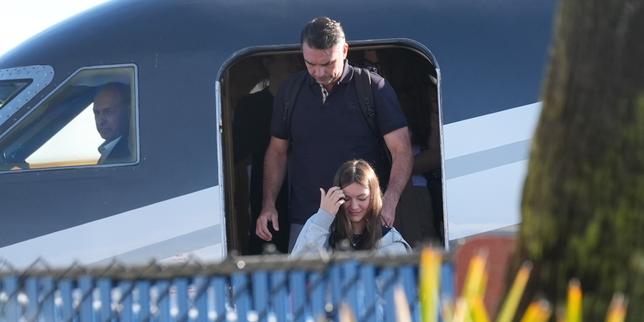
When headlines blared that Flavio Bolsonaro fled Brazil aboard a private jet paid for from the United States, the collective media apparatus tripped over itself to frame it as a Hollywood-style extraction. The lazy consensus formed instantly: a cornered political scion, a mysterious American financier, a clandestine flight out of reach of Brazilian prosecutors.
It makes for thrilling tabloid fodder. It is also a textbook display of total ignorance regarding how private aviation, cross-border campaign financing, and political exile actually operate.
If you buy the mainstream framing of this story, you are looking at the shiny object while missing the entire machinery operating behind the curtain. You are asking who paid for the plane when you should be asking why anyone thinks a commercial-grade paper trail constitutes a covert escape.
Let’s dismantle the amateur hour geopolitics currently dominating your feed.
The Myth of the Clandestine Charter
In twenty years of tracking cross-border asset movements and high-net-worth aviation logistics, I have seen people try to disappear. When someone actually flees a jurisdiction, they do not book a charter through standard international brokerage channels that require full manifest filings, APIS (Advance Passenger Information System) clearances, and verifiable U.S. banking wires.
The mainstream narrative treats a U.S.-originated payment for a private flight as a smoking gun of foreign collusion or illicit slush funds. In reality, it is the exact opposite.
Private aviation is one of the most heavily surveilled, compliance-choked industries on earth. Every international tail number crossing from South American airspace into North American jurisdiction triggers automated data sharing between Brazil’s ANAC (National Civil Aviation Agency), the FAA, and U.S. Customs and Border Protection.
Here is what actually happens when a flight is "paid for from the United States":
- Clearinghouse Transparency: U.S. financial institutions are bound by the Bank Secrecy Act and strict FinCEN (Financial Crimes Enforcement Network) reporting rules. Any wire transfer exceeding $10,000—which barely covers the fuel surcharge on a heavy jet from Brasilia to Miami—leaves a permanent, subpoena-ready digital footprint.
- Beneficial Ownership: Charter brokers in the U.S. must adhere to strict Know Your Customer (KYC) protocols. You cannot walk into a FBO (Fixed Base Operator) in Teterboro or Opa-locka with a briefcase of cash and order a Gulfstream to Rio.
- The Manifest Reality: Diplomatic immunity does not apply to private commercial charters unless the aircraft is an official state plane. Every passenger passport is scanned and transmitted hours before wheels-up.
Calling a U.S.-funded charter a "secret escape" is like calling a wire transfer through JPMorgan Chase "money laundering." If the objective was evasion, using the American banking system to charter an international flight was the single worst operational decision possible.
Why the Media Misreads Cross-Border Political Logistics
Journalists who cover political beats rarely understand corporate aviation or international tax law. When they see a foreign payment on a flight log, their instincts scream conspiracy.
They miss the mundane, structural realities of how modern political dynasties manage risk and liquidity.
Consider the mechanics of international travel for high-profile political figures facing domestic legal pressure. In Brazil, the Supreme Federal Court (STF) holds sweeping powers to freeze domestic assets, cancel passports, and issue preventative detention orders with zero prior notice. For a sitting senator or high-ranking political operator, keeping liquid capital inside domestic banking rails is an operational liability.
Imagine a scenario where a political figure needs immediate mobility, knowing their local credit cards could be declined at the tarmac due to a judicial freeze order issued ten minutes prior. Utilizing an allied entity, a friendly donor, or a corporate structure domiciled in the United States to settle the invoice isn't a spy-movie extraction—it is basic liquidity management.
The competitor coverage frames this as an act of desperation. From a logistical standpoint, it is standard contingency planning.
The "Fleeing" Fallacy
Let’s address the word fled (aurait fui). Words matter, especially when media outlets hide behind the conditional tense to dodge defamation suits while planting a specific visual in the reader's mind.
To flee implies abandoning jurisdiction permanently to evade an active warrant. Yet, look at the timeline and legal reality of Brazilian senators. Under the Brazilian Constitution, sitting members of the National Congress possess foro privilegiado (privileged forum) and specific parliamentary immunities. Arresting a sitting senator requires flagrante delicto of a non-bailable crime, followed by a vote in the Senate itself to uphold the detention.
Leaving the country when no travel ban exists is not fleeing. It is exercising freedom of movement before a potential legal bottleneck closes. Political figures across the spectrum—from Latin America to Europe—routinely relocate temporarily to Washington, Miami, Madrid, or Lisbon during periods of intense judicial friction. They do it to regroup, lobby foreign sympathetic networks, and wait out the domestic news cycle.
By framing routine political repositioning as a cinematic escape, commentators infantilize their audience and obscure the real story: the internationalization of domestic political warfare.
What People Actually Get Wrong About Political Aviation
When stories like this break, search engines light up with the same predictable, flawed questions. Let’s strip away the noise and answer them directly.
Did a foreign government pay for Flavio Bolsonaro's flight?
No. Conflating "paid from the United States" with "paid by the U.S. government" is a rookie error. The United States is the global hub for private aviation brokerage, fractional ownership (like NetJets or Flexjet), and diaspora wealth. Thousands of wealthy Brazilians, dual citizens, and Florida-based LLCs routinely charter flights for visiting politicians, business partners, and family members. A U.S. payment origin simply means the bank account debited was domiciled in America.
Is having a third party pay for a private jet illegal for a politician?
It depends entirely on the disclosure rules of their home legislature and the nature of the trip, not the aviation laws. In Brazil, undeclared gifts or travel funded by private interests with business before the state can trigger ethics violations or accusations of improbidade administrativa (administrative misconduct). However, if the flight is categorized as personal travel funded by a family trust, a legal defense fund, or an allied political organization, it falls into a massive legal gray area that takes courts years to untangle. It is an ethics headache, not an automatic criminal conviction.
Why wouldn't a politician just fly commercial to avoid suspicion?
Security and unpredictability. On a commercial flight out of Guarulhos or Brasília, a polarizing political figure is trapped in a metal tube for nine hours with hundreds of citizens holding smartphones, half of whom might despise them. Furthermore, commercial airlines cooperate instantly with local federal police to pull passengers off the jet bridge if a last-minute injunction drops. A private FBO allows a passenger to drive directly to the stairs of the aircraft, clear customs in five minutes, and depart without running a gauntlet of hostile cameras.
The Real Play Nobody Is Talking About
If you want to understand why this flight actually matters, stop looking at the plane and start looking at the geography of modern political survival.
We have entered an era where domestic political battles are no longer fought within national borders. When a political movement faces judicial pressure at home, its survival depends on establishing an external base of operations.
For the Brazilian right, Florida is not a vacation spot; it is an operational theater.
Miami and Orlando offer three strategic advantages that Brasília cannot:
- Media Infrastructure: Proximity to sympathetic international broadcasters, conservative think tanks, and digital media ecosystems capable of beam-casting narratives back into Brazil without domestic judicial censorship.
- Financial Insulation: Access to U.S.-based fundraising networks, PAC-adjacent structures, and legal defense funds entirely beyond the reach of Brazilian judicial asset freezes.
- Diplomatic Leverage: Direct access to U.S. lawmakers who can frame domestic Brazilian judicial actions as human rights or free-speech violations on the floor of the U.S. Congress.
When a key figure boards a jet paid for out of the U.S., they aren't running away from the fight. They are moving the command center to higher ground where the local referee has no jurisdiction.
The Downside of the Offshore Strategy
Now, let’s be brutally honest about the flaw in this playbook. While moving offshore protects liquidity and physical liberty, it carries a catastrophic political cost: optics.
I have watched dozens of political operators make this exact miscalculation. They optimize for legal safety and logistical convenience, completely forgetting that politics is a game of perceived solidarity.
When your base is struggling with inflation, high interest rates, and domestic turmoil, stepping off a Gulfstream in South Florida—funded by opaque U.S. accounts—looks terrible. It hands your opponents a weaponized narrative on a silver platter. You trade immediate legal insulation for long-term political erosion.
Even if every penny of that charter was 100% legal, compliant with FinCEN, and transparent to the FAA, the perception of privilege and abandonment does the damage. You cannot explain clearinghouse regulations to an angry voter scrolling through headlines on their phone.
How to Actually Read Political Scandal Coverage
The next time a major outlet drops a breathless exposé about a politician, a private jet, and a foreign bank account, run it through a basic filter before sharing it:
- Follow the Regulatory Friction: Ask yourself if the method used actually hides anything. If the transaction went through U.S. banks or international aviation registries, it was designed for speed and convenience, not secrecy.
- Separate Legal Reality from Tabloid Verbs: Ignore words like fled, secret, and mysterious. Look for actual indictments, Interpol Red Notices, or frozen tail numbers. Without those, you are reading political theater, not crime reporting.
- Identify the Strategic Hub: Look at where the person went. People hiding from the law go to non-extradition jurisdictions with weak banking oversight. People going to Miami, London, or Madrid are going there to work, fundraise, and wage lawfare.
The media wants you to believe this story is about a man running away in the dark. Look at the flight logs, look at the banking rails, and look at the destination. Nobody uses the most heavily monitored financial and aviation networks on the planet to disappear. They use them to relocate the war room.