The internet spent weeks hyperventilating over a dead piece of metal hitting the moon. Headlines shrieked about a wayward SpaceX booster carving a fresh crater into the lunar surface like an orbital sniper hitting a bullseye. Astronomers mapped the trajectory. Pundits wrung their hands. Twitter manufactured a panic over space junk trespassing on celestial real estate.
It is completely, utterly missing the point.
Obsessing over a stray rocket stage kissing the lunar dust is the exact kind of performative environmentalism that lets actual systemic failures off the hook. I have spent years watching aerospace boards panic over public relations optics while ignoring the mechanical realities staring them in the face. We are staring at a cosmic fender-bender while ignoring the structural rot happening right above our heads in low-Earth orbit.
The False Panic of Lunar Impacts
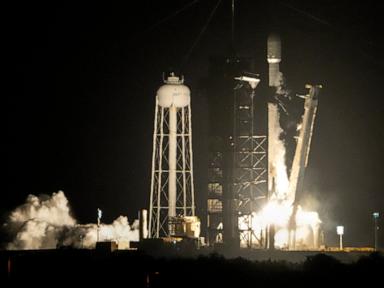
Let us look at the mechanics of what actually happened. Orbital dynamicist Bill Gray calculated that a Falcon 9 second stage from a 2015 DSCOVR launch collided with the moon. The astronomical community treated this like an apocalyptic event.
Let us inject some basic physics into the hysteria. The moon gets hit by space rocks every single day. Micro-meteorites, chondrites, and random asteroidal debris constantly hammer the lunar regolith at hyper-velocities. A hollow, spent aluminum-lithium rocket stage traveling at a few kilometers per second is nothing more than a tiny footnote in a geological history written by high-speed kinetic impacts for four and a half billion years.
The moon does not care. It has no atmosphere to preserve, no pristine ecosystem to disrupt, and no delicate ozone layer to puncture. The kinetic energy released by that booster is microscopic compared to the background flux of natural impactors.
Yet, the media treated it as if someone drove a dumpster through a cathedral. Why? Because dead metal on the moon makes for a clean, digestible villain. It gives people an easy narrative: big tech company litters the cosmos.
The reality is far more mundane, and far more dangerous right here at home.
Where the Real Danger Lurks
If you want to panic about space debris, take your eyes off the moon and look straight up at low-Earth orbit. That is where the actual tragedy of the commons is playing out in slow motion.
We are crowding orbits below two thousand kilometers with thousands of dead satellites, expired upper stages, and clouds of shrapnel from anti-satellite weapons tests. This is the domain of the Kessler Syndrome—a cascading chain reaction where every collision generates thousands of new high-speed projectiles, eventually rendering entire orbital bands unusable for generations.
Unlike the moon, low-Earth orbit is a finite, closed economic resource. When a piece of debris takes out an active communications satellite or a climate-monitoring array, we lose critical infrastructure.
When a rocket body hits the moon, it buries itself in dust and stays there. When a rocket body explodes in low-Earth orbit, it creates fifty thousand hyper-velocity bullets that threaten every human being living on the International Space Station and every multibillion-dollar constellation providing global broadband and GPS.
We are crying over a scratched rock while our actual highway to the stars turns into a minefield.
The Accountability Trap
The outrage over the lunar impact exposed a fundamental misunderstanding of how space logistics operate. Critics demanded better tracking, stricter laws, and retroactive liability for discarded hardware.
This sounds noble in a press release. In practice, it is economically illiterate.
Space flight is an exercise in violent subtraction. Every single gram of mass dedicated to post-mission disposal fuel is a gram taken away from scientific payloads, commercial viability, or deep-space exploration. Aerospace engineering is a brutal series of compromises dictated by the Tsiolkovsky rocket equation. If you mandate that every upper stage must carry enough reserves to deorbit directly into a remote ocean trench or execute a complex heliocentric escape burn, you dramatically inflate mission costs and kill innovation.
SpaceX built an industry by radically dropping the cost to orbit through reusability. Falcon 9 first stages land themselves vertically, ready to fly again. That is true sustainability. The upper stage, by definition of physics and payload constraints, remains expendable on deep-space missions like DSCOVR.
Expecting perfection from a transitional technology is how you stall progress permanently. The companies pushing the boundaries of heavy-lift capability are dealing with the messy physics of orbital mechanics, not playing a video game where every piece of trash neatly returns to its recycling bin.
The Uncomfortable Truth About Orbital Clutter
Let us address the elephant in the room. Space has never been pristine. It is an extension of our terrestrial industrial footprint, and it is governed by the same brutal economics that built our highways, oceans, and skies.
We treat the cosmos as a sanctuary only when it is convenient for a news cycle. Meanwhile, thousands of defunct payloads drift silently through valuable orbits, untracked or poorly monitored because governments refuse to fund comprehensive space traffic management systems.
The Federal Communications Commission and international bodies are starting to slap fines on companies for leaving debris behind, but these are often bureaucratic window dressing. They punish the low-hanging fruit while ignoring the legacy junk launched by state actors during the Cold War—dead military satellites and spent nuclear-reactor cores that dwarf commercial contributions to orbital pollution.
If we want to clean up space, we need to stop throwing tantrums over inert aluminum impacting a barren wasteland. We need to fund active debris removal technologies, establish clear right-of-way rules for operational spacecraft, and stop pretending that the universe is a fragile glass museum.
The cosmos is violent, vast, and indifferent. That Falcon 9 stage did not desecrate the moon. It merely joined a very old, very natural tradition of things crashing into the dark. Stop worrying about the crater on the moon. Start worrying about the shrapnel above your head.