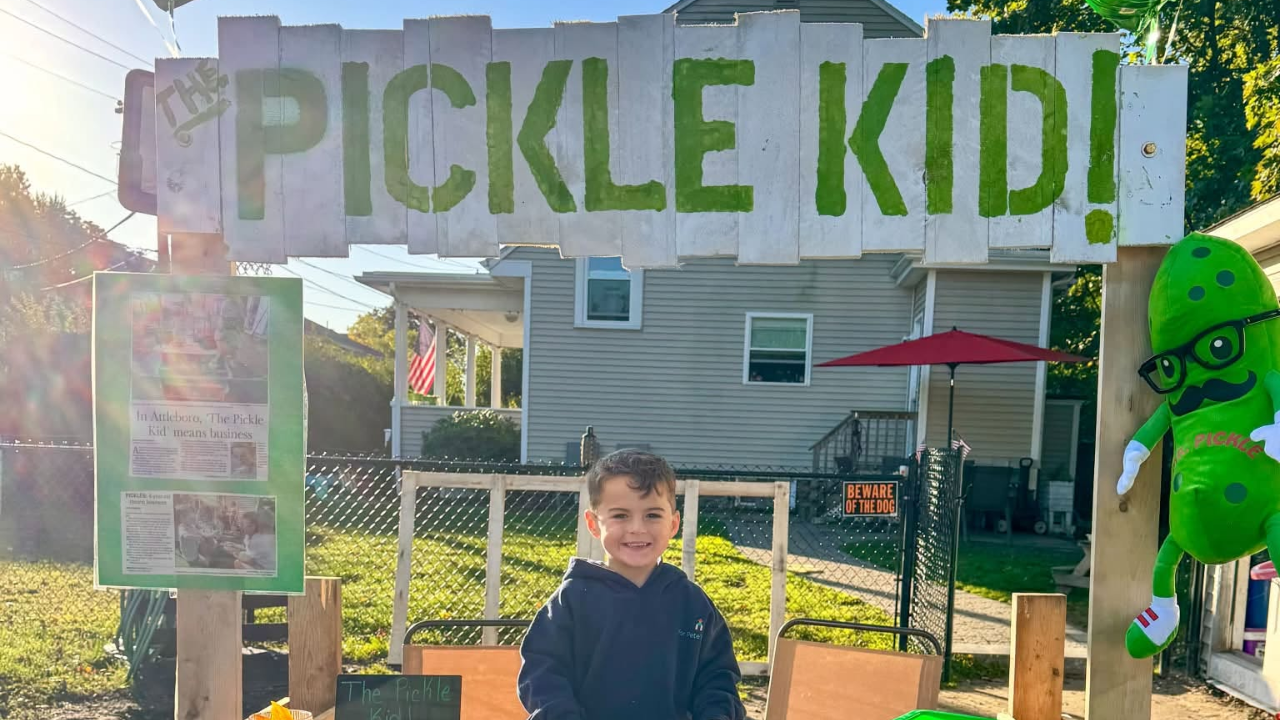
Every few months, the internet falls in love with the exact same story. A photogenic five-year-old plants some seeds, harvests a bumper crop of cucumbers, stuffs them into Mason jars with some vinegar and dill, and suddenly we are crowning the next food-and-beverage mogul.
The headlines write themselves. Local news crews show up. LinkedIn influencers share the clip with captions about "hustle," "grit," and "why adults have no excuses."
Let’s kill the fairy tale right now.
A five-year-old does not have a pickle business. A five-year-old has an adorable, heavily subsidized agricultural hobby bankrolled by parents with disposable income, free labor, and a complete disregard for food safety compliance.
When media outlets frame a backyard harvest as a scalable commercial enterprise, they aren't inspiring the next generation of founders. They are peddling a sanitized, mathematically broken fantasy of what it actually takes to build a consumer packaged goods (CPG) company. If an adult followed the exact playbook praised in these viral kid-preneur profiles, they would be bankrupt, sued, or shut down by the health department before their second batch hit the farmers market.
The Illusion of the Zero-Overhead Startup
The core myth of the viral kid-business story is the magic of "pure profit." The child buys a three-dollar packet of seeds, sells twenty jars of pickles at eight dollars apiece, and walks away with a 157-dollar profit.
That isn't a business model. That is an accounting hallucination.
In real-world CPG economics, your Cost of Goods Sold (COGS) includes far more than the raw produce. Who paid for the raised garden beds, the topsoil, the fertilizer, and the municipal water bill? Who bought the wide-mouth glass jars, the two-piece lids, the white distilled vinegar, the pickling salt, and the fresh dill? Who drove the vehicle to the store to buy those supplies, and who paid for the fuel?
When parents absorb 95% of the capital expenditures and operating costs, the child's profit margin is completely artificial. I have watched dozens of adult first-time food founders lose their life savings because they brought this exact "farmers market math" into commercial production. They price a jar of artisanal pickles at eight dollars because it felt right at a neighborhood stand, only to realize that once they pay for commercial kitchen rental, bulk glass shipping, label printing, and distributor slotting fees, they are losing two dollars on every single unit sold.
Real businesses do not have invisible angel investors covering their utilities and raw materials without taking equity. Teaching a child that revenue minus seed cost equals profit sets them up to fail the moment they have to pay their own overhead.
The Regulatory Reality Check Nobody Mentions
If you want to know how detached these feel-good articles are from reality, look at what they omit: acidified food regulations.
Pickles are not lemonade. You cannot safely throw cucumbers, water, and vinegar into a jar on a residential kitchen counter and sell them to the general public. Under federal law in the United States—specifically 21 CFR Part 114, enforced by the Food and Drug Administration—acidified foods must maintain a strict equilibrium pH of 4.6 or below to prevent the growth of Clostridium botulinum.
Botulism is not a cute childhood learning experience. It is a fatal paralytic illness.
To legally sell shelf-stable pickles in almost any jurisdiction, a producer must:
- Complete an FDA-approved Better Process Control School certification.
- Submit a scheduled process filed by a recognized Process Authority verifying the exact pH, brine ratio, and thermal processing times.
- Manufacture the product in a licensed, inspected commercial kitchen—not a family home with dogs, kids, and domestic cookware.
- Maintain batch-by-batch pH logs using calibrated, commercial-grade meters.
Even in states with generous Cottage Food Laws, pickled vegetables are frequently restricted or banned from home-kitchen sales precisely because improper acidification kills people. When a local reporter celebrates a kindergarten student selling home-canned pickles to strangers, they are celebrating an unlicensed, unregulated food manufacturing operation. The only reason the county health inspector hasn't padlocked the front door is because nobody wants to be the bureaucrat who crushed a five-year-old's dream on the evening news.
Why "Lemonade Stand Economics" Fails Modern Founders
The mainstream narrative insists that starting a micro-business at age five teaches children the fundamentals of entrepreneurship. In truth, it teaches them the exact opposite of how modern commerce works.
First, it teaches pity-based purchasing. Neighbors do not buy an eight-dollar jar of lumpy backyard pickles from a five-year-old because the brine profile outperforms Claussen or Grillo's. They buy it because a child is smiling at them from behind a folding table. Pity is not product-market fit. You cannot scale charm across 400 regional grocery doors. When adult founders launch products based on friends-and-family validation, they crash headfirst into a market that does not care about their personal story—only whether the product solves a problem or tastes better than the alternative on the shelf.
Second, it glorifies unscalable manual labor. Harvesting cucumbers by hand, washing jars in a residential sink, and hand-writing labels works fine for 15 units. At 1,500 units, that workflow breaks your back. At 15,000 units, it breaks your company. Great entrepreneurs do not fall in love with doing every task themselves; they obsess over systems, unit economics, and repeatability.
Third, it confuses revenue with enterprise value. Having a shoebox full of crumpled twenty-dollar bills is cash flow, not a business. If the operation ceases to exist the moment the child gets bored and goes back to playing with Legos, there is no asset. There is no brand equity, no intellectual property, and no repeatable distribution channel.
What People Actually Ask About Starting a Food Business (And the Brutal Truth)
When readers stumble across these viral stories, they inevitably start searching for how to replicate that success. The questions they ask reveal just how deeply the fairy tale has distorted their understanding of the industry.
Can you really start a pickle business from home with almost no money?
No. You can start a hobby from home with almost no money. Launching a compliant, sellable food brand requires upfront capital for licensing, liability insurance, commercial kitchen access, testing, and packaging. Even a lean, hyper-local launch will realistically cost between $5,000 and $15,000 before you legally sell your first jar to a stranger. Anyone telling you otherwise is ignoring the law or subsidizing the losses out of another bank account.
How much profit margin do small-batch pickle brands actually make?
If you are self-distributing directly to consumers at farmers markets, you might clear a 40% to 50% gross margin—before paying yourself an hourly wage. Once you enter wholesale and retail distribution, your margins get shredded. Distributors take 20% to 30%. Retailers demand 35% to 50% margin on top of that. By the time your jar hits a grocery shelf, you are fighting tooth and nail to keep a 15% to 25% gross margin, and your net profit will be razor-thin until you hit massive volume.
Do kids actually learn financial literacy from running a tiny stand?
Only if the parents refuse to rig the game. If the child doesn't have to pay back the startup loan for the jars, doesn't pay for the ingredients out of gross sales, and doesn't split the proceeds between taxes, reinvestment, and personal pay, they aren't learning financial literacy. They are just receiving an allowance with extra steps.
The Counter-Intuitive Blueprint for Teaching Kids Real Business
I am not arguing against teaching children how money, trade, and value creation work. I am arguing against lying to them about the math.
If you want to use a backyard garden to actually educate a child—or if you are an adult trying to turn a kitchen recipe into a real brand—you have to strip away the romantic nonsense and apply real operational discipline.
Imagine a scenario where a parent actually treats a child's garden project like a real venture. Instead of buying the supplies as a gift, the parent acts as a strict commercial bank. Every packet of seeds, every glass jar, every bag of pickling salt, and every gallon of vinegar is logged on a ledger as a startup loan that must be repaid from gross revenue before the child sees a single dime of profit.
Suddenly, the lessons change completely:
- Pricing Strategy Becomes Survival: The child realizes that selling a jar for four dollars means they will lose money on every sale once the jar and vinegar costs are deducted. They have to calculate their break-even point before setting a price.
- Inventory Management Matters: Cucumbers rot. If the child doesn't harvest on time or fails to sell the batch quickly, spoilage wipes out their entire margin. They learn that inventory sitting on a shelf is trapped cash.
- Marketing Replaces Pity: Instead of relying on cute signage, the child has to articulate why their pickles are worth buying—whether that is crispness, garlic intensity, or local freshness—and track which customer pitch actually converts into sales.
- Reinvestment Over Consumption: Instead of blowing all the cash at a toy store, the ledger requires retaining 30% of net profits to fund the next planting cycle and purchase better equipment.
There is an obvious downside to this approach: it is vastly less cute. There will be frustration when a batch gets ruined. There will be tears when the first forty dollars of revenue goes straight back to paying off the jar supplier instead of buying ice cream. It will not go viral on social media because spreadsheets and cost-of-goods ledgers do not make good local news segments.
Stop Confusing Childhood Play With Commercial Strategy
The next time you see a heartwarming profile about a five-year-old who "built a thriving pickle empire" out of a backyard garden, enjoy it for what it actually is: a sweet family memory and a fun summer science project.
Just don't mistake it for business journalism.
Entrepreneurship is not a playground game where the rules of accounting, food safety, and market demand get suspended because the founder is endearing. Real business is built on tight margins, relentless regulatory compliance, scalable systems, and ruthless honesty about what things actually cost.
If you want to build something that lasts, stop taking inspiration from viral fairy tales—and start looking at the ledger.