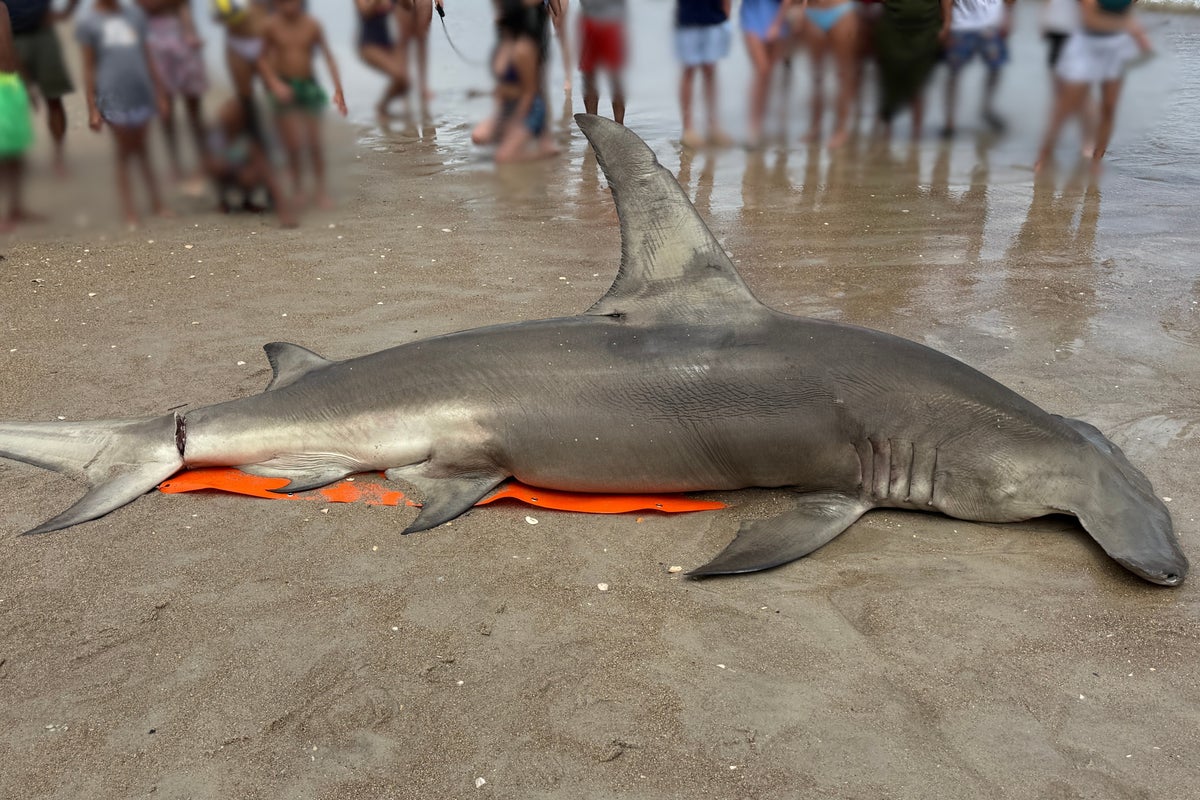
Every time a large marine predator washes ashore with a scratch, the internet loses its collective mind.
Media outlets rush to publish breathless headlines about mysterious lacerations, human malice, and impending ecological doom. Commentators cue the mournful violins. People demand immediate government inquiries, new fisheries restrictions, and total bans on human activity near the coast.
It is lazy, reactive environmentalism at its absolute peak.
I have spent decades tracking marine life dynamics and coastal ecosystems. I have watched billions of dollars get funneled into panic-driven conservation theater while the real, mundane drivers of wildlife mortality are completely ignored. When a great hammerhead shark washes up on a North Carolina beach with deep tissue trauma, the immediate assumption of foul play tells you more about human narcissism than it does about marine biology. We desperately want every natural tragedy to be a villain origin story where humans wear the black hat.
Nature is not a Disney movie. It is an industrial-grade meat grinder.
The Myth of the Pristine Ocean
The lazy consensus relies on a comforting illusion. The public pictures the ocean as a serene, balanced aquarium where animals peacefully coexist until a wicked human comes along with a propeller or a harpoon.
Reality is violent, chaotic, and indifferent.
A great hammerhead shark is an apex predator, but it is not immortal. These animals engage in brutal territorial fights, feed on aggressive prey like stingrays that can inflict devastating defensive wounds, and run headfirst into heavy maritime traffic, natural underwater obstructions, and intra-species predation. When a carcass washes ashore showing signs of severe trauma, human interference is only one variable on a very long list of brutal possibilities.
Let us look at the mechanics of marine decomposition. A floating carcass subjected to tidal currents, scavenger activity from ghost crabs and marine birds, and the crushing pressure of surf slamming against a sandbar will distort tissue damage beyond recognition. What a panicked bystander calls a suspicious laceration is frequently post-mortem scavenging or blunt force trauma from hitting a sandbar at thirty knots during a storm surge.
Yet, nuance does not generate clicks. Outrage does.
Why We Crave a Human Culprit
Blaming human activity for every dead animal on a beach serves a psychological purpose. It gives people a target. If a boat propeller or an illegal gillnet killed the shark, we can write a petition, feel morally superior, and demand a new regulation.
If the shark died because it lost a territorial dominance contest to a larger tiger shark, or succumbed to an age-related systemic infection that compromised its hunting ability, or simply got smashed against the continental shelf during an offshore tempests—well, you cannot legislate a hurricane. You cannot cancel a predator conflict.
That lack of control terrifies the modern armchair conservationist. So they force every wildlife event into a neat, digestible narrative of human villainy.
This approach actively harms real conservation work. When resources, public attention, and scientific funding are diverted toward chasing phantom conspiracies based on a single washed-up carcass, critical long-term habitat management gets starved of oxygen. We spend weeks arguing over a single laceration while agricultural runoff and unchecked coastal development quietly choke out entire nursery estuaries miles away.
The Economics of Outrage Journalism
Let us talk about the incentives at play.
Media organizations do not profit from patience. Waiting for a necropsy report takes weeks. Tissue samples need to be sent to marine pathology labs, histology needs to be run, and toxicology screens take time. Those steps require actual expertise.
That timeline does not fit the twenty-four-hour news cycle.
So, editors bypass the marine biologists and hand the story over to general-assignment reporters who see a dead shark and immediately anchor their copy to the scariest possible interpretation. They quote activists who have never set foot on a research vessel, let alone performed a marine necropsy. They amplify speculation until it hardens into accepted fact in the comments section.
By the time the actual pathology report comes out three weeks later—showing the animal died of natural causes or an old, non-malicious interaction—nobody cares. The outrage mob has already moved on to the next tragedy. The retraction gets buried on page four.
This is not information. This is emotional exploitation.
What Real Conservation Looks Like
If you actually care about shark populations, stop hyperventilating over individual casualties and start looking at systemic metrics.
Apex predators die every single day. That is how ecosystems function. Nutrients cycle back into the benthic food web. Crabs, hagfish, and bacteria feast. The system recycles itself with ruthless efficiency.
Instead of demanding an investigation every time a dorsal fin hits the sand, focus on the boring, unsexy work that actually moves the needle:
- Protecting critical coastal nursery grounds from industrial dredging.
- Funding long-term acoustic telemetry tracking to map actual migration corridors.
- Reforming commercial bycatch policies through strict, science-based catch limits rather than emotional bans.
- Accepting that death is a fundamental component of wildlife management.
The ocean does not need your tears. It needs your common sense.
Next time a headline breaks about a mutilated marine animal, resist the urge to panic. Turn off the cable news, ignore the viral social media threads, and wait for the scientists to speak.
Until then, remember that nature is doing what it has done for four hundred million years. With or without our permission.