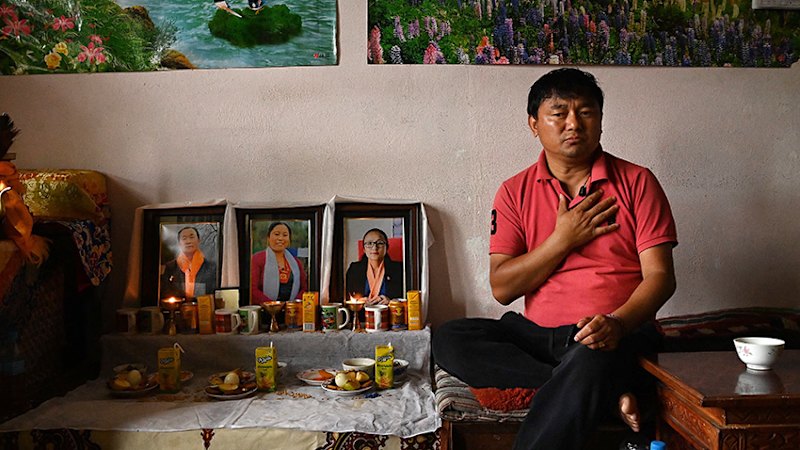
Every monsoon season, the headlines write themselves. Rivers swell, mud swallows mountain settlements, families gather around makeshift memorials, and distant commentators cry about an angry nature punishing the innocent. It is a comforting narrative for editors sitting thousands of miles away. It lets everyone point fingers at the sky, mumble about unpredictable weather patterns, and open up charity funds that treat the symptoms while ignoring the disease.
The lazy consensus is that Nepal is simply a helpless victim of geography. That mountain topography combined with shifting atmospheric conditions equals inevitable tragedy.
That theory is lazy, convenient, and entirely wrong.
What we call natural disasters in places like Helambu, Melamchi, and the hills surrounding Kathmandu are actually man-made accounting errors. We are watching the tragic results of unbridled land speculation, unregulated road-building bulldozers, and local municipal corruption masquerading as development. If you want to understand why villages are being wiped off the map, stop looking at rain gauges and start looking at real estate deeds.
The Bulldozer Economy And The Myth Of Natural Disasters
For decades, the narrative surrounding the Himalayan region has been shaped by romanticized external views. Outsiders want to see a pristine Shangri-La where resilient locals live in harmony with the elements. When the monsoon hits hard, that fantasy shatters, and the coverage swings to helpless victimization.
Both extremes are dishonest. The local population is not helpless, but they are trapped in a perverse economic incentive structure.
Let us look at how rural infrastructure actually gets funded in Nepal. Local politicians are handed budgets to build dirt roads connecting remote settlements. In flat countries, building a road requires engineering. In the steep, fragile topography of the Middle Hills of Nepal, building a road often requires a single rented excavator pushing thousands of tons of loose soil, rock, and vegetation directly down the slope.
These rogue bulldozers are commissioned not by civil engineers, but by local committees who view road access as a shortcut to land value appreciation. Once a dirt track cuts across a hillside, the land above and below it becomes marketable. It can be subdivided. It can be sold.
Physics does not care about your municipal permits. When the monsoon arrives, those loose piles of earth—known technically as spoil tips—act as pre-loaded landmines. The first heavy downpour turns the loose debris into liquid mudslides that scour entire valleys.
We do not have a flood crisis in Nepal. We have a geotechnical negligence crisis.
Follow The Money Behind The Mud
Why does this continue if the danger is obvious? Because danger is externalized, while profit is privatized.
Imagine a scenario where a local landowner convinces a municipality to cut a track directly above a historical village. The landowner profits when property values double overnight. The local politician wins votes for delivering connectivity. When the slope fails two years later during an intense cloudburst, the resulting torrent destroys homes at the bottom of the canyon.
The media arrives. Tragic photos are published. Relief packages are distributed. The cycle resets.
Nobody holds the local earthmovers accountable because the legal framework for environmental impact assessments in rural municipalities is practically non-existent or routinely bypassed. Environmental clearances are treated as bureaucratic checkboxes rather than physical laws of survival.
When I spoke with disaster management specialists in Kathmandu who have actually analyzed catchment areas rather than just reporting the body counts, the frustration was palpable. They pointed out that many of the villages currently mourning their dead were built on ancient alluvial fans—flat areas formed by past debris flows that locals assumed were safe because they had not flooded in a generation.
Memory is short. Real estate greed is permanent.
The Uncomfortable Truth About Climate Narratives
It is intellectually lazy to blame every cubic meter of mud on global climate change. Yes, atmospheric moisture capacity increases as global temperatures rise, leading to more concentrated cloudbursts. That is an indisputable scientific reality.
However, climate change is becoming a convenient scapegoat for local institutional failure.
If a hillside collapses because an unengineered road was cut at a forty-five-degree angle into schist and phyllite rock without proper drainage, that is not a climate disaster. That is bad engineering. If a settlement expands directly into a river’s active flood chute because land prices elsewhere skyrocketed, that is bad zoning.
When we attribute every localized catastrophe purely to macro-level climate shifts, we absolve local actors of responsibility. We tell corrupt officials and reckless developers that they bear no blame because the weather made them do it.
That mindset is lethal. It guarantees that next year, and the year after that, the same villages will flood, the same politicians will shed tears for the cameras, and the same funds will be squandered on downstream band-aids instead of upstream prevention.
What Actually Needs To Happen
Stopping this cycle requires breaking some deeply entrenched local political economies.
First, rural road construction must be taken away from local patronage networks. Every single kilometer of road cut into steep terrain requires retaining walls, proper drainage diversion, and geotechnically sound disposal of excavated material. If a municipality cannot afford to build a road safely, they cannot afford to build it at all.
Second, land-use zoning must be enforced from the top down, overriding local political pressures. Building homes in active debris-flow paths or on unstable slopes must carry severe legal and financial penalties for the developers and officials who sign off on them, rather than just acting as a tragic lottery for the families who buy the plots.
Third, international aid organizations need to stop funding downstream emergency relief without attaching strict conditionalities regarding upstream environmental management. Throwing tarps and rice bags at a village after it washes away is not humanitarianism if you are funding the very infrastructure politics that caused the slide in the first place.
Stop romanticizing the tragedy. Stop blaming the clouds for human greed.
Put down the shovel, take away the keys to the unauthorized excavator, and start treating the mountains like the fragile, living tectonic systems they actually are.