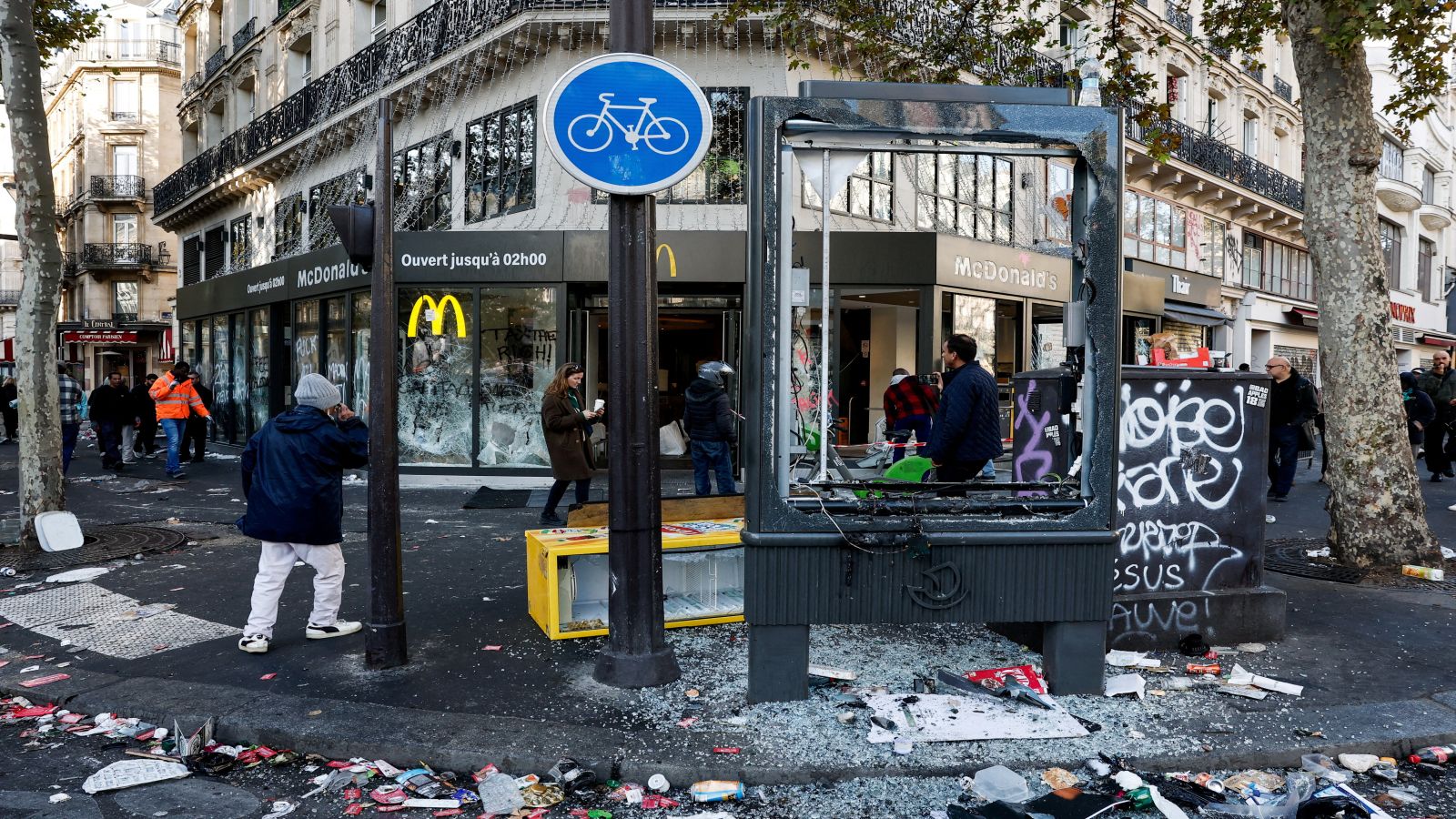
Burning cars make great television. Broken glass makes even better headlines.
Every time a weekend of riots erupts in France, the commentary class rushes to the exact same script. They count the torched vehicles, tally the smashed storefronts, invoke civil war, and ask what fresh catastrophe comes next. Recently making headlines recently: Why Trump Mocking France Protests Misses the Real Story.
They are asking the wrong question.
A weekend of riots in France is not a turning point. It is a symptom. The real action—the real danger, the real political shift—happens on Monday morning, in the ministries, the bond markets, the municipal budgets, and the ballot boxes long after the tear gas clears. More insights regarding the matter are detailed by USA Today.
The Lazy Consensus Around French Riots
Read the standard coverage of French civil unrest and you will see the same lazy consensus recycled with different dates. First comes the shock of disorder. Second comes the assumption that the street violence itself will force an immediate reckoning or topple the system overnight. Third comes the predictable hand-wringing over whether France is "ungovernable."
That framing is shallow. Worse, it gets the mechanics backward.
Street disorder in France rarely rewrites policy on its own in the short term. French governments are built to absorb noise. They deploy riot police, declare curfews, trade accusations between ministries and unions, and wait for exhaustion to set in. In 2005, three weeks of suburban riots led to a state of emergency and roughly 8,973 burned vehicles, yet the deeper structural grievances in the banlieues outlasted the emergency decrees. In 2023, widespread unrest erupted and burned hot, yet core fiscal and political tensions remained unresolved. By late 2026, waves of student walkouts, cost-of-living protests, and violent clashes—with damages projected above €1.2 billion and public debt pushing near 119 percent of GDP—have followed a familiar arc: loud streets, defensive ministers, and mounting strain behind closed doors.
I have watched political analysts and institutional strategists blow millions of dollars mispricing French risk because they treat street theater as a structural break. They buy panic when fires break out and sell panic when a curfew is announced, missing the slow-moving fiscal arithmetic and electoral realignment that actually move the needle.
Street Chaos Is Noise; Institutional Gridlock Is the Signal
To understand what follows a weekend of French riots, you have to separate acute disorder—the visible clashes, arson, and looting—from chronic institutional paralysis, which is the inability of a divided political class to pass coherent budgets or credible reforms.
When commentators fixate on the riots, they miss how Paris actually breaks. France does not usually unravel in a single dramatic collapse. It grinds down.
Consider the fiscal trap. When public debt sits near 119 percent of GDP and deficits draw scrutiny from Brussels, every euro of emergency relief or public-sector concession carries a sharper price tag. Bond investors do not care nearly as much about a single night of broken windows as they do about whether the state can fund its commitments without triggering a sovereign debt squeeze. When unrest hits a country already wrestling with parliamentary stalemate and elevated borrowing costs, the immediate aftermath often looks like bond market jitters and fierce fights over who pays for the damage—whether taxpayers, insurers, or already battered local shopkeepers.
Political scientists who study contentious politics—scholars like Sidney Tarrow and Charles Tilly—have long shown that protests and riots reshape power less by direct force than by altering alliances, legitimizing grievances, and shifting what political actors dare to say next. In France, the aftermath of unrest frequently hands ammunition to the extremes. Hardliners on the right point to law-and-order failures and cultural fracture; firebrands on the left point to economic squeeze, strained public services, and state overreach. Meanwhile, the political center gets squeezed from both sides, looking smaller and more reactive with every news cycle.
Imagine a scenario where a weekend of riots ends with a curfew, a few emergency concessions to students or workers, and a flurry of tough speeches from the Élysée. On paper, calm returns by Tuesday. In reality, trust erodes further, local mayors inherit expensive repair bills, and party strategists spend the rest of the month calculating how to turn street anger into votes. That quiet drift is far more consequential than the smoke on Sunday night.
What People Actually Ask—And Why the Premise Is Flawed
Will riots force the French government to cave on policy?
Rarely in a clean, straight line. Governments often resist caving immediately under violent pressure so they do not look weak or reward arson. Instead, what follows is a tug-of-war: symbolic gestures, delayed overhauls, or targeted tweaks designed to cool tempers without blowing up the entire policy framework—or without admitting defeat. Even when concessions arrive, movement leaders and unions routinely argue they do not go far enough, leaving the underlying friction intact.
Are French riots a sign of impending state collapse?
No. Calling every wave of unrest a sign of a failing state is lazy melodrama. France has deep administrative capacity, strong state institutions, and a long history of contentious street politics. The real risk is not sudden collapse; it is stagnation—a state stuck between high expectations for public protection and tighter fiscal room to maneuver.
Who actually pays the price after the cameras leave?
Not the people throwing fireworks in the dark. The real bill lands on small business owners dealing with shuttered doors and steep insurance headaches, ordinary commuters hit by blockades and transit disruptions, students losing instruction time, and taxpayers absorbing security costs and public property repairs. Worse, heavy-handed policing or rushed, sweeping court proceedings can leave communities feeling more alienated than before, planting seeds for the next flare-up.
How to Read the Aftermath Without Getting Played
If you track French politics, markets, or business exposure, stop trading on the riot footage. Change how you read the aftermath.
- Watch the budget math, not the body count of burned cars. Check bond yields, deficit pushback, and how ministers fund any promised relief. If a government promises spending it cannot credibly finance, the real crisis starts weeks later.
- Separate peaceful grievances from opportunistic violence. Lumping every student, worker, or local resident into the same bucket as violent rioters guarantees bad analysis. Track whether mainstream unions and ordinary citizens back away from the chaos or double down on their core demands.
- Follow the municipal and regulatory fallout. Look at curfews, local emergency measures, insurance rules, and policing directives. Those day-after decisions shape daily life and business risk long after cable news moves on.
- Measure the polling shift two weeks out, not two hours out. Immediate reactions are emotional. Look at which political camp owns the narrative once the dust settles and voters decide who looks competent versus who looks reckless.
The Catch With Betting Against Panic
There is a real downside to this contrarian view, and pretending otherwise would be dishonest. Sometimes, a spark does jump the gap. Misreading the mood on the ground, underestimating how fast local anger can spread across neighborhoods or sectors, or assuming elites will always contain the pressure can leave you flat-footed if a protest wave snowballs into a broader political rupture. Contrarianism is a lens, not a shield; you still have to verify whether the tinder is dry.
Still, most observers get burned by the opposite mistake. They mistake noise for power and drama for destiny. Watch what happens when the cameras pack up—that is where France's real story is written.