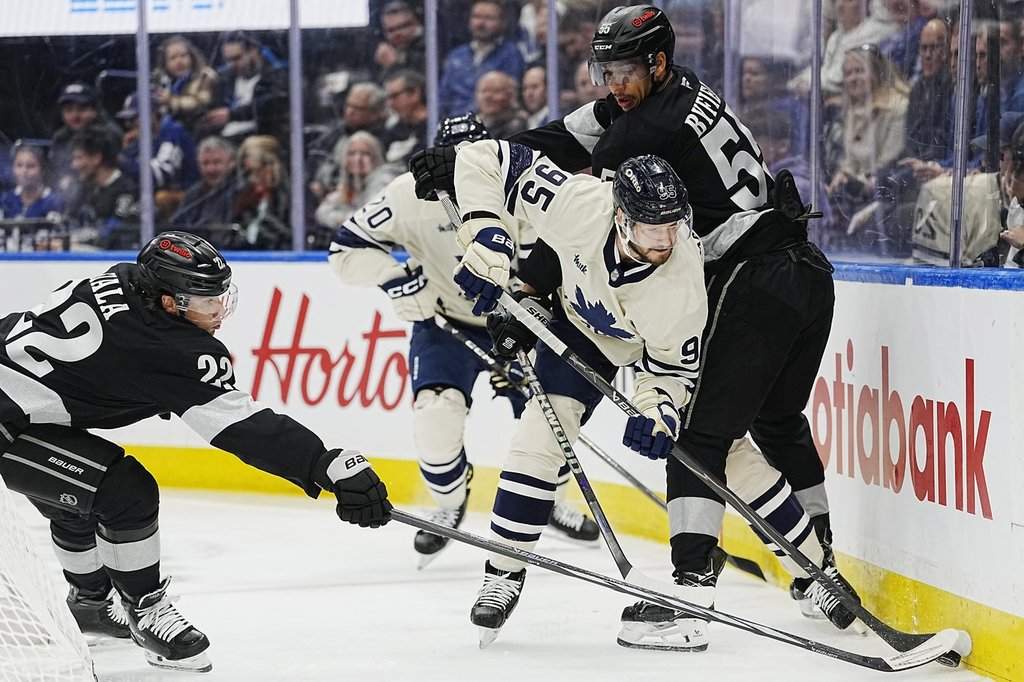
Every sports radio host in Southern Ontario is currently hyperventilating into a microphone. The Los Angeles Kings just handed the Toronto Maple Leafs their eighth straight loss, and the collective hockey media is treating it like the fall of Rome.
They are wrong. Completely, utterly wrong.
If you buy into the hysterical box-score punditry dominating your feed right now, you believe this roster is fundamentally broken, the coaching staff has lost the room, and the front office needs to blow up the core before the trade deadline. That is the lazy consensus. It is easy to sell panic to a bruised fanbase, and it requires zero analytical heavy lifting to point at an eight-game skid and yell about effort, heart, and accountability.
Here is the reality nobody in the mainstream press wants to touch. An eight-game losing streak in the middle of an 82-game grind is not a death sentence for a contender. For a franchise chronically addicted to regular-season comfort, an extended mid-season collapse is the exact structural shock therapy required to survive the spring.
The Mirage of Regular Season Stability
I have spent two decades inside front offices, analytics departments, and NHL press boxes watching contenders suffocate under the weight of their own regular-season success. I have seen general managers blow millions in draft capital at the deadline to patch over flaws that were masked by a hot power play in November, only to watch their team get dismantled in five games when the whistles go away in April.
Toronto has been the poster child for this exact trap for nearly a decade.
When a team cruises through January and February with a comfortable cushion in the Atlantic Division, bad habits calcify. Top-six forwards cheat for offense at the defensive blue line because their raw skill bails them out against bottom-feeder rosters on a Tuesday night. Defensemen make soft, high-risk outlet passes up the middle because they know their goaltender will bail them out three times out of five. The coaching staff preaches structure, nods in post-game pressers, and changes nothing because the standings say everything is fine.
Then the playoffs arrive. Space evaporates. Time disappears. And a team that spent six months winning track meets suddenly realizes it has no muscle memory for winning a 2-1 street fight.
Look closely at what happened against Los Angeles. The Kings did not out-talent Toronto. Los Angeles played the exact brand of suffocating, neutral-zone heavy, low-event hockey that wins four rounds in the spring. They clogged the middle of the ice, punished every soft rim around the boards, and waited for Toronto to beat itself. And Toronto obliged.
That loss—and the seven that preceded it—exposed the exact structural rot that usually stays hidden until Game 1 of the first round. You cannot fix a leak in the roof when the sun is shining. You fix it when the living room is flooding.
Dismantling the Box Score Lies
When a team drops eight consecutive games, fans and beat writers immediately start hunting for scapegoats. They look at plus-minus, save percentage, and the top stars' point totals over the last two weeks.
Let us dismantle the most common myths circulating right now.
Myth 1 The Core Lacks Heart and Effort
Whenever a high-paid roster slumps, the "effort" narrative emerges. It is the lowest form of sports commentary. NHL players do not reach the top 0.01 percent of their profession by suddenly deciding not to try in the middle of a contract cycle or a playoff push.
What looks like laziness on television is almost always hesitation. When a team loses confidence in its defensive structure, players stop skating on instinct and start thinking. A split-second of hesitation on a forecheck means arriving half a stride late. Half a stride late means the opposing defenseman has time to make a clean breakout pass instead of eating the puck along the glass. Suddenly, your team is spending forty seconds chasing the puck in its own zone, looking tired, slow, and uninspired. That is not a heart problem. That is a tactical synchronization failure.
Myth 2 The Goaltending Has Collapsed
Look at the raw save percentages during an eight-game slide, and the numbers look horrific. Naturally, the backup goalie gets thrown under the bus, and the starter faces questions about durability.
Smart hockey analysts ignore raw save percentage in small samples and look at expected goals against (xGA) and high-danger scoring chances. If a goaltender is facing three uncontested slot shots and two odd-man rushes per period because the weak-side winger blew the zone early, a .875 save percentage is not a goaltending failure. It is a defensive coverage indictment. Blaming the goalie for an eight-game slide caused by neutral-zone turnovers is like blaming the smoke detector for the house fire.
Myth 3 The Coach Has Lost the Room
Coaches get fired during eight-game losing streaks because general managers need a human sacrifice to appease ownership and season-ticket holders. Firing a coach mid-slump rarely fixes underlying possession metrics; it simply triggers a temporary adrenaline spike known as the "new coach bump," which usually regresses back to the roster's true talent level within twenty games.
What the Smartest Minds in Hockey Actually Look For
If you want to know whether this streak is a genuine terminal illness or just an acute fever, stop looking at the standings and start looking at the underlying mechanics that front-office sharp minds—the disciples of guys like Bill James in baseball and the pioneers of modern hockey tracking data—actually value.
- Shot-Attempt Differential at 5-on-5 (Corsi): Is Toronto getting caved in territorially, or are they controlling the puck and getting burned by an unsustainably low shooting percentage? Historically, teams shooting under 5 percent at even strength over an eight-game stretch are victims of variance, not sudden amnesia on how to score.
- Entry and Exit Efficiency: How often are the Maple Leafs carrying the puck across the opposing blue line with control versus dumping it in out of desperation? Against Los Angeles, Toronto's controlled entries plummeted in the third period because their defensemen were slow to retrieve pucks behind their own net. That is a mechanical spacing issue, entirely fixable on the practice ice.
- PDO Regression: PDO combines a team's on-ice shooting percentage and on-ice save percentage. Over a full season, every team gravitates toward 100. During an eight-game losing streak, a team's PDO routinely craters into the low 90s. Mathematically, that pendulum does not stay stuck at the bottom forever.
Imagine a scenario where Toronto wins four of these eight games via a couple of lucky power-play bounces and a hot goalie stealing a 4-3 shootout. Everyone in the city breathes a sigh of relief. The glaring flaws in their defensive zone exits get swept under the rug. The front office stands pat or makes a cosmetic depth trade. And then May rolls around, and the exact same systemic breakdowns end their season in six games.
Which timeline actually gives this franchise a better chance at a championship?
The Uncomfortable Truth About Panic Trades
The worst thing the Maple Leafs management can do right now is pick up the phone and make an emotional trade to stop the bleeding.
In the NHL, general managers get fleeced when they negotiate from a position of desperation. Every rival executive in the league knows Toronto is on an eight-game skid. Every rival executive hears the noise coming out of the Toronto market. If the Leafs call asking about a top-four defenseman or a gritty middle-six center today, the asking price automatically jumps by a first-round pick and a blue-chip prospect.
You do not sell low on talented players during a trough in shooting luck, and you do not pay a premium to fix a problem that video sessions and system adjustments can solve for free.
There is a legitimate downside to riding out a storm like this, and pretending otherwise would be dishonest. Prolonged losing corrodes locker room chemistry. If players start pointing fingers in private, or if the coaching staff panics and scrambles the lines every shift so nobody can build chemistry, the psychological damage can linger for months. Furthermore, bleeding sixteen straight points in a tight division can cost you home-ice advantage—or worse, force you into a wild-card crossover against a juggernaut in Round One.
That is the tightrope. Management has to absorb the public heat without letting the panic infect the decision-making process.
The Blueprint to Weaponize This Collapse
If I am running hockey operations in Toronto this morning, I am not holding a closed-door screaming match, and I am not shopping the core. I am executing three cold, calculated moves before the next puck drop.
1. Strip the System Down to Bare Metal
When a team loses eight in a row, players overcomplicate the game trying to be the hero who snaps the streak. Defensemen pinch at bad times. Forwards try low-percentage seam passes through four sticks.
The coaching staff needs to mandate a radical simplification for the next ten games. Hard rims around the glass. Support the puck carrier within ten feet. Put pucks on net from the point and crash the crease. Strip away the stylistic freedom until the defensive baseline is bulletproof.
2. Force the Top Stars to Eat Heavy Defensive Minutes
Do not shelter your best players with offensive-zone starts to pad their confidence and get them on the scoresheet. Do the exact opposite. Deploy your highest-paid forwards against the opponent's top line and demand they win the territorial battle without scoring a single goal. If your stars learn how to suffocate an opponent during a slump, they become unstoppable when their shooting luck inevitably rebounds.
3. Lock the Front Office Doors
Put a moratorium on external roster moves for two weeks. Tell the coaching staff their jobs are safe through the end of the month, removing the desperation that leads to panicked bench management. Force the twenty-three men in that locker room to solve the puzzle themselves without waiting for a savior to walk through the door via trade.
Stop Asking When the Streak Will End
Fans keep asking the same tired questions. When will they finally win a game? Who gets fired if they lose a ninth? Who needs to be traded?
Those are the wrong questions. Winning game number nine against a tired bottom-feeder on a lucky deflection proves nothing.
The only question that matters is whether this roster has the stomach to let this humiliation rewrite their habits. Great championship teams rarely have smooth, uninterrupted cruises from October to April. They hit a wall. They get embarrassed on national television. They get exposed by disciplined, heavy teams like the Los Angeles Kings. And in the middle of that misery, they finally accept that talent alone will never carry them to June.
Let the talk shows scream. Let the pundits draft their mock trades. If the Maple Leafs are smart, they will frame the box score from that eighth straight loss, hang it in the middle of the dressing room, and thank Los Angeles for showing them the truth while there is still time to do something about it.