Every time a group of cyclists gets mowed down on a stretch of asphalt, the collective outrage machine fires up on autopilot. Politicians offer hollow prayers. Advocacy groups demand neon signs, painted gutters, and slower speed limits. Then everyone goes back to sleep until the next body hits the pavement.
Stop blaming the motorists. Stop pretending a green-painted stripe on a fifty-mile-per-hour stroad is infrastructure. It is a psychological placebo designed to make municipal planners feel progressive while they herd athletes into the path of distracted suburbanites piloting four-thousand-pound steel boxes.
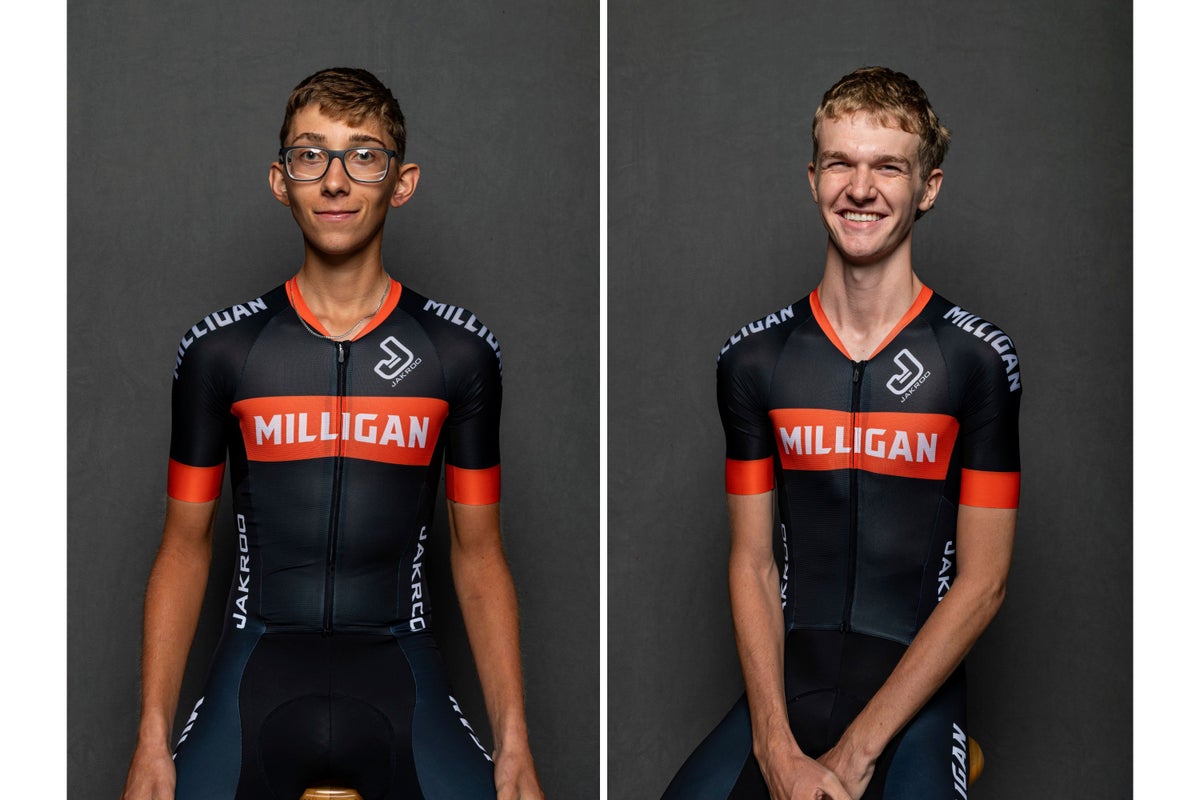
The tragic collision in Tennessee that left college cyclists dead and injured is not an isolated freak accident. It is the predictable mathematical outcome of a broken system that forces human muscle to share space with combustion engines.
The Myth of Shared Responsibility
The lazy consensus in every newsroom and safety committee is that education and awareness campaigns will save us. Drivers need to put down their phones. Cyclists need to wear brighter neon vests. Everyone just needs to share the road.
This is a dangerous fantasy.
I have spent two decades analyzing transportation policy and watching municipal governments throw millions of dollars at cosmetic fixes. Paint is not protection. A white dashed line offers zero kinetic resistance against an SUV traveling at sixty miles per hour. When physics collides with policy, physics wins every single time.
Expecting a cyclist to safely navigate a high-speed corridor alongside multi-ton vehicles is like expecting a pedestrian to safely jog across an active runway because there is a painted crosswalk. The premise itself is fundamentally flawed.
"Shared roads" are a euphemism for a gamble where the cyclist holds all the downside risk and the motorist holds all the mass.
Why Painted Bike Lanes Fail Every Time
Cities love painted lanes because they are cheap. They cost pennies compared to concrete barriers, grade separations, or dedicated off-road circuits. They look great on a sustainability report.
Yet they create a false sense of security. A cyclist rides inside the painted box, assuming the arbitrary boundary commands respect. Meanwhile, the driver five feet away is adjusting the cabin temperature, texting at a red light, or fighting fatigue after a double shift.
- The Speed Differential: When a vehicle travels at 55 mph and a bicycle travels at 20 mph, the closing speed is immense. Human reaction times cannot bridge that gap when visibility drops or distraction creeps in.
- The Door Zone and Debris: Painted lanes are frequently dumped in the gutter where road debris, glass, and storm drains accumulate, forcing cyclists outward into traffic lanes just to avoid a flat tire.
- The Intersection Trap: Most serious collisions do not happen on straightaways; they happen at junctions where turning vehicles cross paths with straight-moving bikes. Paint does nothing to alter intersection geometry.
The Brutal Solution Nobody Wants to Fund
If we actually cared about protecting athletes and commuters on two wheels, we would stop pretending we can retrofit nineteenth-century car-first corridors into safe multi-modal paths.
We need physical separation or we need to get off the open road entirely.
That means dedicated, grade-separated cycling highways completely isolated from automotive traffic. It means investing in closed-loop training facilities for competitive teams so they do not have to risk their lives on rural highways just to log base miles. It means admitting that asphalt designed for industrial transit and personal transport cannot double as a training camp for endurance athletes.
Yes, it will cost money. Yes, it will require eminent domain battles and massive engineering overhauls. But the alternative is continuing to sacrifice young talent on the altar of automotive convenience while offering nothing more than thoughts, prayers, and fresh coats of green paint.
Put down the spray can. Pour the concrete.