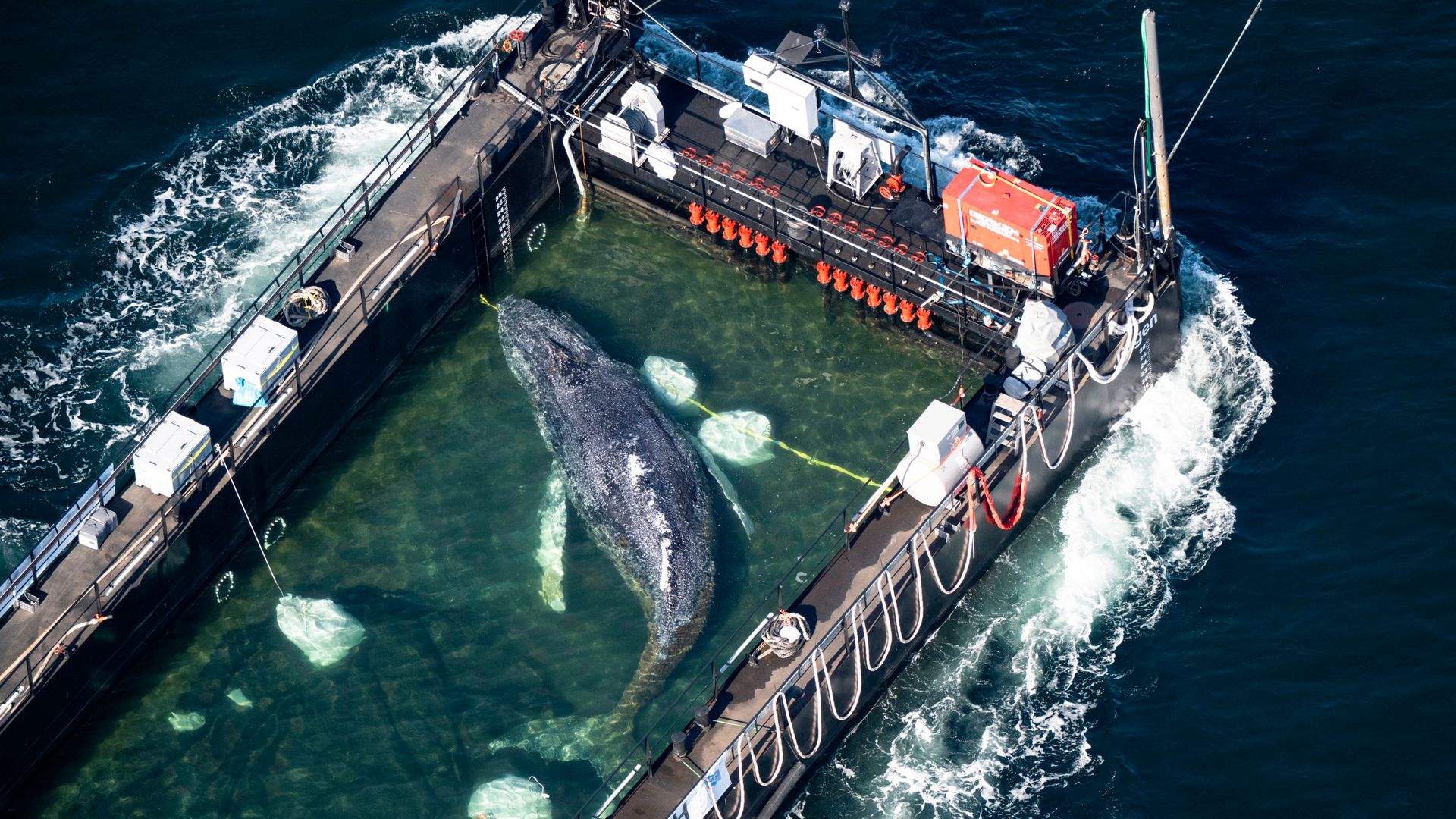
The headlines are predictable. A 14-meter sperm whale strands itself. Local authorities scramble. A barge is commissioned. Thousands of euros are burned to transport a literal mountain of rotting flesh back to the North Sea. The public cheers for the "dignified" burial at sea.
It is a circus of human ego masquerading as environmentalism.
We need to stop pretending that moving a dead whale is an act of conservation. It is a sanitation project wrapped in a PR campaign. When we interfere with the natural deposition of a carcass, we aren't "helping nature." We are robbing an entire biological sequence of its fuel to soothe our own discomfort with the sight of death on a tourist beach.
The Myth of the Clean Coastline
The "lazy consensus" among maritime authorities is that a beached whale is a biohazard and an eyesore. They treat it like a spilled shipping container or a pile of plastic waste. It isn't. A whale carcass is the most significant nutrient event a coastline can experience.
In a natural cycle, a stranding provides a massive influx of nitrogen, phosphorus, and organic carbon to the local terrestrial and intertidal systems. Birds, crabs, and microbial colonies have evolved for millions of years to exploit these rare windfalls. By hoisting that whale onto a barge and dumping it in deep water, we are effectively stealing food from the local table.
Why do we do it? Because "Travel" and "Tourism" boards can’t sell a view that includes the stench of a decaying leviathan. We prioritize the aesthetic comfort of a few weekenders over the caloric needs of an entire ecosystem.
The Logistics of Vanity
Let’s talk about the math. Transporting a 30-ton animal requires heavy machinery, specialized barges, and hundreds of man-hours. I have seen municipal budgets evaporate because of a single stranding.
$Cost = (Machinery \times Fuel) + (Specialized Labor \times Risk Premium)$
The risk is not just financial. Moving a whale in an advanced state of decomposition is a literal ticking time bomb. Internal gases—primarily methane and hydrogen sulfide—build up within the blubber layer. When you lift that animal with a crane, you are courting a catastrophic structural failure. We’ve all seen the videos of "exploding whales." It isn't a joke; it’s a failure of physics.
If we were honest, we would admit that the $50,000 to $100,000 spent on these "burial" missions could fund actual marine conservation—like ghost net removal or acoustic monitoring—for years. Instead, we spend it on a one-day funeral for an animal that doesn't care where its bones rest.
Necro-Ecology: What the Experts Won't Tell You
Marine biologists often stay quiet during these operations because they don't want to fight the tide of public emotion. But ask them about "whale falls."
When a whale dies naturally at sea and sinks, it creates a "whale fall" ecosystem that can last for 50 years. It supports species that exist nowhere else on Earth, like the Osedax bone-eating worm.
By hauling a beached whale back out to sea on a barge, we aren't creating a whale fall. We are creates a "whale dump." Because these animals are often towed to convenient, shallow-ish locations, they don't reach the abyssal depths where they belong. They end up in high-traffic shipping lanes or wash right back up on the next high tide three miles down the coast.
The Counter-Intuitive Fix: Let It Rot
The most "green" thing we can do is also the most offensive to our modern sensibilities: Leave it exactly where it is.
If a whale strands on a remote beach, the area should be cordoned off, and the carcass should be allowed to integrate back into the sand.
- Nutrient Cycling: The beach thrives.
- Scientific Opportunity: Researchers get a window into the animal's life without the pressure of a 12-hour removal window.
- Reality Check: Humans are reminded that they don't control the ocean.
If the whale is on a high-traffic tourist beach, the answer isn't a barge. It’s a burial on-site, deep under the dunes. This sequesters the carbon and feeds the local flora without the carbon footprint of a maritime transport operation.
The Emotional Cost of "Saving" the Dead
We have developed a pathological need to "clean" nature. We see a dead whale and we feel a collective failure. We want to fix it. We want to give it a "noble" end.
But there is nothing noble about a crane strap digging into the throat of a sperm whale. There is nothing dignified about a barge engine pumping diesel exhaust over the carcass of a deep-sea wanderer.
The most respectful thing we can do is acknowledge the tragedy of the stranding and then get out of the way. Stop treating the North Sea like a landfill for the things we don't want to look at on our beaches.
Nature isn't a curated museum exhibit. It’s a messy, smelly, efficient machine. Every time we fire up a barge to "save" a dead whale, we are just throwing a wrench in the gears so we can feel better about ourselves.
Stop the barges. Let the bones bleach in the sun. Let the crabs eat. That is the only dignity a whale actually needs.