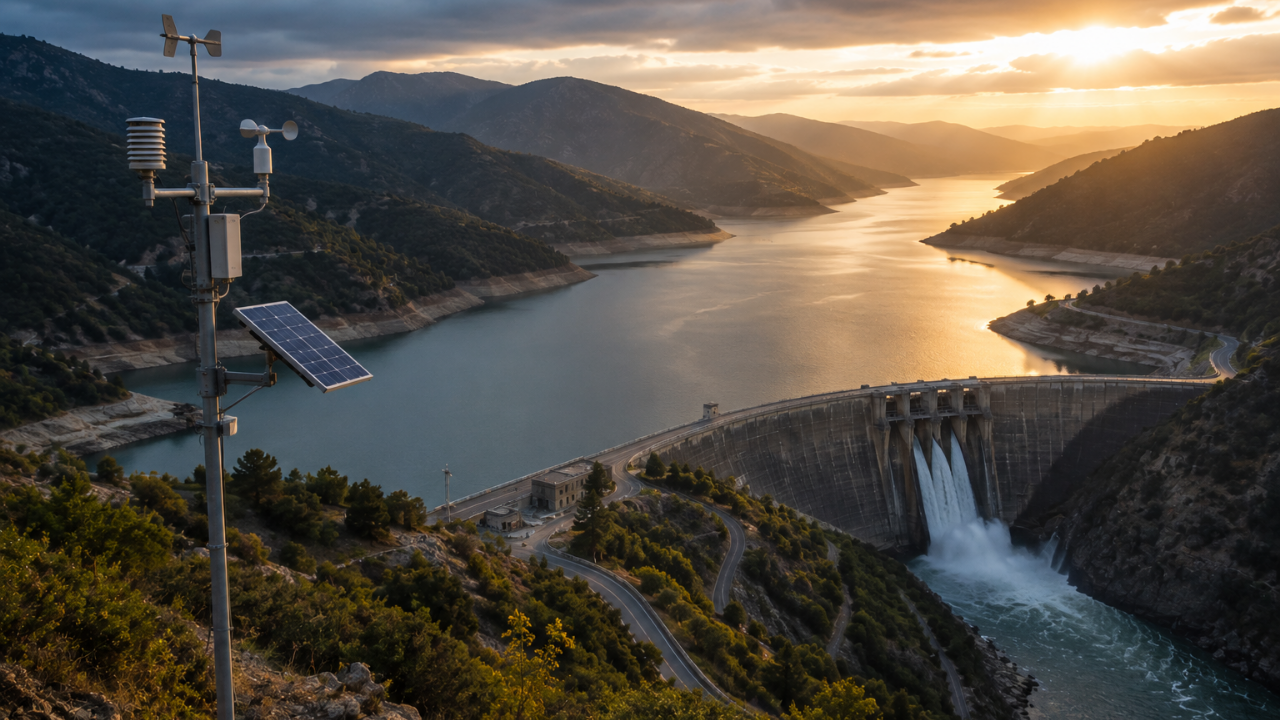
Every few months, another group of consultants rolls into Sacramento waving fresh meteorological reports. They look at California’s sprawling reservoir network and swear that if we could just upgrade our radar, buy a faster supercomputer, or squeeze five more percentage points of accuracy out of atmospheric river predictions, we would magically unlock hundreds of millions of dollars in annual water value.
It is a comforting delusion. It shifts the blame for our chronic scarcity from human failure, stubborn litigation, and ancient infrastructure to the unpredictable whims of the sky. For a closer look into similar topics, we recommend: this related article.
The lazy consensus says smarter forecasts equal smarter dam operations. It sounds reasonable at a cocktail party or in a venture capital pitch deck. If the National Weather Service tells operators a massive storm is hitting Lake Oroville next Tuesday, they can safely release water ahead of time, capture the flood protection buffer, and then refill the basin once the rain stops.
Except reality refuses to cooperate with spreadsheet math. For broader details on the matter, extensive analysis can also be found at Financial Times.
I have watched state agencies and private utilities blow millions of dollars chasing marginal gains in predictive meteorology while ignoring the rusted gears of actual water delivery. Better forecasts will not save a drop of water if you lack the conveyance capacity to move it, the regulatory permission to store it, or the political courage to alter hundred-year-old operating rules written when Eisenhower was in office.
The Forecast Fallacy
Let us dismantle the core premise of the $200 million forecast windfall.
Forecast-Informed Reservoir Operations sounds like the silver bullet for the American West. The idea is simple: use modern satellite data and atmospheric river tracking to dynamically manage storage instead of relying on fixed calendar rules established in the 1950s. On paper, operators can hold water higher into the flood season because they trust they will get a four-day warning before disaster strikes.
The missing variable in this equation is risk tolerance.
When a spillway fails, nobody remembers the brilliant paper published by the hydrologist who saved forty acre-feet of storage. They remember the catastrophic floods that flattened downstream towns. Dam operators are not portfolio managers trying to optimize yield on a tech stock; they are civil servants legally and criminally liable for catastrophic public safety failures.
Imagine a scenario where an advanced ensemble model predicts a major atmospheric river will miss a watershed to the north. Based on that prediction, the operator keeps storage high to preserve supply. The storm shifts fifty miles south, dumps ten inches of rain directly onto saturated granite, and overspills the dam. The forecast was ninety percent accurate. The outcome is a disaster.
Precision meteorology cannot bridge the gap between statistical probability and absolute disaster prevention. When the downside is drowning a valley, nobody cares about the confidence interval.
The Bottleneck is Concrete, Not Code
The real crisis in California water is not informational. It is structural.
We suffer from a severe mismatch between where water falls, where it is needed, and where we are legally allowed to put it.
- Conveyance Collapse: The California Aqueduct and the Delta-Mendota Canal are sinking. Subsidence from over-pumped groundwater aquifers has structurally reduced the physical carrying capacity of our primary north-to-south arteries. You can forecast a trillion gallons of runoff with atomic precision, but if the concrete channel carrying it south has lost thirty percent of its capacity due to crumbling soil compaction, that water stays stranded in the north or spills uselessly to the sea.
- Regulatory Gridlock: Environmental flow requirements and water rights allocations are bound by rigid legal frameworks that do not change because a computer model got smarter. Pumping restrictions designed to protect the delta smelt do not lift simply because a meteorologist has a better Doppler radar feed. The legal bottlenecks dictate operations far more strictly than any weather report ever could.
- Storage Deficits: Above-ground storage is finite and fully claimed. Groundwater basins are our true subterranean reservoirs, yet we spent decades dragging our feet on mandatory recharge implementation under the Sustainable Groundwater Management Act.
Pouring money into forecasting algorithms while leaving our physical delivery infrastructure to crumble is like installing a high-end GPS in a car with no engine, no transmission, and four flat tires.
The Honest Approach
If we want to stop bleeding economic value, we have to abandon the technocratic fantasy that better data solves physical scarcity.
Stop funding academic studies on ensemble forecasting optimization until we fix the physical and legal pipes. Reallocate those capital expenditures toward decentralized groundwater recharge projects, repairing canal subsidence, and modernizing nineteenth-century water transfer markets so that water can actually move to its highest economic use without getting bogged down in five-year court battles.
The market rewards reality, not clever projections. The sky is not failing us. Our unwillingness to face structural decay is.