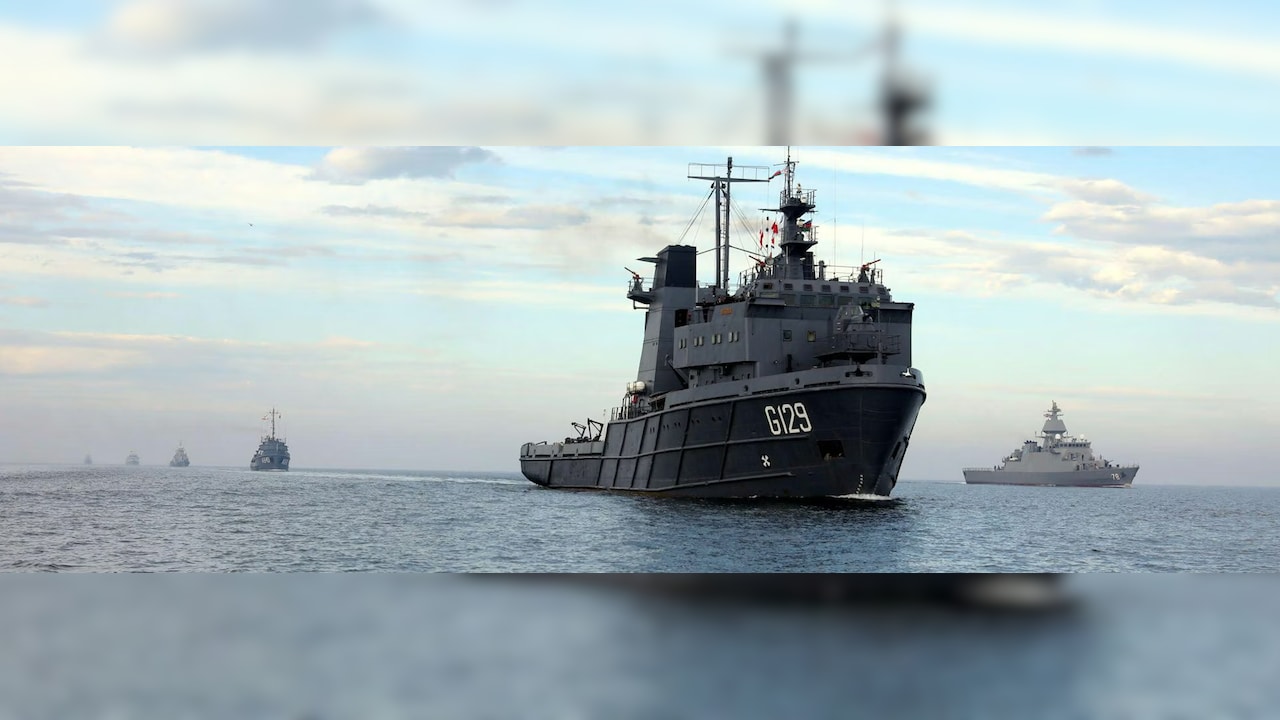
Foreign policy circles are gripped by a singular, lazy panic: the "shadow route" keeping Iran alive. The mainstream narrative, peddled by safe commentators in secure briefing rooms, paints a picture of a mysterious, untouchable ghost fleet of rusting tankers. They claim this fleet, operating in dark corners of the South China Sea through illicit ship-to-ship transfers, is an unfixable leak in the Western sanctions apparatus. They look at the U.S. Treasury's constant stream of blacklists and the explosive escalation in the Strait of Hormuz, and they throw up their hands. They declare that America simply cannot touch this covert financial and logistical web.
This diagnosis is completely wrong. It misunderstands global logistics, misreads financial data, and fundamentally misjudges how sanctions actually work.
There is no "shadow" route. There is only a highly visible, hyper-rational, and completely predictable commodities market that Washington deliberately chooses not to shut down. The ghost fleet is not an invisible phantom slipping through the cracks of global enforcement. It is a structural feature of American foreign policy. Washington tolerates it because the alternative—a true, airtight blockade that completely eliminates Iranian crude from the global market—would trigger a global energy supply crisis that no Western administration could politically survive.
The Myth of the Invisible Tanker
I have spent years analyzing maritime supply chains and corporate registries. If there is one thing that becomes instantly clear when you look at the raw data, it is that nothing on the ocean is truly hidden. The idea of an invisible fleet of 200 tankers moving millions of barrels of crude undetected is a fantasy designed to excuse bureaucratic failure.
The conventional wisdom focuses on the theatrics of maritime evasion:
- Flag hopping between registries like Panama and Sierra Leone.
- Disabling Automatic Identification System (AIS) transponders.
- Falsifying bills of lading to claim the oil originated in Malaysia or Oman.
- Conducting risky ship-to-ship (STS) transfers in the Eastern Outer Port Limits (EOPL) within Malaysia's exclusive economic zone.
The commentators treat these tactics as if they are sophisticated, untraceable maneuvers. They are not. They are incredibly loud, clumsy, and obvious. A commercial satellite tracking data feed can pinpoint these vessels with near-perfect accuracy. When a 300,000-ton Very Large Crude Carrier (VLCC) goes dark near Kharg Island and mysteriously reappears weeks later riding low in the water off the coast of China, nobody is fooled. The U.S. Treasury Department knows exactly which ships are carrying this crude. In fact, they publish their names and IMO numbers on Office of Foreign Assets Control (OFAC) blocklists every few months.
The real breakdown is not an intelligence failure. It is an enforcement choice.
The Western enforcement strategy relies on a flawed premise: that you can stop a state-backed commodities trade by playing whack-a-mole with individual hull numbers and shell companies. When the U.S. sanctions a vessel like the Lana Luster or the Nora, the asset does not vanish. The owners simply incur a minor cost of doing business. They pay a negligible fine to a local maritime authority, shuffle the paper ownership to a new front company registered in a different Chinese city, change the ship's name with a fresh coat of paint, and head right back to the loading terminals.
The system treats a systemic, state-incentivized macroeconomic flow as if it were a localized compliance problem.
The Macroeconomic Reality: China's "Teapot" Refineries
To understand why the shadow route cannot be broken by traditional sanctions, you have to look past the tankers and focus on the destination. The competitor articles tell you that Iran is surviving because of clever logistics. The truth is that Iran is surviving because it has a captive, massive, and structurally insulated buyer: China’s independent "teapot" refineries in Shandong province.
These teapots do not operate like major state-owned oil conglomerates such as Sinopec or PetroChina. State-owned giants have global brands, rely on Western clearing banks, and hold massive assets across Europe and North America. They are terrified of secondary U.S. sanctions, which is why China's official customs data has logged exactly zero imports of Iranian oil for years.
The teapots are entirely different entities:
- They are small, localized, and private.
- They do not use the U.S. dollar or access the SWIFT banking network.
- They process crude for domestic consumption, meaning they have no international supply chain vulnerability.
- They clear transactions through regional, non-systemic Chinese banks using renminbi (RMB) or barter arrangements.
When Iranian crude moves through the EOPL transit zones, it is purchased at a steep discount—often $5 to $10 below the Brent benchmark. This discount is not a sign of failure for Iran; it is the structural lubricant that keeps the entire trade moving. For a Shandong refinery, this discounted crude represents a massive competitive advantage.
Imagine a scenario where the U.S. attempts to impose absolute secondary sanctions on these small refineries. What is the leverage? You cannot cut off a bank from the U.S. financial system if that bank has never held a single dollar, has no foreign branches, and operates entirely within a domestic currency ecosystem. The U.S. sanctions toolkit is built on the assumption that everyone eventually needs access to the greenback. When an entire supply chain consciously decouples from the dollar, the traditional sanctions architecture loses its bite.
The Insurance Illusion
Another major talking point among conventional defense analysts is the role of Western maritime services, specifically Protection and Indemnity (P&I) clubs. The argument goes that because 90% of global maritime tonnage relies on Western-linked insurance, the West can paralyze Iran's trade by legally barring insurers from covering these vessels.
This argument completely ignores the rise of parallel maritime infrastructure. When Western P&I clubs pulled out, they did not stop the trade; they just shifted the risk to alternative markets. Companies like the Maritime Mutual Insurance Association, alongside various obscure entities operating out of jurisdictions with zero Western alignment, stepped in to fill the void.
More importantly, state buyers like China can easily self-insure or accept sovereign guarantees from the exporting nation. When the survival of a strategic energy corridor is on the line, the absence of a standard London-issued insurance certificate is a minor administrative hurdle, not a structural barrier. The trade continues because the underlying economic incentives overwhelm the regulatory frictions.
The Collateral Damage of Absolute Enforcement
So, why doesn't Washington simply deploy the U.S. Navy to physically interdict these tankers in international waters? Why not declare a total maritime embargo and seize every vessel suspected of carrying sanctioned Iranian oil?
Because the economic fallout would be catastrophic for the West.
The global oil market operates on razor-thin margins of surplus capacity. Iran exports roughly 1.5 million barrels of crude per day, with the vast majority heading into the Chinese market. If the United States were to successfully remove those 1.5 million barrels from the global supply curve overnight, the shockwave would be instantaneous.
- Global crude prices would spike immediately.
- Retail gasoline prices in the U.S. and Europe would surge, creating severe political liability for the incumbent administration.
- China would be forced to compete more aggressively for non-sanctioned crude from the Middle East and West Africa, driving energy costs even higher for Western allies.
The current state of affairs in the region highlights this delicate balance. With the ongoing conflict in West Asia effectively halting standard vessel movements through the Strait of Hormuz, global energy supplies are already under immense strain. Iran's newly established Persian Gulf Strait Authority is actively leveraging its geographic position, imposing multi-million dollar transit fees and forcing major shipping groups to choose between paying exorbitant tolls or rerouting entirely around the Cape of Good Hope.
In this hyper-strained environment, the "shadow fleet" acts as a vital, unacknowledged macroeconomic safety valve. It allows a significant volume of oil to flow into the global economy outside the standard, heavily disrupted commercial channels. It keeps Chinese demand satisfied quietly, preventing Beijing from bidding up the price of the remaining free-market oil that the West relies on.
Washington’s public rhetoric must always be uncompromisingly tough on sanctions evasion. But the operational reality is a calculated policy of managed non-enforcement. The goal is not to reduce Iranian oil exports to zero. The goal is to keep those exports just expensive enough, just difficult enough, and just discounted enough to penalize the Iranian regime without triggering an energy price shock that collapses the Western domestic economy.
Dismantling the Premium Evasion Industry
The current framework has created a highly lucrative, entirely counter-productive "sanctions compliance" industry. Billions of dollars are spent globally on compliance software, satellite tracking tools, and legal consultancies designed to vet ownership structures and flag "high-risk" vessels.
This entire apparatus is fighting yesterday's war. It treats sanctions evasion as an anomaly to be corrected rather than a permanent, parallel global market structure.
If the goal is to actually reduce the revenue flowing to adversaries, the current playbook must be abandoned. Stop chasing the hulls. Stop listing shell companies that will be dissolved before the press release is even formatted.
Instead, the strategy must pivot to targeting the structural economic incentives that make the trade profitable in the first place:
- Incentivize Alternative Supplies: Rather than trying to block discounted Iranian oil from entering China, the focus should be on flooding regional markets with competitive, non-sanctioned alternatives, lowering the premium that makes the risk of running a ghost fleet acceptable.
- Target the Domestic Infrastructure: Focus enforcement actions entirely on the fixed, physical infrastructure inside the destination ports—the specific storage terminals, blending facilities, and regional pipelines that cannot be renamed or re-flagged.
- Accept the Parallel System: Acknowledge that a multi-tiered global commodities market is now a permanent reality. One tier operates within the Western legal and financial framework; the other operates entirely outside of it, powered by RMB, alternative registries, and non-Western insurance pools.
The "shadow route" is not a failure of American power. It is an indictment of the illusion that global trade can be controlled via a dollar-denominated legal switch. The ghost fleet is here to stay, not because America can't touch it, but because the West cannot afford to watch it sink.