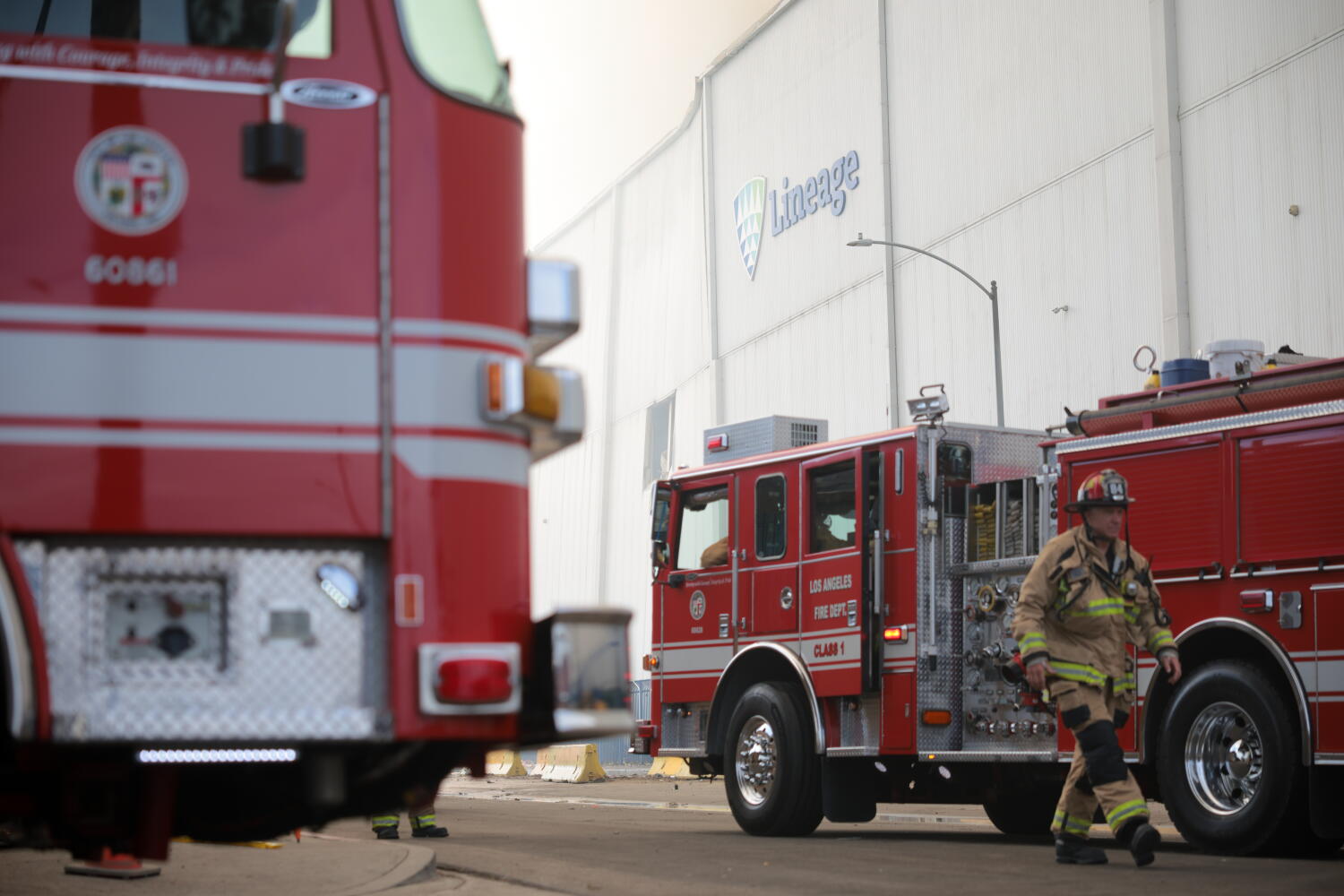
The lazy consensus loves a paper trail. Every time a major public agency asks for the financial resources required to prevent a city from burning to the ground, local op-ed pages beat the exact same tired drum: "No more cash until we get an independent audit."
It sounds responsible. It smells like fiscal conservatism. In reality, demanding an independent audit of the Los Angeles Fire Department before addressing its structural deficits is an exercise in bureaucratic theater that actively endangers human lives. You might also find this similar coverage interesting: The Mechanics of Retail Fuel Benchmarks and the Non-Linear Transmission to US Consumer Sentiment.
The core premise of the anti-spending argument is fundamentally broken. Critics look at internal scandals—like the recent suspension of United Firefighters of Los Angeles City (UFLAC) union leaders over $800,000 in undocumented credit card spending—and deliberately conflate labor union politics with municipal operational reality. They point to massive overtime expenditures and assume it is a sign of systemic fraud or administrative gluttony.
I have spent twenty years watching municipal budget battles play out in major metropolitan areas. I have seen cities waste millions on third-party forensic firms only to discover what anyone with an operational pulse already knew: you cannot audit your way out of a severe, decades-long understaffing crisis. As extensively documented in recent reports by Al Jazeera, the effects are worth noting.
The Compounding Cost of the "Audit First" Delay
When you starve a fire department of capital while waiting for a six-month committee review, you do not save the taxpayers a dime. You just shift the liabilities around. The LAFD operates on a budget of roughly $1.1 billion, with the vast majority allocated directly to mandatory personnel costs.
Let us break down the mechanical reality of how fire staffing actually works, and why the current panic over overtime spending misses the point entirely.
The Overtime Trap Explained
Fire stations do not have the luxury of running short-handed. If a station requires a minimum of four personnel to man a light force truck or an engine company, that engine does not roll unless four bodies are in those seats. If the city fails to hire enough active-duty personnel to account for attrition, injury, and retirement, the department has exactly two options:
- Close the station or brown out the engine. This spikes response times, violates national fire protection standards, and guarantees that structural fires turn into block-wide conflagrations.
- Order existing firefighters to work mandatory overtime. This keeps the engine staffed but drives up the line-item expenditures that auditors love to complain about.
The math behind this reality is simple, predictable, and entirely immune to accounting tricks:
$$O_t = (P_m \cdot S_h) - (P_a \cdot H_r)$$
Where $O_t$ represents the total overtime hours generated, $P_m$ is the required minimum staffing per shift across all active apparatus, $S_h$ is the total annual shift hours needed to maintain continuous citywide coverage, $P_a$ is the actual number of active, deployable personnel on the payroll, and $H_r$ is the standard straight-time hours an individual firefighter can legally work before triggering premium pay.
When $P_a$ drops due to budget freezes or hiring backlogs, $O_t$ must rise to maintain equilibrium. An audit cannot alter this variable; only hiring more academy classes can.
Where the Money Actually Goes
The argument that the LAFD is swimming in surplus cash that needs to be clawed back ignores the physical degradation of the department's infrastructure. While critics cherry-pick specific operational lines to claim the budget has increased, the reality is that recent funding adjustments have barely kept pace with standard cost-of-living increases and inflationary spikes in heavy equipment manufacturing.
+-----------------------------------------------------------------------+
|                       LAFD ANNUAL BUDGET ALLOCATION                    |
+-----------------------------------------------------------------------+
| [■■■■■■■■■■■■■■■■■■■■■■■■■■■■■■■■■■■■■■■■■■■■■■■■] Personnel: ~80%   |
| [■■■■■■■■■■] Fixed Costs, Fuel & Infrastructure: ~15%                 |
| [■■] Fleet Modernization & Specialized Apparatus: ~5%                 |
+-----------------------------------------------------------------------+
A standard custom fire engine that cost $650,000 a few years ago now commands close to $1 million, with delivery backlogs stretching past 24 months. The city's fleet is aging out faster than the replacement schedule can handle, forcing mechanics to keep frontline apparatus running on hope and expensive, fabricated replacement parts.
When a city council reduces operational funding by even a seemingly minor amount—such as the $17 million adjustment debated during recent budget cycles—it severely limits the department's ability to train for large-scale urban-interface wildfires. It cuts into communication technology updates. It delays the replacement of thermal imaging cameras and self-contained breathing apparatus (SCBA).
Dismantling the Consensus: The Brutal Answers to Public Panic
The public conversation surrounding emergency services spending is dominated by deeply flawed premises. Let us address the questions that tax watchdogs love to throw at city hall, using the cold light of operational facts.
"Why can't we just cap overtime spending to force the department to stay within its budget?"
Because fires do not respect fiscal quarters. If a major brush fire erupts during a high-wind event in the Santa Monica Mountains, the fire chief cannot pull crews off the line because the overtime account is in the red. Capping overtime without expanding the baseline workforce is an implicit decision to let buildings burn.
"Shouldn't we wait until the union financial scandals are completely resolved before trusting the agency with more funds?"
This is the ultimate category error. The United Firefighters of Los Angeles City is a private labor organization funded by voluntary member dues. The Los Angeles Fire Department is a public public-safety agency funded by taxpayer dollars. Punishing the line personnel who respond to medical emergencies because their union representatives failed to produce receipts for credit card expenses is vindictive policy-making that achieves nothing but a degradation of local emergency services.
Actionable Steps for Genuine Reform
If we are going to fix the structural issues plaguing municipal emergency services, we need to stop hiding behind the word "audit" and execute structural policy adjustments that target the root of the problem.
- Implement an Automatic Staffing Trigger: Legally tie the department's hiring budget to regional population growth and emergency call volume metrics, bypassing the annual political theater in the city council entirely.
- Establish a Dedicated Capital Fleet Fund: Isolate apparatus replacement funds from the general operating budget to prevent politicians from raiding vehicle maintenance accounts to balance short-term deficits.
- Decouple EMS from Fire Suppression: Over 80% of the LAFD's daily call volume consists of medical emergencies, not structure fires. By expanding civilian-led advanced life support basic response units, the city can relieve pressure on heavy apparatus crews, slashing wear-and-tear costs and artificial overtime pressures simultaneously.
The hard truth nobody wants to admit on the evening news is that public safety is an expensive, capital-intensive endeavor that yields no financial return on investment. Its profit is measured solely in the disasters that do not happen and the properties that do not burn. Stop demanding more paperwork from the people holding the hoses. Fill the operational deficit, build the academies, replace the trucks, and let them do their job.


