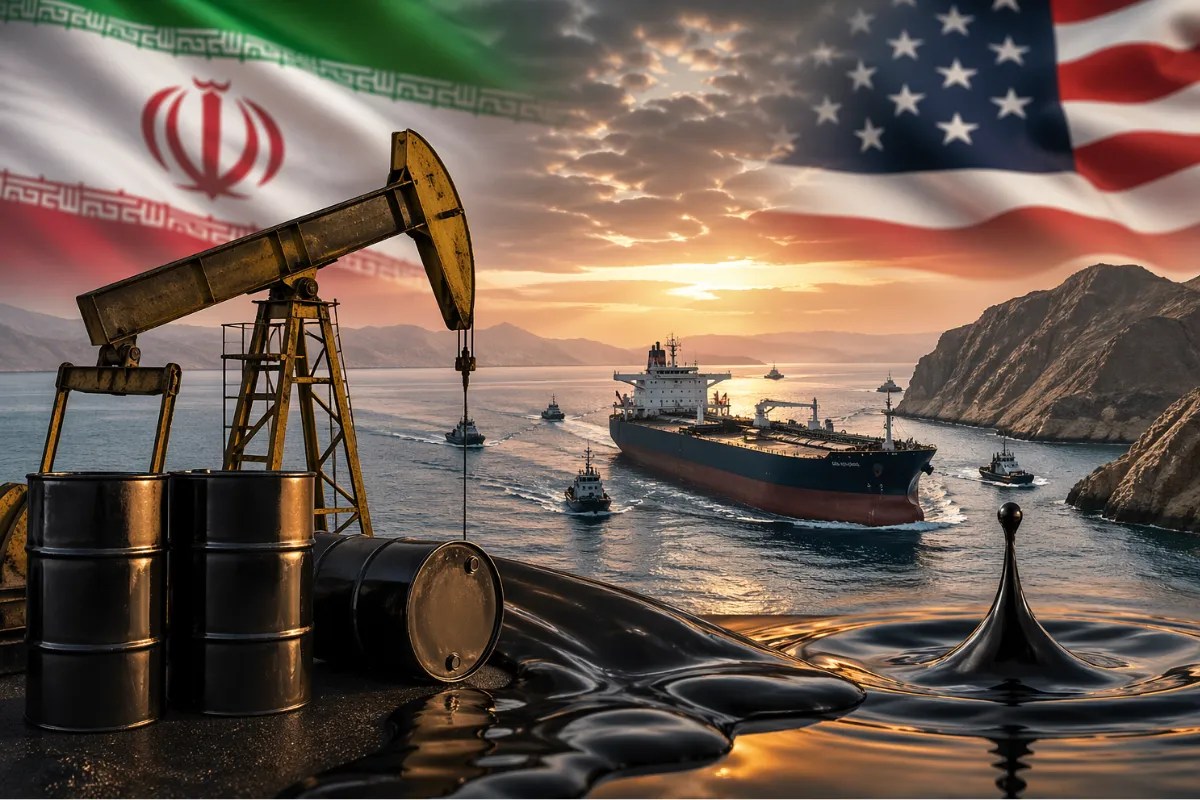
If you think a localized conflict in the Middle East stays in the Middle East, you're not paying attention to your gas tank. The ongoing maritime standoff involving Donald Trump, Iranian authorities, and the choke point of the Strait of Hormuz has transformed from standard geopolitical posturing into a full-blown stress test for the global economy. When commercial vessels get tracked by drones, warned by the Iranian Revolutionary Guard Corps (IRGC), or face sudden disruptions near vital oil terminals like Kharg Island, the shockwaves hit global markets instantly.
Let's cut through the noise. Most mainstream reports treat this as a temporary headline generator. It isn't. When roughly a fifth of the world's petroleum supply gets squeezed by military patrols, naval blockades, and sea mine threats, the implications stretch far beyond regional politics. You need to understand how this fragile maritime corridor actually works, why previous predictions about crude prices missed the mark, and what this means for your wallet right now.
The Reality Behind the Hormuz Choke Point
People throw around terms like "maritime blockades" as if they're abstract video game concepts. They aren't. The Strait of Hormuz is a narrow shipping lane—barely twenty-one miles wide at its tightest point—connecting the Persian Gulf with the Gulf of Oman. Over twenty percent of total global petroleum consumption and a massive chunk of liquefied natural gas move through this exact aquatic bottleneck.
When tensions spike and the IRGC begins enforcing strict passage protocols or challenging unapproved tankers, global supply chains stutter. U.S. Central Command enforces strict counter-measures, redirecting or boarding commercial carriers to maintain strategic enforcement. Insurance rates for cargo ships traversing the region shoot up overnight.
This isn't just about military posturing between Washington and Tehran. It’s about physical geography dictating global commerce. If you control Hormuz, you hold a choke chain over major importing nations, particularly across Asia where a high percentage of crude shipments are traditionally destined.
Why Oil Prices Haven't Completely Crashed the Global Economy Yet
Back when early threats of total closure surfaced, analysts panicked, predicting crude would rocket past historic thresholds toward two hundred dollars a barrel. That catastrophic price point didn't materialize, and understanding why reveals how modern black-market logistics actually operate.
- Ghost Shipments: A complex shadow fleet of unregistered tankers utilizes dark transponders to move barrels past official radar zones.
- Strategic Reserves: Major economies maintain emergency emergency crude stockpiles, buying months of breathing room while diplomats scramble.
- Rerouting Efforts: While difficult, alternative pipelines and overland logistics absorb a fraction of the displaced capacity.
Still, relying on shadow fleets isn't a long-term economic strategy. Refineries face mounting pressure, floating storage capacities near terminals fill to the brim, and environmental risks from regional skirmishes threaten local ecosystems. The system is holding together with duct tape, not structural stability.
What Trump’s Stance Means for the Ground Game
Donald Trump’s return to the geopolitical arena brought an aggressively transactional playbook. His administration's approach mixes blunt economic threats—targeting civilian energy infrastructure or proposing asset rearrangements—with direct naval enforcement.
When Trump pushes for total compliance or threatens severe secondary penalties on entities dealing with frozen assets, it leaves little room for diplomatic ambiguity. Tehran responds by leaning heavily on asymmetric tactics, drone surveillance, and regional proxies to signal that any attempt at total western dominance comes with an immediate economic toll.
This high-stakes game of chicken means stability can shatter in an afternoon. Talks mediated by regional partners like Oman frequently stall because both sides refuse to compromise on baseline sovereignty over the strait.
Preparing for What Comes Next
You can't control what happens in the Persian Gulf, but you can manage your exposure to the fallout. Energy volatility trickles down into everything from shipping fees to manufacturing costs and retail inflation.
Keep a close eye on regional shipping insurance indices rather than just daily news soundbites. Those insurance spikes tell the real story of risk long before it hits retail fuel prices. Diversify your understanding of energy dependencies, pay attention to how local markets respond to supply adjustments, and stop assuming that maritime trade routes are indestructible. They are as fragile as the political wills protecting them.
:max_bytes(150000):strip_icc()/ar-American-Cheese-taste-test-horizon-4x3-54cc339550cd44b9a818c17bdfd5428d.jpg)