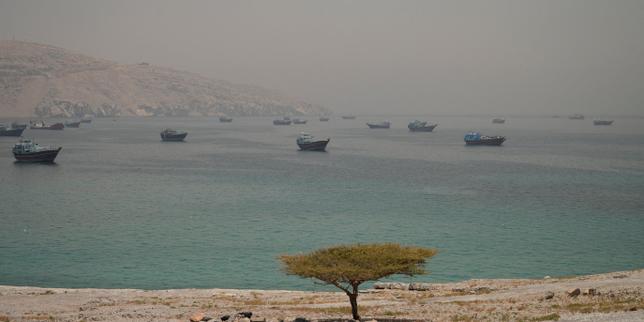
The United States military recently intercepted a swarm of Iranian-manufactured drones targeting commercial and naval vessels in the Strait of Hormuz. While defense officials framed the kinetic engagement as a routine, successful neutralization of an asymmetric threat, the incident signals a dangerous shift in the regional security dynamic. It highlights a critical vulnerability in global supply chains that standard naval doctrine is struggling to address. This is no longer a localized standoff. It is a war of economic attrition fought with cheap, expendable technology against multi-billion-dollar defense systems.
The immediate objective of these drone deployments is clear. Tehran wants to test the response times, radar signatures, and electronic warfare capabilities of Western naval assets without triggering a full-scale conventional war. By flooding the narrow shipping lanes of the Persian Gulf with low-cost loitering munitions, non-state actors and state sponsors alike can disrupt 20 percent of the world’s petroleum liquid consumption. The math favors the agitator.
The Asymmetry of Modern Maritime Defense
Naval warfare has entered a hyper-asymmetric phase. A single Iranian-designed Shahed-series drone costs approximately $20,000 to manufacture. In stark contrast, the standard air-defense missiles utilized by US Navy destroyers to down these threats cost between $2 million and $4 million per shot.
This financial imbalance represents a long-term strategic crisis. A warship can carry only a finite number of vertical launching system cells before it must return to a secure port to reload. By launching successive waves of inexpensive drones, an adversary can effectively deplete a strike group's magazine depth. Once those interceptors are spent, the capital ships, and the commercial vessels they protect, become vulnerable to supersonic anti-ship cruise missiles and ballistic threats.
The Pentagon is acutely aware of this bottleneck. Navy commanders are being forced to calculate the economic utility of every engagement. Do you fire an advanced interceptor at an unguided, slow-moving drone that might miss its target anyway? If you choose wrong, the cost is measured in human lives and catastrophic environmental damage to shipping lanes.
The Failure of Traditional Deterrence
Decades of establishing permanent carrier strike groups in the region have failed to deter these grey-zone operations. Conventional military superiority relies on the threat of overwhelming retaliation against recognizable infrastructure. Drone warfare shatters this framework by providing plausible deniability and distributed launch networks.
A drone can be launched from the back of a commercial flatbed truck, a civilian fishing trawler, or a remote desert valley. There is no massive airbase to target in retaliation, no centralized radar hub to jam. The decentralized nature of these operations means that standard show-of-force maneuvers by Western navies are met with indifference by the crews operating these remote systems.
The Technology Driving the Threat
Understanding the threat requires stripping away the propaganda from both sides. These are not sci-fi superweapons. They are essentially flying lawnmowers packed with commercial-grade GPS components, fiberglass hulls, and small explosive payloads.
- Guidance Systems: Many of these drones utilize commercial off-the-shelf civilian GPS receivers coupled with rudimentary inertial navigation systems. This makes them highly resistant to standard military-grade electronic jamming, as they can default to dead reckoning if the satellite signal is lost.
- Propulsion: Powered by simple two-stroke or four-stroke internal combustion engines, they fly low and slow. This low altitude allows them to hide within the sea clutter, masking their radar cross-section against the crests of ocean waves.
- Payloads: While their warheads are modest compared to a cruise missile, they carry more than enough high explosives to punch through the unarmored hulls of commercial oil tankers and container ships.
The simplicity is the point. You cannot easily disrupt a supply chain that relies on components found in everyday consumer electronics. Sanctions have failed to halt the proliferation of these weapons because the dual-use technologies that power them are ubiquitous across global markets.
The Electronic Warfare Mirage
For years, defense contractors promised that electronic warfare would provide a silver bullet against drone incursions. The theory was elegant. Direct a high-energy beam at the incoming threat, fry its circuits, or sever its command link, and watch it splash harmlessly into the sea.
Reality has proved far more stubborn. Modern loitering munitions are increasingly autonomous. They do not rely on an active data link with a human operator during the terminal phase of their flight. Once launched, they follow pre-programmed coordinates. You cannot jam a signal that does not exist.
While directed-energy weapons like shipboard lasers are undergoing active field testing, they are plagued by atmospheric limitations. Salt spray, humidity, and dust storms in the Strait of Hormuz scatter the laser beams, severely reducing their effective range and kill capacity.
| Weapon System | Estimated Cost Per Unit | Primary Target Type |
|---|---|---|
| Shahed-136 OWA Drone | $20,000 - $40,000 | Infrastructure / Ships |
| SM-2 Interceptor Missile | $2,100,000 | Aircraft / Cruise Missiles |
| ESSM (Evolved SeaSparrow) | $1,800,000 | Anti-Ship Missiles / Drones |
| Phalanx CIWS (20mm Rounds) | $4,000 per burst | Short-Range Terminal Threats |
Supply Chain Contagion and Global Markets
The tactical reality in the water directly translates to economic volatility on land. Shipping conglomerates do not operate on ideology; they operate on insurance risk profiles. Each successful drone strike, or even a highly publicized near-miss, causes maritime insurance premiums to skyrocket.
When the risk of transiting the Strait of Hormuz becomes too high, companies face a grim choice. They can pay the exorbitant insurance rates, passing the cost directly to consumers, or they can reroute their vessels around the Cape of Good Hope. Rerouting adds up to two weeks to a voyage, burning thousands of tons of additional fuel and disrupting just-in-time manufacturing schedules across Europe and Asia.
This is the true objective of the drone campaigns. It is economic warfare by proxy. By maintaining a state of perpetual insecurity, regional actors can exert immense pressure on Western economies without ever firing a shot at a Western homeland.
Counter-Drone Strategies that Might Actually Work
To break this cycle, naval doctrine must abandon its reliance on expensive, exquisite missile systems for low-tier threats. The solutions must match the economic scale of the problem.
Rapid Prototyping of Kinetic Interceptors
The military needs to rapidly field cheap, kinetic counter-drone systems. Small, explosive-laden quadcopters or guided gun systems that utilize smart ammunition could destroy incoming threats at a fraction of the cost of a traditional missile. These systems must be modular and capable of being bolted onto commercial vessels, reducing the burden on overstretched naval escorts.
Aggressive Maritime Interdiction
Defending ships at sea is a losing game if the flow of weapons remains unchecked. International coalitions must transition from a reactive escort posture to an aggressive, intelligence-led interdiction campaign in international waters. This means boarding suspected smuggling vessels, tracking the financial networks of front companies procuring dual-use electronics, and holding the state suppliers directly accountable for the damage caused by their exports.
The current strategy of intercepting drones one by one in the shipping lanes is unsustainable. It consumes resources at an alarming rate while leaving the root cause of the instability untouched. The global shipping industry cannot be sustained on the assumption that a two-million-dollar missile will always be available to stop a twenty-thousand-dollar drone.