Asia is currently sleepwalking into a nutritional catastrophe. While regional diplomats focus on the immediate military fallout of a potential conflict between Iran and its adversaries, they are ignoring the more insidious threat. The physical closure or heavy disruption of the Strait of Hormuz would not just spike oil prices. It would trigger a systemic failure in the global food supply chain that would hit the world’s most populous continent first and hardest.
The mechanism of this disaster is simple and terrifying. Asia relies on the Middle East for energy, but it relies on that same energy to power the massive industrial agriculture systems that feed its billions. Furthermore, the Middle East is a vital transit hub for grain and fertilizer coming from the Black Sea and Europe. If Hormuz shuts down, the cost of logistics will skyrocket, and the availability of nitrogen-based fertilizers—dependent on natural gas—will evaporate.
The Fertilizer Trap
Most observers treat food and energy as separate silos. They are not. Modern agriculture is essentially the process of turning fossil fuels into calories.
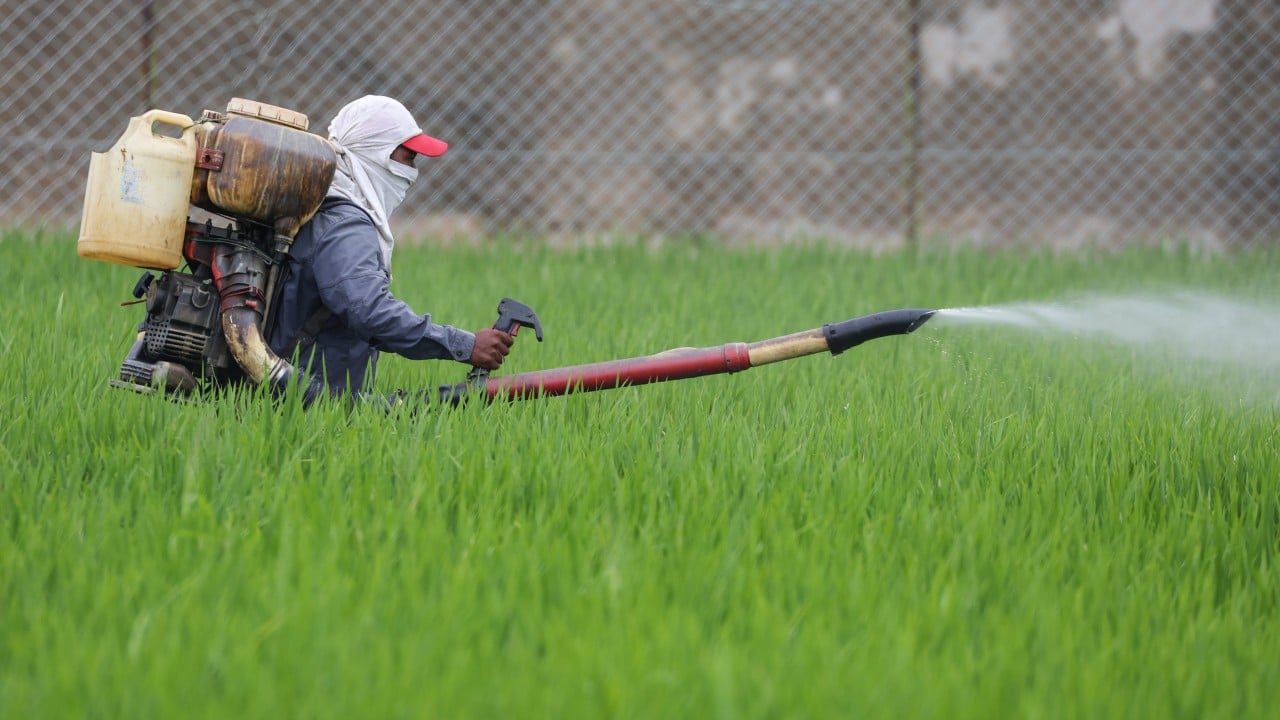
Nitrogen fertilizer is the backbone of Asian rice and wheat production. Producing this fertilizer requires immense amounts of natural gas. The Middle East, particularly Qatar and Iran, sits on the world’s most significant gas reserves. A hot war in the Persian Gulf doesn't just mean empty gas tanks in Tokyo or Seoul; it means empty silos in Bangkok and Hanoi.
When energy prices spike during a conflict, fertilizer plants are often the first industrial victims. They shut down because the input costs exceed the market price of the final product. We saw a preview of this during the early stages of the Ukraine-Russia conflict. However, a conflict involving Iran would be significantly worse because it would physically block the transport of both the raw gas and the finished chemical components to Asian ports.
Without this input, crop yields in India, Vietnam, and Indonesia would plummet. Farmers cannot simply "switch" to organic methods overnight to sustain three billion people. The math does not work. You either have the nitrogen, or you have a famine.
The Shipping Insurance Death Spiral
The mechanics of a blockade are rarely about steel and gunpowder alone. They are about spreadsheets.
As soon as the first drone strikes a tanker or a mine is detected in the Strait, the maritime insurance market goes into a frenzy. "War Risk" premiums would jump from a negligible cost to a prohibitive burden within hours. For many shipping companies, the risk of losing a vessel—and the inability to insure it—means they simply stop sailing.
The Logistics of Starvation
- Rerouting Costs: Ships forced to bypass the Gulf must take longer, more expensive routes, burning more fuel and tying up global shipping capacity.
- The Container Crunch: Food isn't just bulk grain. Much of Asia’s processed food and high-value perishables move in containers. A regional war disrupts the complex "just-in-time" scheduling these ships rely on.
- Port Congestion: If the Gulf ports are offline, cargo gets dumped in Singapore or Colombo, creating bottlenecks that can take months to clear.
This is not a theoretical problem. The global shipping industry is already stretched thin. A major disruption in the Middle East would force a prioritization of cargo. In a bidding war between a shipment of semiconductors and a shipment of grain, the grain rarely wins. The profit margins on basic foodstuffs are too thin to absorb a 400% increase in freight rates.
The Myth of National Reserves
Governments across Asia point to their strategic grain reserves as a shield. These reserves are a facade.
Most national stockpiles in Southeast Asia are designed to handle short-term price volatility or localized crop failures. They are not built to withstand a multi-year breakdown of global trade. Furthermore, these reserves are often poorly managed, subject to spoilage, and—most importantly—only contain raw grains. They do not contain the fuel needed to mill the grain, the electricity to refrigerate the results, or the diesel to move the food from the warehouse to the urban poor.
In a crisis, these reserves disappear in weeks. Panic buying usually empties shelves before the government can even figure out how to implement rationing. We have seen this pattern repeat in every major supply chain shock of the last century. The state’s ability to "control" a food market ends exactly where the citizen’s fear of hunger begins.
The Failure of Regional Cooperation
ASEAN and other regional bodies are fundamentally ill-equipped for this. Their primary mode of operation is non-interference and slow-motion diplomacy.
There is currently no unified Asian protocol for sharing food resources during a maritime blockade. Instead, the historical precedent suggests that as soon as the pressure mounts, nations will turn inward. In 2008 and again in 2022, we saw major exporters like India and Vietnam ban rice exports to protect their domestic prices.
This "beggar-thy-neighbor" policy is a death sentence for import-dependent nations like Singapore, Japan, and the Philippines. If the Strait of Hormuz closes, the spirit of "Asian Unity" will likely vanish, replaced by a cutthroat competition for whatever calories are still moving on the water.
The Calorie Weapon
We must also consider that Iran understands the leverage it holds over Asia’s dinner tables.
Tehran knows that China is its biggest customer, but it also knows that China is terrified of domestic instability. If Iran can threaten the food security of America’s Asian allies—Japan and South Korea—it creates a massive diplomatic headache for Washington. Food is not just a commodity in this scenario; it is a tactical weapon used to force concessions.
The "Food-Energy-Water" nexus is where the Middle East conflict hits the average Asian citizen. You don't need to be in the line of fire to feel the effects of a missile battery in Bandar Abbas. You just need to be someone who buys rice in Manila.
Beyond the Strait
While Hormuz is the immediate trigger, the vulnerability is structural. Asia has spent decades optimizing for efficiency and low cost, completely ignoring resilience.
We have built a world where a farmer in the Mekong Delta relies on gas from the Persian Gulf and potash from the Urals to feed a family in Kuala Lumpur. This is an incredibly fragile web. The "just-in-time" delivery model is a miracle of modern economics until it isn't. When the link breaks, there is no backup.
The solution isn't more "dialogue" or another toothless summit in Jakarta. It is the aggressive, rapid diversification of fertilizer production and the creation of a physical, regional food-sharing infrastructure that is independent of the global banking system and Western shipping lanes.
The Hard Reality of the Next Decade
Waiting for a peace treaty in the Middle East is not a strategy. The geopolitical tensions in the Gulf are a permanent feature of the 21st century, not a bug.
Asian nations need to stop treating food security as a subset of agriculture and start treating it as a subset of national defense. This means investing in massive, domestic "green" ammonia production (using renewables instead of gas) and building deep-water ports that don't rely on the chokepoints of the Middle East.
If this transition doesn't happen with extreme urgency, the next war in the Gulf won't just be fought with tanks and planes. It will be fought in the streets of Asia’s mega-cities by people who can no longer afford to eat.
National security begins at the stomach. Every day that Asia fails to de-link its food supply from the volatility of the Strait of Hormuz is a day closer to an irreversible social collapse. The clock isn't just ticking for the diplomats; it's ticking for the farmers and the families they serve.
Stop looking at the maps of the Gulf and start looking at the inventory levels of your local grain elevators. That is where the real war will be won or lost.