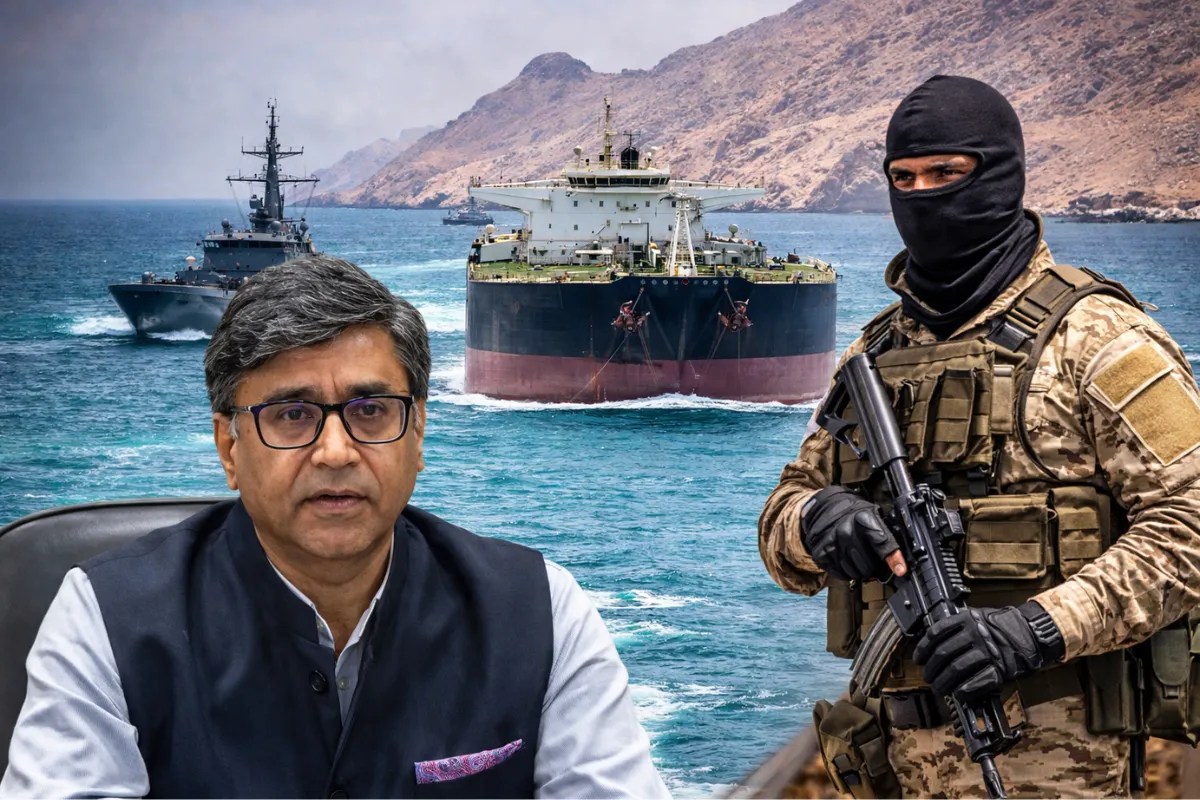
The global diplomatic circuit is obsessed with the word "stability." At the recent summit involving over 60 nations, India and its peers once again chanted the mantra of "safe transit" and "diplomatic solutions" regarding the Strait of Hormuz. It sounds responsible. It looks good on a press release. It is also fundamentally delusional.
To suggest that a 21-mile-wide strip of water, which carries nearly 20% of the world’s liquid petroleum, can be managed through the polite exchange of dossiers is a fantasy. We are witnessing the slow death of the "Chokepoint Neutrality" myth. While bureaucrats talk about international law, the reality on the water is governed by raw leverage and the brutal physics of energy dependence. Read more on a related issue: this related article.
The Diplomacy Delusion
The competitor narrative suggests that more talking leads to more safety. I have spent years analyzing maritime trade corridors, and the data tells a different story. Diplomacy in the Strait of Hormuz isn't a solution; it’s a stalling tactic used by nations who lack the naval capacity to actually enforce their will.
When India calls for "safe transit," it is admitting a vulnerability. It is signaling to regional powers that its energy security—and by extension, its GDP—is a hostage to the whims of coastal batteries and fast-attack craft. Further reporting by NPR explores comparable views on the subject.
Relying on diplomacy in a chokepoint is like asking a kidnapper to please drive the speed limit while they have your children in the trunk. The "path through diplomacy" that everyone keeps praising is actually a corridor of compromise where the strongest bully sets the toll.
The Mathematical Impossibility of Total Security
Let’s look at the geometry of the problem. The Strait of Hormuz is essentially a bottleneck. You cannot "secure" a bottleneck with 60 different nations having 60 different definitions of "stability."
If you analyze the traffic flow, approximately 20 to 21 million barrels of oil pass through daily. The shipping lanes are narrow—only two miles wide in each direction, separated by a two-mile buffer zone. This isn't an open ocean; it’s a driveway.
- Electronic Warfare Vulnerability: Modern tankers are floating computers. Diplomatic agreements don't stop GPS jamming or AIS (Automatic Identification System) spoofing.
- Asymmetric Costs: It costs a rogue actor $50,000 to deploy a drone or a mine. It costs a naval task force $50 million a month to patrol the area. The math favors the disruptor, not the diplomat.
Why India’s "Middle Path" is a Strategic Dead End
India’s stance is often framed as a masterclass in non-alignment. By staying "neutral" and calling for peace, New Delhi hopes to maintain ties with both Iran and the Western-led maritime coalitions.
This is a classic "Strategic Straddle." In theory, you get the best of both worlds. In practice, you get no protection from either.
When a tanker is seized or a mine is struck, the "middle path" doesn't provide an escort. It provides a statement of concern. I’ve seen energy markets react to these events; they don't care about "statements." They care about insurance premiums. The moment the Joint War Committee (JWC) of the Lloyd’s Market Association expands the "listed area," the cost of doing business spikes. No amount of diplomatic hand-wringing lowers those premiums.
The Illusion of International Law
The United Nations Convention on the Law of the Sea (UNCLOS) is the holy book that everyone quotes at these summits. There is a massive problem: Iran is not a party to UNCLOS.
Applying UNCLOS logic to the Strait of Hormuz is like trying to enforce the rules of cricket in a backyard cage fight. Iran recognizes "transit passage" only for those who have signed the treaty. For everyone else, they claim the right of "innocent passage," which gives the coastal state significantly more power to intervene.
The "status quo" that the 60-nation meeting seeks to protect doesn't actually exist. We are operating in a legal grey zone where might makes right, and the "right" is currently defined by whoever has the most missiles pointed at the tankers.
Stop Asking for Peace, Start Building Alternatives
The real question isn't "How do we secure the Strait?" The question is "How do we make the Strait irrelevant?"
The obsession with Hormuz diplomacy is a distraction from the only real solution: radical infrastructure bypass.
- The Saudi Bypass: The East-West Pipeline (Petroline) has a capacity of 5 million barrels per day, yet it is rarely utilized to its full potential.
- The UAE Bypass: The Habshan-Fujairah pipeline can move 1.5 million barrels per day directly to the Gulf of Oman.
- Strategic Stocks: Nations like India need to stop talking about "transit" and start talking about 90-day physical reserves held in-country, not in paper futures.
The Hard Truth About Maritime Insurance
You want to know who actually runs the Strait of Hormuz? It’s not the admirals or the ambassadors. It’s the underwriters in London.
If the insurance industry decides the Strait is a "war zone," the global economy stops. Diplomacy has zero impact on an actuary's spreadsheet. These 60-nation summits are essentially theater designed to keep insurance companies from panicking. It’s a confidence game.
The moment we admit that diplomacy is failing, the risk models change, and the price of gas at the pump in Mumbai or Manila doubles overnight. We aren't seeking "peace"; we are seeking "price stability." Let’s at least be honest about our greed.
The "Hormuz Dilemma" Thought Experiment
Imagine a scenario where a non-state actor—not a country, but a decentralized group—uses autonomous underwater vehicles (AUVs) to harass shipping.
Who does India talk to then? Who does the 60-nation summit send a letter to?
The old-world model of "State A talks to State B" is dying. The chokepoints of the future will be disrupted by actors who don't have a seat at the diplomatic table. By the time the diplomats finish their lunch, the global supply chain has already suffered a cardiac arrest.
The Actionable Pivot
If you are an investor or a policy lead, stop listening to the "safe transit" rhetoric. It is a lagging indicator.
Instead:
- Monitor the Spread: Watch the price difference between Brent and Dubai Crude. If it widens, the "diplomatic solution" is failing regardless of what the headlines say.
- Bet on Fujairah: The real winners are the ports located outside the Strait. Any investment in transshipment hubs that bypass the chokepoint is a bet on reality.
- Ignore the Commingled Voice: When 60 nations agree on something, it is by definition the least offensive, least effective option possible. The consensus is the "white bread" of geopolitics—it has no nutritional value and exists only to fill space.
The Strait of Hormuz is a tactical nightmare masquerading as a diplomatic challenge. We can keep pretending that another round of talks will secure the waters, or we can admit that the Strait is a permanent hostage situation.
True security doesn't come from a "clear stance" in a global meeting. It comes from having enough leverage that you don't need to ask for permission to pass. Everything else is just noise.
The world doesn't need more diplomacy. It needs a way to stop caring what happens in 21 miles of water. Until then, we are all just waiting for the next spark to hit the powder keg while the diplomats argue over the color of the fuse.